
The Timeless Allure of Indian Cinema
How Bollywood and Beyond Continue to Shape Global Storytelling

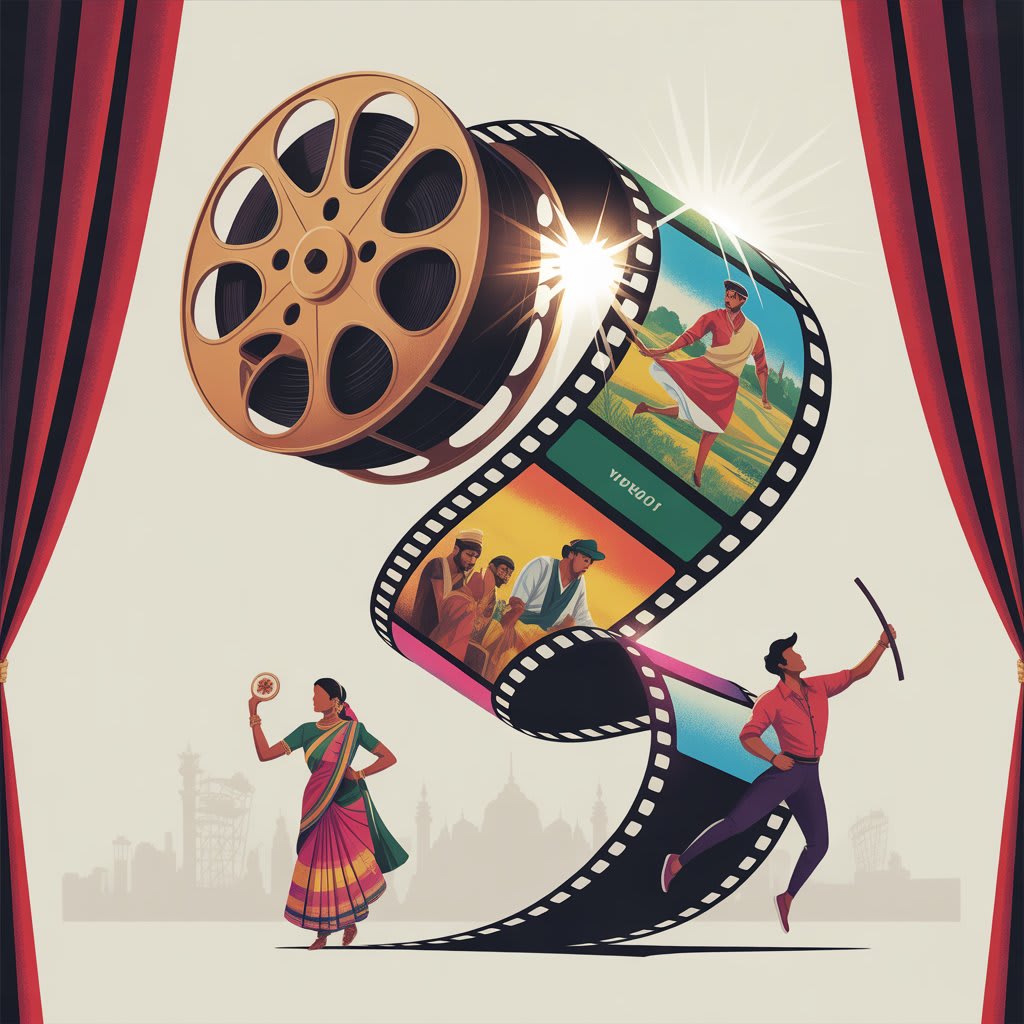
The Timeless Allure of Indian Cinema
How Bollywood and Beyond Continue to Shape Global Storytelling
Indian cinema is more than just an entertainment industry — it is a cultural force, a reflection of history, and a global ambassador of art. With its roots extending back over a century, the Indian film industry has produced legends, inspired generations, and created stories that resonate far beyond its national borders. Today, it remains one of the most prolific and influential film industries in the world, with Bollywood at its heart and regional cinemas giving it vibrant diversity.
A Century of Storytelling
The journey of Indian cinema began in 1913 with Raja Harishchandra, a silent film directed by Dadasaheb Phalke, often called the "Father of Indian Cinema." From that pioneering effort, cinema rapidly grew into a shared cultural language across a country rich in linguistic and regional diversity. Silent films evolved into talkies, black-and-white transitioned to color, and eventually, the industry expanded into multiple languages, regions, and styles.
What has remained constant is the power of storytelling. Indian cinema has always captured emotions — joy, tragedy, romance, and social struggle — in ways that deeply connect with its audiences. For millions of Indians, going to the cinema is not just a pastime but a community experience, one that unites different classes, regions, and even generations.
Bollywood: More Than Just Glamour
When most of the world hears “Indian cinema,” the first word that comes to mind is “Bollywood.” Based in Mumbai, Bollywood produces the largest number of Hindi-language films annually and has given the world iconic stars like Amitabh Bachchan, Shah Rukh Khan, Aishwarya Rai, and Deepika Padukone.
But Bollywood is more than just extravagant song-and-dance sequences. It has a tradition of combining entertainment with social commentary. Films like Mother India (1957) highlighted themes of sacrifice and resilience, while Lagaan (2001), nominated for an Academy Award, combined sports, colonial history, and patriotism in one sweeping narrative. In the modern era, movies such as Dangal (2016) and Pink (2016) have addressed gender equality, empowerment, and justice, proving that mainstream cinema can also spark critical conversations.
Regional Cinema: The Unsung Powerhouses
While Bollywood dominates headlines, regional Indian cinema is equally rich and influential. Tamil, Telugu, Malayalam, Bengali, Kannada, Punjabi, and Marathi films have created some of the most groundbreaking works in Indian cinema.
Take for example Satyajit Ray’s Bengali classic Pather Panchali (1955), which won international acclaim and put Indian cinema on the global map for its neorealism and poetic storytelling. In recent years, Telugu cinema gave the world Baahubali and RRR, spectacular blockbusters that broke records and reached global audiences. Malayalam cinema continues to impress with realistic narratives and sharp social commentary, while Tamil films frequently explore innovative action, politics, and romance with depth and flair.
Regional films are proof that Indian cinema is not monolithic — it is a mosaic of voices, traditions, and perspectives.
The Global Reach of Indian Films
From the bustling streets of Mumbai to theaters in New York, London, and Dubai, Indian cinema has a massive global following. The diaspora, spread across continents, has kept demand alive for Hindi and regional films. Meanwhile, streaming platforms like Netflix, Amazon Prime, and Hotstar have made Indian films accessible to audiences who may have never stepped into a theater in India.
The international recognition of films like Slumdog Millionaire (though a British production with heavy Indian influence) and RRR winning an Oscar for Best Original Song (Naatu Naatu) has further cemented the idea that Indian cinema has truly gone global. Today, Western filmmakers collaborate with Indian studios, while Indian actors and directors increasingly feature in Hollywood projects.
Music: The Soul of Indian Cinema
One cannot talk about Indian cinema without mentioning its music. Film songs are not just background entertainment — they are cultural phenomena. Legendary composers like R.D. Burman, A.R. Rahman, and Ilaiyaraaja have shaped the soundscape of Indian films for decades. Rahman’s Oscar-winning score for Slumdog Millionaire introduced a new generation of listeners to Indian cinematic music.
Songs in Indian films serve multiple purposes: they move the narrative forward, capture emotions words alone cannot express, and provide audiences with unforgettable experiences. From the golden melodies of the 1950s to the electronic beats of the 2000s, music remains the heartbeat of Indian storytelling.
Challenges and Transformations
Like any major industry, Indian cinema faces challenges. Piracy, changing audience preferences, and competition from global streaming services have forced the industry to adapt. The COVID-19 pandemic accelerated the shift toward OTT (over-the-top) platforms, changing how films are released and consumed.
However, this transformation also opened new doors. Independent filmmakers, once sidelined by mainstream cinema, now find global audiences through streaming. Stories once considered too niche — exploring rural life, marginalized communities, or unconventional relationships — now receive recognition and acclaim.
Why Indian Cinema Matters
Indian cinema is not just about entertainment; it is about identity, memory, and aspiration. It mirrors the hopes of a billion people while also offering escapism, joy, and collective celebration. A Bollywood blockbuster can fill theaters with laughter, while an art-house film can inspire social change.
Moreover, Indian films teach us the universality of emotion. Whether you understand Hindi, Tamil, or Malayalam, the emotions of love, loss, courage, and triumph transcend language. That is why Indian cinema resonates so strongly worldwide.
The Road Ahead
As technology evolves and boundaries blur, Indian cinema stands on the edge of exciting possibilities. Virtual reality, AI-driven effects, and global collaborations will shape its future. But what will remain timeless is the heart of Indian storytelling — emotional, colorful, layered, and deeply human.
Indian cinema is not merely an industry producing thousands of films each year. It is a living, breathing narrative of a nation in motion, constantly reinventing itself while holding on to traditions. Whether you watch a sweeping Bollywood romance, a gritty Malayalam drama, or a Telugu action epic, you are experiencing a part of India’s soul.
And that is why, more than 100 years later, Indian cinema continues to capture the world’s imagination — and promises to do so for generations to come.
About the Creator
LONE WOLF
STORY
Wild Card Weekend Recap: What Happens Now?
I think I figured out why I love Wild Card Weekend so much. It's because it's the first playoff anything of the calendar year. The NFL season starts in the fall, and once upon a time, the champion was crowned either on or slightly before New Year's. The evolution of the NFL schedule has resulted in the playoffs starting just into the New Year, and currently, the final week of the season falls on the first weekend of the New Year, with Wild Card Weekend coming a week after that. So yes, chronologically, the NFL's Wild Card Weekend serves as the first playoff anything of the calendar year.
By Clyde E. Dawkins7 days ago in Unbalanced



Comments
There are no comments for this story
Be the first to respond and start the conversation.