

There weren't always dragons in the Valley. At that time, when Ered was young, life was peaceful and good. He worked with his father in the smithy and played with his mates everywhere else: in the village, in the fields, in the forest. The first time he saw a dragon, the first thing he heard was a cry in the village: “Dragon!” The same word repeated. His head turned this way and that, and he looked up all around, but the tops of the houses and trees blocked his view . . . until a dark shape passed directly overhead. He looked up just in time to see it flying away from his position. Though it was spring, he felt a chill. Then he saw the dragon wheel around and turn toward the village again. Something in him said, Run. Then he remembered the rule of being chased: run sideways. His father had used a word like “perpendiculous”, but Ered knew it as sideways. He would not run in front of a horse, an ox, or a dragon. But he had to save his family first. He ran inside their hut.
“Mother!” She was already swaddling his baby sister.
“Come with me,” his mother, Gudrun, said.
“I came to get you.”
“Good. Come. Run.”
They ran out of the hut at the moment the dragon unleashed a breath of fire at the village. They ran sideways to the dragon’s path, through the din of shouts and cries, toward the creek where water would shield them.
Ered looked to his sides as he ran to see men standing their ground, launching arrows and spears at the flying beast. Where did it come from? he wondered. Why is it here?
Where is father?
“Ered—come!” Gudrun urged.
“Where is father?” Ered stopped to look for him.
Gudrun turned, saw that he had stopped, and her eyes widened in horror. “Ered, down!” She then did something Ered would never forget, as old as he later became: she dropped the swaddling and his sister to the ground.
Ered dropped to the ground, felt burning heat over him, and saw the underside of the dragon’s belly. His mother screamed and was gone.
Ered did not know whether to rise or remain prone, but he heard the cries of his sister, Ljot. He scrambled to rise and ran to pick her up, the creek a short distance ahead. He could not think. His eyes burned with tears. He reached the water and went in all the way, hiding along the creek bank, their faces above the water. The sounds of fires, anguish, and pain fell away, and all he could think about was his mother. Could she have escaped? Father!
Ljot cried, and Ered tried to calm her. “I know—I know—I’m wet too, but we have to stay here.” He began to sing to her. “I’m sorry. I’m sorry, Ljot.”
Liot calmed and closed her blue eyes. Ered caressed her head with his wet hand and shushed her gently. They stayed in the creek until Ered heard a voice shouting his mother’s name and his. Ered lay Ljot on the grass away from the creek bank and pulled himself up, his legs cramped, his whole body sore. He threw himself on the grass next to Ljot and cried. Some homes continued to burn and some to smoulder.
“Over there!” someone called. Men and women ran over to them.
Ered woke in his bed. He saw his father holding Ljiot, speaking to other men and women. “He’s awake, Birkir,” a woman called, and Ered’s father came to the bedside.
“Ered,” Birkir said. He ran his hand over Ered’s brow and hair. “I am sorry, my son.”
“Is Mother . . . ?”
Birkir’s brow darkened. “Was she in the creek with you? We did not find her there.”
“The beast took her.”
Without thinking of Ered’s hair, Birkir made a fist. “Ow,” Ered said.
“I am sorry, my son!” He leaned forward and rested his brow against that of his son. “You saved your sister.”
“I could not save Mother.”
“You saved your sister.”
Over the years, the dragons returned. They came in increasing frequency and in increasing numbers. The villagers dug homes into the walls of the Valley, fortified them with stones, and never left them alone.
“Where do they come from?” Ljot asked Ered one day when she was five.
“I wish I knew.”
“We should go find out.”
“It would not be safe.”
“We wouldn’t let them see us.”
“Father would never allow it.”
Ljot could not argue with that.
“Ered, you are now a man,” Birkir said one day. “You have learned the arts of the smith. When I retire, you will be the village smith.”
“Thank you, father. But there is something I must do first.”
“Oh?” Birkir asked.
“I will forge the finest blade the Valley has ever seen, the tip of a spear. And I will avenge my mother.”
About the Creator
Keep reading
More stories from writers in Fiction and other communities.
After the Storm
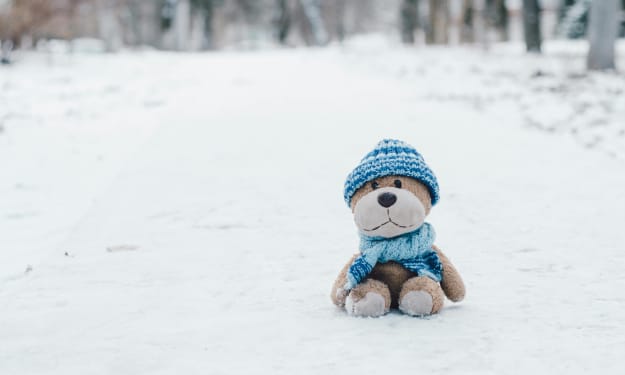
After the storm of winter snow there sat a small bear by the name Ted, of course. He loves the snow and likes to roll around in it making all sorts of trails and whatever he has a mind to do. He wondered where all the people are, but in a way, he is hoping that they are all snug in the homes maybe drinking hot chocolate-one of his favorite drinks with mini-marshmallows and eating something homemade for he likes this winter wonderland all to himself to romp and play and maybe even catch some fish down by the river.
By Mark Graham6 days ago in Fiction
The Strong Word
Studio lights permitted the viewer enough visual stimulation as a NASA engineer’s workspace. The producer, Latrell “Real Weight” Voight, looked black as root beer. He queued up a video of a documentary depicting the construction of a skyscraper in Wilmington, Delaware a few blocks away. The engineer, Argent “Clean Bill” Boggs, possessed the skin color of an oak tree.
By Skyler Saunders4 days ago in Fiction


Comments
There are no comments for this story
Be the first to respond and start the conversation.