
Leah grunted, pressing down on the handles. The share bit into the dry earth. She clicked her tongue and Bruce ambled forward, his hooves churning dirt. The share cut the weeds and the moldboard scooped them away, turning over fresh, dark soil. She tried to guide Bruce into straight lines, which made the planting, the watering, the harvest easier. Mother had taught her, and that was all there was to it. She still wore the necklace she’d given her around her neck, it gave her strength whenever she grew tired.
She thanked the earth as she broke it open, her bare feet pressed into the cool, damp soil, she pushed. Sweat beaded from her nose, her shoulders burned with exertion. Bruce huffed and snorted ahead of her. The sun beat upon her back as she drove the plough. She made it across her farm and stopped for a breather, Bruce going for a drink from his trough. She kept water for herself in a jug of very old plastic, she raised this over her head and poured it over her hair. It ran down her back, cooling her neck and collar. She squinted up into the sky, tried to determine how much daylight she had left. Enough, she figured, for a bit more work. Then she and Bruce could rest.
She took up the handles of the plow, though hesitated as she heard a faint sound float in on the wind. Her heart clenched with ice. She froze, listening.
The wind tousled the dry fingers of her corn field. The evening robin sang in the dogwoods beyond her farm. She screwed her eyes closed, searching for it again. She had to be sure that she’d really heard it.
The wind shifted, and there it was, this time unmistakable. The distant whack of an axe, striking a tree. That meant people were nearby. Her stomach soured.
She looked out over the green veil of the trees, and felt fear. She wondered how many people, and of what sort. People, those that survived, were animals. Some, like deer, were phantoms that didn’t want to be seen, and could vanish again into the green without a trace. Others, crows, worked in numbers, took what wasn’t theirs. Worst yet were the wolves, those that ate by killing. Leah ate by farming, and so she had a lot to lose to someone like that. So much in fact, that she kept a rifle strapped to the back of her plough.
She grabbed it from its straps and pulled back the bolt to inspect the internal magazine. Brass twinkled back up at her. Good. Bullets. She had just a few, and they weren’t making those any more– she couldn’t afford to waste any, not a single shot. That meant she had to be sure she was dealing with wolves. Someday she’d need her bullets for them, sooner or later.
Whack. The axe struck again.
She took a moment to free Bruce from the plough, and took off after the sounds. Beyond her field grew the dogwoods that she’d planted, her own, personal forest. She stalked through the trees like a panther, melding with the cool greenery. Whack. The axe thumped the trunk, the wooden sound almost musical. She followed the noise and as she crested the hill beyond her farm, her eyes fell upon the axeman at last.
He had his back turned to her, bare and sheening with sweat. Around his waist he wore animal fur. He swung the axe, whack, and a few dry leaves fell from the canopy, shimmering. The sun was already beginning to set, swelling orange through the trees; Leah knew he must be after firewood.
His blows hurt to hear. She had planted that tree, and all the other dogwoods on this side of the hill. More than concealing her farm, they meant a great deal to her. She shouldered her rifle, peered through the scope, and pinned the crosshairs onto the back of the axeman’s head. She considered the shot very carefully, as her finger trembled on the trigger. The axe struck the tree again. Whack.
How can I know if you are a wolf?
There came another sound through the trees, besides the axe. More people. She watched the axeman stop as he heard it, too. He dropped his axe, and turned to one side. Leah sunk into the ferns to remain unseen, but she kept a pin on him, watching through her scope.
An infant cried. The baby and its mother stepped into view, from just off to one side. The pair came to the man, and they gathered close together into a huddle. A family, then. Leah watched them through the eyepiece of her rifle.
She thought on it, until she relinquished the gun, pulled it from her shoulder and swore. A child complicated things. She wasn’t going to risk shooting a baby. Unlike the real thing, people weren’t all wolves at birth. They were animals, but not all were the worst sort. And yet she still had to save her damn tree. It was important to her.
She set the strap of her rifle around her shoulder and waded through the ferns down the hill, towards the small group. She had a quiet step, and by the time she was close enough to be noticed, the infant’s mother looked up and gasped. The man saw her at last and cried in alarm.
Leah hiked the gun strap up her shoulder to spare it from sliding off. “Try not to kill my trees,” she said. She hadn’t spoken in so long, her voice sounded alien to her, like it had aged twenty years in only ten. “This wood is important to me. Maybe you can understand.”
The man and woman beheld her in astonishment, while their infant cried. The man saw the rifle that Leah had on her shoulder, and gently raised his empty palms out before him.
“Are you going to shoot us?”
Leah stared at him. “Not unless you make me.”
The woman held her crying baby over her shoulder. They were all thin, starving. The mother spoke, and Leah saw that she had tears twinkling in her eyes. “You live here?” The woman hesitated. She eyed Leah’s rifle carefully. “Our child needs medicine, people say that you…” She trailed off, the man filled her place.
“People say that a witch lives in these woods. That she can grow plants and heal those that are sick.”
A witch now, was it? “I can’t work magic,” Leah explained. “But I do know a thing or two about plants.”
She took them back to the home her mother had built. It was an old structure and she kept it well enough repaired. The roof was a suspended lean-to of corrugated metal, across which big block white letters faded into rust. Leah couldn’t read, but her mother had once explained that the letters read the word BOEING. That had seemed to mean more to her mother than it had to her. To Leah, the big white letters just meant home.
Inside, she kept many ancient things. Colored pieces of fabric with stripes and stars hung from the rusty ceiling. Iron pans leaned against the oil barrel within which she built her cooking fires. She kept a few interesting pieces of wood that mother had carved with a knife, as well as various tools, mostly pertaining to farming. Her bed was a real relic– a whole surviving mattress, and though it grew moss, it was still softer to sleep on than the bare ground. Leah suggested the woman lay her baby on the bed, while she went about gathering the materials to start a small fire.
“What’s wrong with him?” She asked, wary of how thin the child was.
The infant’s mother explained the nature of the boy’s illness, and Leah frowned. She had seen dysentery many times before. After a certain point, her medicines could only do so much. She must have grown very quiet, for the man grew impatient with her.
“Can you help him?” He demanded. “Can he be saved?”
Leah felt his desperation and decided he deserved the truth. “Well, it depends…”
Those were evidently the wrong words. She heard the click of a metal mechanism locking. She looked up and saw that the boy’s mother held out a revolver, the barrel wavering before her. “They said you can heal with magic. Save my boy, witch.”
The man also retrieved a hidden gun, a semi automatic pulled from under his hide belt. He lay it visibly upon his lap.
Leah felt her guts knot. She regretted having put any trust into these people. All humans were animals, and animals acted unpredictably when they were scared. It was important to appear relaxed, as much as possible. She took a deep breath to steady her nerves, and examined the baby. “I will have to make a tea. He will need to drink it.”
The woman kept her gun up. “Do it,” she said.
Leah was forced to ignore the pistol as she went about her home, gathering the necessary things. Malosma root. Blackberry root. Nettle. Clean water. As she did, and the water was just coming to a frothing boil, she noticed the man’s eyes beginning to wander around her shelter. She kept a sack of dried beans left over from her harvest, and he’d found them among her storage. The hunger was plain across his face. Just as she was combining the medicines, it evidently became too much for the man. He picked up his gun and pointed it at her.
“...And make us something to eat, too.”
Wolves, she realized. Too little, too late. She knew at this point, there was only one safe thing to do.
She boiled the tea, and poured it off into the bottom of an aluminum can that had been cut in half. As it cooled, the man again insisted for food, by throwing Leah’s sack of beans onto the dirt floor before her. The woman seemed antsy while the tea cooled. She, too, appeared hungry.
“Cook,” she insisted with her gun.
Leah started the beans. They took a long time in boiling water, during which she thought about her rifle. She’d left it too far away, propped up against the inside of her door. Both the man and the woman were between her and the weapon. She lamented this sourly, but remembered the necklace that she kept around her neck, a locket in the shape of a heart. Mother had told her that what it held could be far more dangerous than any gun, if used correctly.
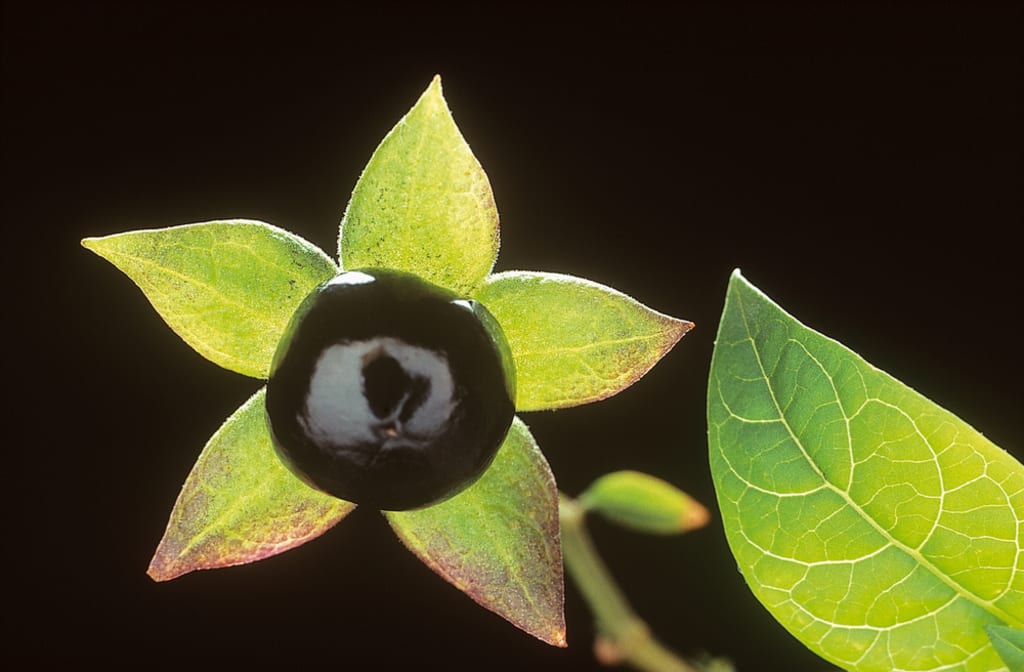
At last the tea was cool enough, and the mother set down her gun to help give it to the child. The father’s attention briefly turned as well, and Leah took the opportunity to open the locket, dump its contents into the beans. A ground powder fell out, the root from a green plant with black berries. The substance vanished into the boiling beans.
The child took his medicine without fuss, and shortly fell asleep. The man and woman ate voraciously. The night drew on. Eventually, the man had the presence of mind to fetch Leah’s rifle, and lay it across his lap. Not long after this, he appeared to become drowsy. He slumped his chin into his chest, and shortly began to snore. Beside him, the mother relaxed back on the mattress. Her revolver slipped from her grip and rattled onto the floor as she fell asleep.
Leah sighed in relief. She knew the two of them would not be waking up. Not with such a dose of nightshade, enough to kill several adults. She reclined back on her dirt floor, and regarded the child as he slept, pondering his fate. There was still a chance that he would survive, and she hoped he would. She didn’t want to have to plant a dogwood for a child, too.
About the Creator
Keep reading
More stories from writers in Fiction and other communities.
Trouble at the Tea Leafing Café
The rain had started right around the time that Annie was buttering her second thick slice of homemade toast for breakfast, and hadn’t paused since. Not that anyone could tell. The windows of the café were fogged over, and with every seat filled with happy customers munching on fresh baked pastries or steaming bowls of the delicious soup of the day, it was hardly surprising. Annie looked around the room, finally taking a moment to breathe after the lunch time rush. Her old life already felt like a bad memory, a part of her history, always, but just that. History.
By Hannah Moore4 days ago in Fiction



Comments
There are no comments for this story
Be the first to respond and start the conversation.