
The Spider-Tailed Horned Viper: Nature's Master of Deception
Unravelling the Enigma: The Spider-Tailed Horned Viper's Deceptive Mastery

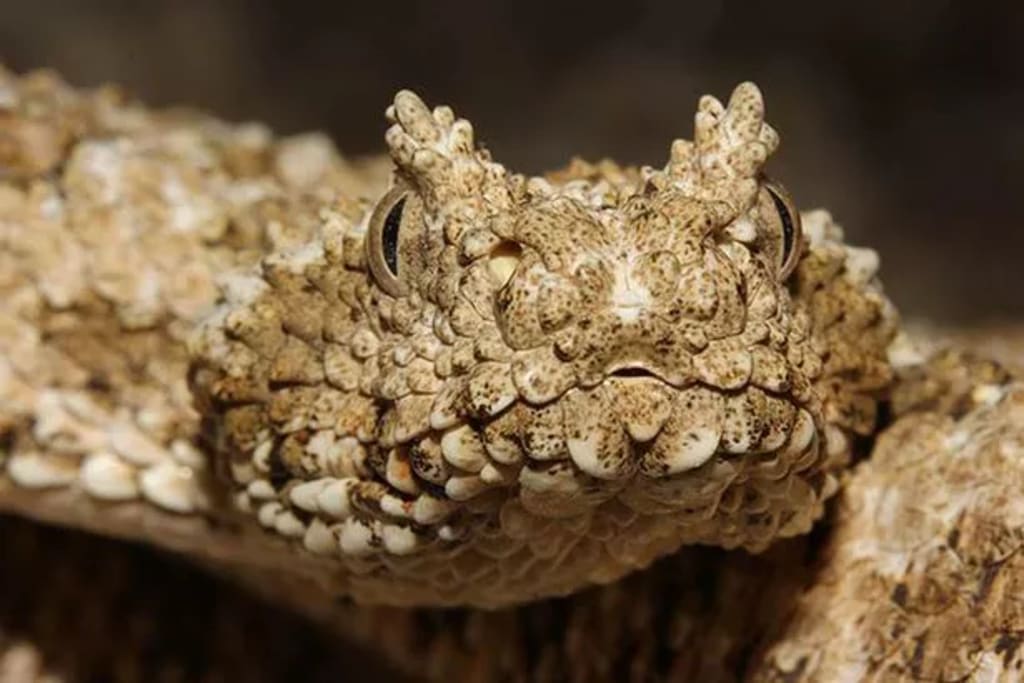
Hey everyone, gather around for a tale of an extraordinary creature from the depths of the animal kingdom! As a ninth-grade biology teacher, I had the chance to explore the wonders of nature with my students. Little did I know that a presentation by one of my students, James, would lead me to discover the enigmatic spider-tailed horned viper – a creature that challenges our perceptions and showcases the marvels of evolution.
The spider-tailed horned viper, or spider viper for short, is an elusive snake found in the rugged landscapes of Western Iran. Its existence remained unknown to science until 1968 when the first specimen was discovered. Initially, scientists believed it belonged to the pseudocerastes genus, which includes venomous vipers like the Persian and field horned vipers. However, upon closer examination, they realised that this serpent had something unique hidden within its tail.
Before we dive deeper into the mysteries of this enigmatic creature, let's explore the scientific names associated with it. The genus name, pseudocerastes, is derived from Latin words meaning "fake sham." The word cerastes, on the other hand, refers to "having horns." In Greek mythology, cerastes represented a serpent beast with no spine but possessing two horns. Interestingly, the cerastes vipers have what we call "false horns" – little protrusions formed from multiple scales. These false horns are a curious characteristic of this group of vipers.
The first specimen of the spider-tailed horned viper was found with an intriguing growth at the end of its tail. At first, scientists mistook it for a solifuge, a type of arachnid. However, upon closer examination, they discovered that this was no ordinary growth – it was an ingenious caudal lure. A caudal lure is a specialised appendage used by some animals to mimic the appearance and movements of prey, luring unsuspecting victims into their grasp.
The mystery surrounding this peculiar viper puzzled researchers for over four decades until 2003, when another specimen was found with the same tail growth. The evidence was mounting, and scientists were becoming increasingly convinced that they were dealing with a new and unique species.
In 2006, after meticulous observation and study, the spider-tailed horned viper was finally given its own scientific name – pseudocerastes urarachnoides. With this new discovery, the snake entered the scientific spotlight, fascinating experts and enthusiasts alike.
So, how does the spider viper's caudal lure work? At the end of its tail, the viper possesses a brightly coloured bulb surrounded by elongated scales resembling spider legs. In 2008, scientists conducted experiments in a lab setting to observe the snake's behaviour. When introduced to an environment that mimicked its natural habitat, the viper used its caudal lure to mimic the movements of a spider or insect. The deception was so convincing that it successfully lured potential prey into striking range. This remarkable display of mimicry demonstrated the viper's exceptional ability to adapt and survive in its challenging environment.
In 2015, a team of researchers embarked on a daring adventure to study the spider vipers in their natural habitat. For over two years, they tracked and recorded the behaviour of these elusive creatures. The study confirmed that the caudal lure was indeed a successful tool for hunting, highlighting the snake's extraordinary capacity for deception and survival.
The spider-tailed horned viper is a testament to nature's ingenuity and the wonders that await exploration in the animal kingdom. It reminds us that appearances can be deceiving, and some creatures have evolved remarkable adaptations to thrive in their environments.
Before I conclude, I want to take a moment to send a heartfelt message to my former student, James. Thank you for introducing me to this incredible creature and for sparking my curiosity about the hidden treasures of the natural world. I hope you are doing well, and I miss your inquisitive spirit and unique questions.
In a world where we are constantly learning and evolving, the spider-tailed horned viper serves as a reminder of the many wonders waiting to be discovered. So, whether you are exploring biology, admiring nature's beauty, or wearing your favourite jersey, always keep an open mind and a curious heart. For there is a world of extraordinary discoveries just waiting to be unveiled.
About the Creator
Rohit Singh
Software developer, part-time content creator, and tech enthusiast.
Unleashing creativity and embracing tech. Join me on this thrilling journey! 🚀
Keep reading
More stories from Rohit Singh and writers in Fiction and other communities.
The Enigmatic Creatures of the Past - Unravelling the Mysteries of Earth's Ancient Fauna
A Journey into the World of Ancient Animals Mother Nature's Eclectic Creations In the annals of Earth's history, there exists a time when the creatures that roamed the planet were so bizarre and extraordinary that they seem like the product of a wild acid trip. Some 500 million years ago, during the Cambrian period, scientists were baffled by the fossils they unearthed, struggling to make sense of the enigmatic beings that once inhabited our world. With each discovery, the mysteries of these ancient animals deepened, revealing a fascinating and diverse array of life forms that defy conventional classification.
By Rohit Singh3 years ago in Fiction
The Cat in the Box
The humans have a story about one of us. How do I know this? It's because they talk among themselves while they take care of us each day. Sometimes they'll even listen to things through these little white button-like objects they place in their ears. Occasionally they'll take these out and share with each other things that they find fascinating. One of the things I've overheard them talking about is the cat in the box. They never agree about what happened to this cat, which shows just how carefully they were listening.
By Special Little Whiskers Kitten Sanctuary6 days ago in Fiction
Thief In The Night
To the thief in the night that took and replicated what once was mine: Honestly, I feel kind of bad for you. It’s funny, because we hardly know each other. I only know of you through the magazines you’ve written and the broadcasts you have televised in the past — as well as through the public mentions of you from your show business connections there.
By Snarky Lisa7 days ago in Humans


Comments
There are no comments for this story
Be the first to respond and start the conversation.