

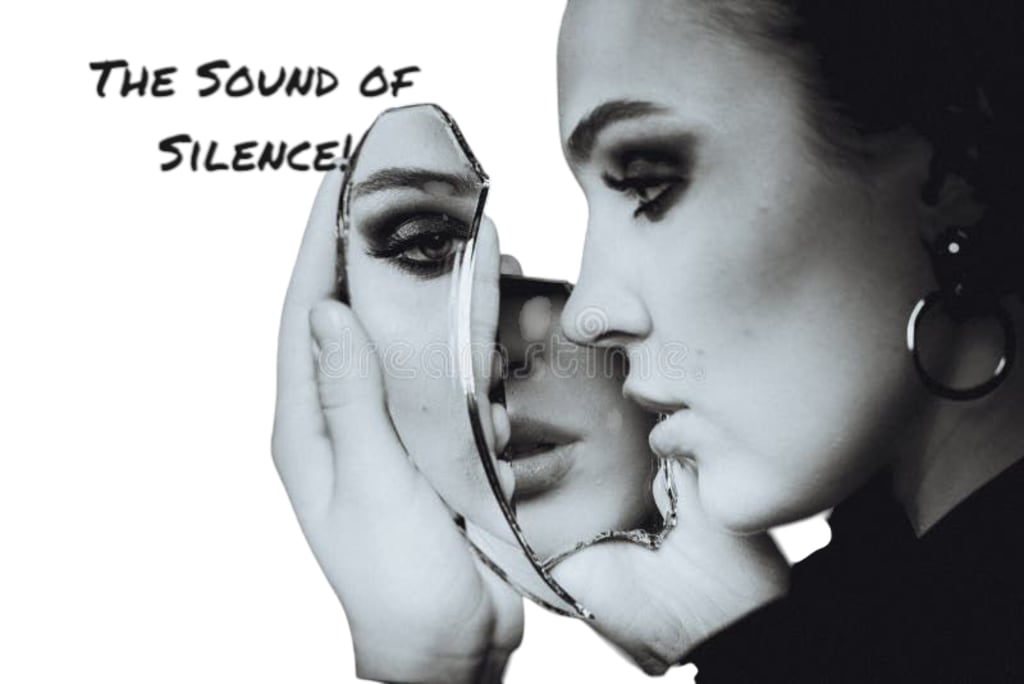
It started with the ticking.
At first, Eleanor thought it was the old clock in the hallway—a faint, rhythmic tick that punctuated the silence of her apartment. But the clock had been broken for months, ever since she knocked it off the wall during one of her cleaning frenzies. Still, the sound persisted, steady and maddening.
Tick.
She paused in the kitchen, hand hovering over the kettle. Her eyes darted to the walls, then the floor. Nothing. Just her imagination, surely. Maybe it was stress. Work had been brutal lately—tight deadlines, a boss who breathed down her neck like a predator. But even when she took time off, the ticking followed.
It was inside her head.
Between tasks she scoured late-night forums for others who heard phantom clocks, but every thread dissolved into arguments about tinnitus, metaphysics, and ghosts. None described a sound that felt intelligent, a sound that listened back. She felt profoundly alone.
Tick.
She started avoiding mirrors. Every time she looked, her reflection seemed just slightly off: a flicker too slow, a smile too strained. Once, she swore the reflection blinked when she hadn’t. She laughed it off—nervous, forced—but after that she began turning mirrors to face the walls.
It didn’t help.
The ticking grew louder.
Desperate for answers, she booked extra sessions with her therapist, Dr. Klein. He called it “heightened awareness,” a benign-sounding phrase for a mind on the edge of rupture. “The brain seeks patterns, even in silence,” he explained. “What you’re hearing isn’t real. It’s your mind filling the void.”
“But it feels real,” she whispered.
He nodded, scribbling something in his notebook. She watched his pen move—too quickly, as though racing to record a secret before it vanished. Why had he never shown her what he wrote?
Tick.
At night, the sound transformed. It became a voice, soft and unfamiliar, repeating her name over and over like a lullaby from hell. “E-le-a-nor… E-le-a-nor…” It spoke in the spaces between heartbeats, in the hush between breaths.
She left the television on, then the radio, even the hairdryer once, just to drown it out. But the voice grew clever. It waited. It knew when she was most vulnerable.
By the second month, she stopped going out. The world was too bright, too loud, too fake. People looked at her too long, or not at all. She didn’t trust their eyes. They didn’t see her—they saw a shell, a well-dressed woman going through the motions. No one noticed the tremble in her hands, the tightness in her jaw.
Except the voice.
“You see it now, don’t you?” it hissed one night, coiling in her mind like smoke. “None of this is real.”
She tried to silence it with pills, with sleep, with screams into pillows. But the more she fought it, the more it embedded itself. It spoke of forgotten things, childhood fears, people she hadn’t thought about in years. It remembered details she had never shared.
Tick.
She found herself standing in front of the bathroom mirror—the one she’d draped with a towel weeks ago. Her hand trembled as she pulled the fabric away.
Her reflection was waiting.
It smiled.
Eleanor didn’t.
She stared into its eyes—her eyes—and saw something looking back that wasn’t quite her. It wore her face like a mask, but beneath it… something ancient stirred.
“Who are you?” she asked.
The reflection tilted its head. “I’ve always been here,” it replied. “You’re just now listening.”
The ticking stopped.
Outside, the city hummed with ordinary life, oblivious. Inside the apartment, in the sudden hush, Eleanor smiled.
But only in the mirro
About the Creator
Wajid Ali
"I'm Wajid Ali—a storyteller drawn to emotion, mystery, and the human experience. I write to connect, inspire, and make you feel something real with every word."
Miss Persephone's Manual to a Seemingly Ordinary Life
Miss Persephone was found at the dining table, her blue eyes swollen, her tears arriving and retreating like the tides of the ocean. Earlier that day, her family had visited her in the retirement home where she had lived for eight years. It was her eightieth birthday.
By Imola Tóth5 days ago in Fiction




Comments
There are no comments for this story
Be the first to respond and start the conversation.