
The Small Cat Who Waited
She Waited by the Door Long After He Was Gone

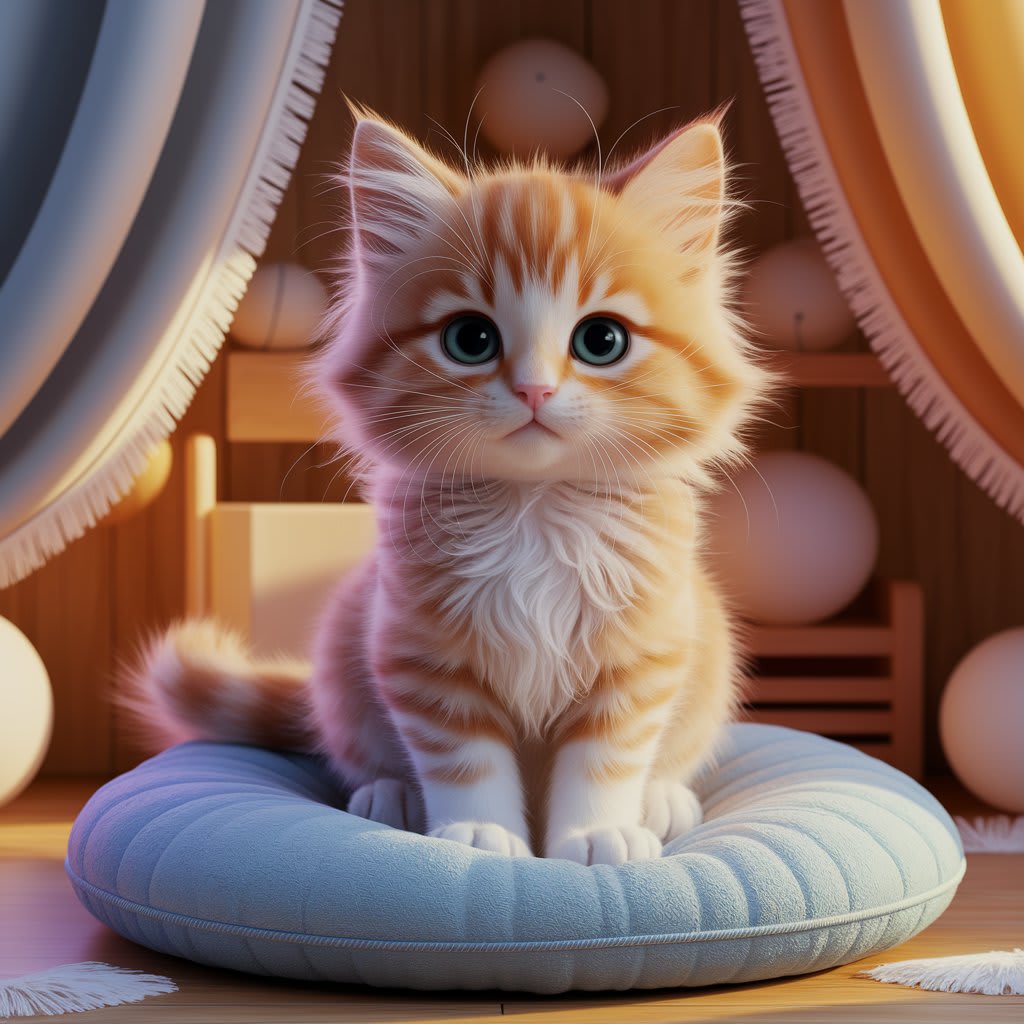
The old house stood quietly at the edge of the village, its shutters gently creaking in the breeze and its garden overgrown with thistle and thyme. Moss curled around the stones of the porch steps, and the wooden front door sagged slightly on its hinges. But none of this mattered to the small cat who sat just outside that door, still as a shadow, eyes fixed on the horizon.
Her name had once been Miro. He had given it to her.
She was no longer sure how long she had waited. Days had folded into seasons, and seasons into years, and still she kept her vigil—small and silver-grey, with a white patch over her heart and a tail like a question mark.
She had come to him as a kitten, thin and trembling in the rain. He found her under his porch one October morning, his boots splashing through puddles as he bent down and held out a gloved hand. “Well, hello there,” he’d said, smiling gently. “You’ve got brave eyes.”
She remembered his scent—cedarwood and ink—and the way he whistled while making tea. He was a quiet man, living alone in that old house after the war took both his brothers. He wrote books that few read and mailed letters no one answered. But he made a place for her, warm and soft, beside the fire and near the window.
He called her his “little listener.” She would curl beside his feet as he typed, sometimes on his lap, soaking in the rhythm of the keys. And every evening, he would say, “Be good, Miro. I’ll be right back,” before stepping out the door for a walk. He always came back. Always.
Until the day he didn’t.
That day, there was no return. No boots on the steps. No hand turning the key.
It had rained that morning. He had buttoned his coat slowly, stared at the sky with a weariness in his bones. “Only a short walk, Miro,” he promised. “Wait for me.”
And she did.
The sun fell. The moon rose. The shadows stretched long and cold. But Miro didn’t leave her spot. She stayed by the door, ears perked at every creak, tail flicking at every breeze.
The neighbors came eventually. They called out his name. Knocked. Then opened the door and stepped in. Miro hissed from her corner.
They murmured words—missing, elderly, search party, perhaps he wandered too far. A week passed. Then two. Then the house was sealed and silent again, save for the quiet rustle of a small cat by the door.
Others might have forgotten. But Miro remembered.
Every day, she sat.
In snow, she curled up tightly, a grey pebble half-buried in white. In summer, she shaded herself beneath the old flower pots. When it rained, she sat under the wooden awning, watching the droplets fall like beads of time.
She accepted food from kind strangers. A boy from down the road left bowls of milk and bits of meat. She never went far, never chased butterflies or climbed trees the way other cats did. Her world had narrowed to one simple task: wait.
Sometimes, she dreamed. In her dreams, he returned. His boots echoed on the stone path, his hands lifted her gently, and he whispered, “There you are, little listener. I knew you’d be waiting.” Then she would purr and press her nose into the warmth of his coat.
But always, she awoke to the same silence.
Years passed.
The house aged. Its paint peeled. Ivy wrapped around its windows. People passed by without noticing the small cat or pausing to wonder what she waited for.
But one day, a little girl with a red scarf paused at the gate.
“Mama,” she said, tugging her mother’s hand. “There’s a kitty there. She’s waiting for someone.”
The mother smiled absently. “She’s just an old stray, sweetheart.”
But the girl frowned. “No. She’s waiting.”
The next day, the girl came back alone. She sat a few feet away and placed a soft red cushion on the ground. “Hi, kitty,” she whispered. “My name is Ava.”
Miro blinked slowly. The girl had kind eyes.
“I don’t want to bother you. I just thought you might like some company.”
Ava came back again. And again. Sometimes with food, sometimes just a book she would read aloud, her voice lilting like birdsong.
Miro never moved from her spot by the door, but she began to purr again.
Winter returned. A harsh one. Snow swallowed the garden. The girl didn’t come for days.
One morning, the door creaked open.
It wasn’t him. Miro knew that instantly.
It was Ava.
She stepped inside the house, brushing dust from the windowsill, laying down a blanket and a bowl.
“I asked Mama,” she said softly. “And she said I can take care of you. You don’t have to wait outside anymore.”
Miro looked back at the doorway one last time.
The wind whistled, carrying the smell of rain and memory.
And then, with a soft stretch of her limbs, the small cat rose and stepped inside—for the first time in years—quiet and slow, like turning the last page of a long, long story.
About the Creator
Miss Persephone's Manual to a Seemingly Ordinary Life
Miss Persephone was found at the dining table, her blue eyes swollen, her tears arriving and retreating like the tides of the ocean. Earlier that day, her family had visited her in the retirement home where she had lived for eight years. It was her eightieth birthday.
By Imola Tóth6 days ago in Fiction
My New Book is Finally Here
My poetry collection Beautiful and Brutal Things is done. It's actually done and finally published over 270 pages. Over a year of my life went into this book. More than a year, really. Long days at my computer, sometimes seven days a week because I couldn't stop even when I probably should have. Then two months of editing that felt harder than the writing itself. But it's finished, and I'm still standing, and the book is real.
By Tim Carmichael4 days ago in BookClub



Comments
There are no comments for this story
Be the first to respond and start the conversation.