
The Simulation Hypothesis: Is Our Reality Just a Digital Illusion?
Maybe
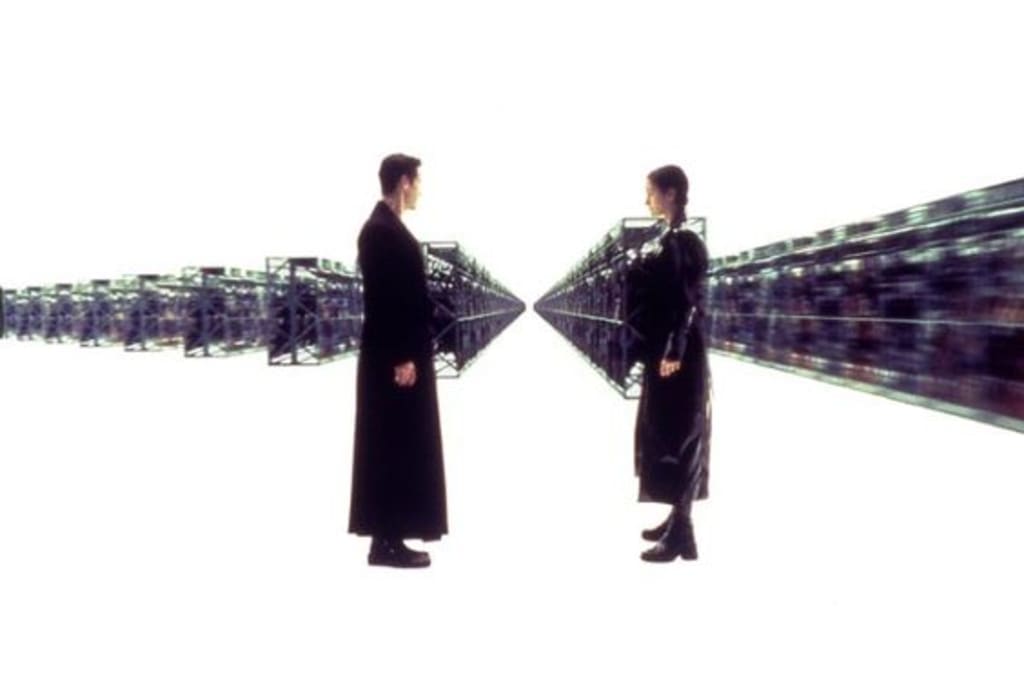
The simulation hypothesis is the idea that our reality is nothing more than a computer simulation. This theory has gained a lot of attention in recent years, with some prominent scientists and philosophers discussing its potential validity. While the idea may seem like science fiction, there are several arguments and pieces of evidence that suggest it's a possibility worth considering.
One of the main arguments for the simulation hypothesis is the rapid advancement of technology. We are already creating virtual worlds that are becoming more and more indistinguishable from reality. It's not difficult to imagine that in the future, we will be able to create simulations that are so advanced, they are almost indistinguishable from reality itself. If this is the case, it's not a stretch to think that an advanced civilization could have already created such a simulation and that we could be living in it.
Another argument for the simulation hypothesis is the idea that the universe operates according to mathematical laws. Many scientists have noted that the universe seems to be "designed" with a specific set of rules and constants that allow it to function. This has led some to suggest that the universe is actually a computer program, with the laws of physics and mathematics being the code that governs it.
One of the most compelling arguments for the simulation hypothesis is the idea that we have not yet discovered any evidence of an underlying "reality." In other words, everything we know about the universe could be a product of the simulation itself. This would mean that all of the scientific discoveries we have made so far are simply part of the simulation's programming, and that we have no way of knowing what lies beyond it.
There are also several pieces of evidence that suggest the simulation hypothesis is a possibility. For example, some scientists have noted that the universe appears to be made up of "pixels" or indivisible units of space and time. This is similar to the way that computer screens display images, which are made up of pixels. Additionally, some scientists have noted that the laws of physics appear to be "quantized," or discrete, which is consistent with the idea of a simulated reality.
Of course, there are also many arguments against the simulation hypothesis. One of the most compelling is the idea that it's impossible to simulate consciousness. While we may be able to create simulations of physical objects and environments, it's unclear whether we could ever create a simulation of something as complex as human consciousness. Additionally, the simulation hypothesis raises many questions about the nature of the universe and the purpose of our existence. If we are living in a simulation, who created it, and why?
Ultimately, the question of whether the world is a simulation is still a matter of debate and speculation. While there are many arguments and pieces of evidence that suggest it's a possibility, there are also many unknowns and uncertainties. However, the simulation hypothesis is a fascinating idea that challenges our understanding of reality and raises important questions about the nature of the universe. As technology continues to advance, it's possible that we may one day discover evidence that supports or disproves the theory, but for now, it remains an intriguing possibility.
About the Creator
Keep reading
More stories from Mustafa Bozbas and writers in Fiction and other communities.
Miss Persephone's Manual to a Seemingly Ordinary Life
Miss Persephone was found at the dining table, her blue eyes swollen, her tears arriving and retreating like the tides of the ocean. Earlier that day, her family had visited her in the retirement home where she had lived for eight years. It was her eightieth birthday.
By Imola Tótha day ago in Fiction
The Lunar Lord
There is a story that has been passed down from generation to generation amongst the zuxia. This story tells of a lord that was said to be the God of the lunar. This God, however, was not like the other Seven Gods. It was believed that he was the very same God that fell into the world and shattered it. This God is known to be the very father of corruption itself so the story is not often spoken about, however, whispers still get around that this Lord of the moon is still worshipped till this day.
By Kelly Johnson5 days ago in Fiction



Comments
There are no comments for this story
Be the first to respond and start the conversation.