
The Silver Screen and Beyond: How the Film Industry Shapes Our Society
From entertainment to influence, cinema’s role in molding culture, values, and everyday life.

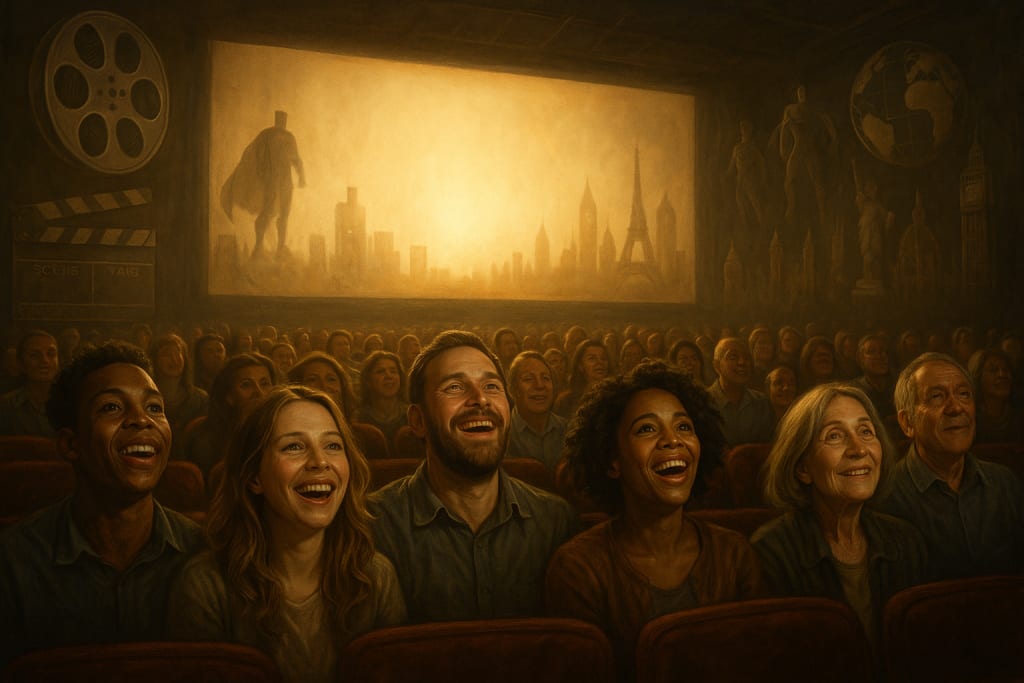
The Silver Screen and Beyond: How the Film Industry Shapes Our Society
From entertainment to influence, cinema’s role in molding culture, values, and everyday life.
When the lights dim and the screen comes alive, we don’t just watch a story unfold — we immerse ourselves in a reflection of humanity. The film industry, born out of creativity and technology, has evolved into more than just an entertainment powerhouse. Movies shape how we think, how we feel, and even how we live. From the golden age of Hollywood to today’s global streaming platforms, cinema remains one of the most influential cultural forces in the modern world.
This article explores how the film industry affects our society — not just as a provider of stories but as a driver of cultural trends, economic growth, technological innovation, and social transformation.
Storytelling as a Mirror and a Map
Cinema is often called a “mirror to society.” Films reflect the struggles, hopes, and dreams of the times in which they are made. For example, post-war films often dealt with trauma, resilience, and the longing for peace. In contrast, modern superhero blockbusters reflect our fascination with strength, justice, and the fight against overwhelming odds.
But film is more than just a mirror — it is also a map. Movies guide us toward ideals and possibilities. They can challenge stereotypes, highlight marginalized voices, and open conversations that were once taboo. A film like Schindler’s List doesn’t just recount history — it educates generations about human cruelty and compassion. A romantic comedy can influence how we perceive relationships, while a documentary can inspire activism.
Every genre, whether fantasy, drama, or action, contributes to shaping the collective consciousness of society.
Cultural Exchange Without Borders
In the past, films were largely national products, but globalization has turned cinema into a shared cultural experience. Bollywood movies are watched in New York; Hollywood blockbusters are adored in Tokyo; South Korean dramas are celebrated in Europe.
Through film, cultures blend. Fashion, slang, food, and even social customs travel across borders thanks to the screen. Consider how martial arts films introduced Eastern philosophy to Western audiences or how Disney movies carry American values to millions of households worldwide.
This cultural exchange is powerful. It broadens worldviews, fosters empathy, and helps people appreciate diversity. At the same time, it raises concerns about cultural homogenization, where smaller traditions may be overshadowed by dominant industries.
The Economic Powerhouse of Cinema
The film industry is not just a cultural force; it is also an economic one. Globally, it generates billions of dollars each year through box office sales, streaming services, merchandise, and tourism. Major film productions create jobs for actors, directors, crew members, costume designers, set builders, and countless others.
Moreover, film locations often transform into tourist attractions. For example, New Zealand’s landscapes gained international recognition through The Lord of the Rings, boosting the country’s tourism industry. Similarly, Hollywood itself has become both a physical and symbolic center of economic activity tied to film.
Streaming platforms like Netflix, Amazon Prime, and Disney+ have added another layer of economic influence, reshaping consumer behavior and disrupting traditional theater experiences.
Technology and Innovation Driven by Cinema
Movies don’t just tell stories — they drive technological progress. From early black-and-white silent films to today’s 3D, IMAX, and CGI-driven spectacles, the industry constantly pushes the limits of technology.
Advancements in film production often spill into other areas of society. Techniques used in special effects have influenced video games, advertising, and even medical imaging technologies. Virtual reality, once considered futuristic, is now partly fueled by cinematic innovation.
The constant race to create more immersive storytelling experiences shows how deeply film affects our relationship with technology and imagination.
Social Influence and Responsibility
Cinema can change attitudes and inspire social movements. Films highlighting racial injustice, gender inequality, or environmental destruction often spark conversations that lead to real-world action. Movies like Black Panther celebrated African identity and representation, while An Inconvenient Truth raised global awareness about climate change.
At the same time, the film industry has a responsibility. Misrepresentation, stereotyping, or glorification of violence can also negatively affect society. Critics argue that certain movies normalize harmful behaviors or reinforce biased perspectives.
Therefore, filmmakers hold great power — and with it, a duty to create content that not only entertains but also considers its societal impact.
The Emotional Connection
Perhaps the most underrated impact of cinema is its ability to make us feel. A two-hour film can make us laugh, cry, or reflect on life in ways that few other mediums can achieve. This emotional connection is why people bond over movies, quote their favorite lines, and revisit them for comfort.
Cinema gives us shared experiences. A family movie night, a crowded theater cheering for a superhero, or a festival celebrating independent films all create moments of unity in a fragmented world.
The Future of Film in Society
As technology evolves and platforms multiply, the influence of cinema will only deepen. Artificial intelligence, virtual reality, and interactive films are shaping the next era of storytelling. Society, in turn, will continue to evolve alongside these cinematic innovations.
But one thing remains unchanged: our need for stories. From cave paintings to Shakespeare to Hollywood blockbusters, humanity thrives on narratives that make sense of the world. The film industry, with its immense reach, will remain one of the most powerful tools for shaping how we see ourselves and others.
Conclusion: More Than Just Entertainment
The film industry is not just about red carpets, celebrities, or box office numbers. It is a cultural compass, an economic engine, a technological innovator, and a social influencer. Movies are woven into the very fabric of society, reminding us of our humanity while pushing us toward what we might become.
The next time you sit down to watch a film, remember: you are not just being entertained — you are engaging with an art form that has the power to transform individuals and entire societies.
About the Creator
LONE WOLF
STORY
The Inferno Elixir: A Legacy of Blood
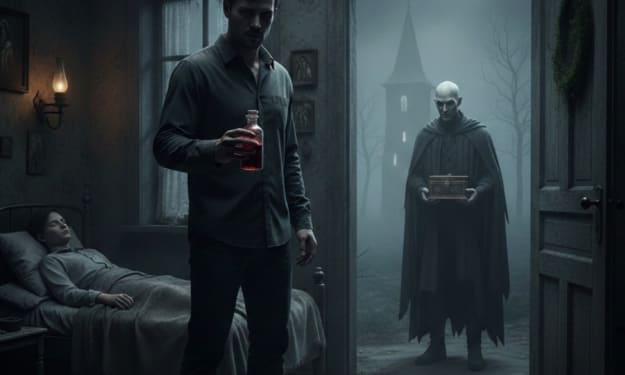
1. The Sinister Stillness of the Village My grandfather had always been an enigmatic man, but in the last three years, his eccentricity had crossed into something far more unsettling. He lived alone in a secluded house far from the city’s clamor, tucked away in a village perpetually choked by mist. We assumed he was merely grieving the loss of my grandmother and his lifelong friend, but his gaze hid something deeper than sorrow—a secret that was slowly devouring his soul. During my last visit, I was struck by the sight of his refrigerator; it was grotesquely overstuffed with heaps of raw meat. He claimed with a cold detachment that it was for the poor, but his face betrayed the lie. Even more disturbing was the reinforced steel door he had installed in the basement, from which a foul stench seeped through the cracks—a smell like a carcass that refused to stay buried. 2. A Descent into the Abyss Late that night, I took advantage of my grandfather’s heavy sleep. With trembling fingers, I pilfered a modern, sophisticated key from his cabinet. I descended the decaying stairs into the basement, my flashlight cutting through the oppressive gloom. The air there didn't just smell of rot; it smelled like a slaughterhouse. Dry bloodstains smeared the walls, and in the corners lay bleached-white human skeletons. I approached the reinforced room and peered through a tiny peephole. The blood froze in my veins. A gaunt creature, its bones protruding obscenely from its skin, stood there. Its hair was so long it trailed behind it like a shroud. It moved on all fours with a demonic fluidity. Suddenly, its eyes—completely white—locked onto the hole. It wasn't looking at me; it was scenting me. 3. The Bitter Truth Before I could flee, I felt the sharp sting of a needle in my neck. The world dissolved into darkness. I awoke inside a hermetically sealed glass chamber. My grandfather stood on the other side of the glass, weeping bitterly as he recounted the catastrophe: > "Three years ago, your grandmother was on the brink of death. A stranger with non-human features knocked on my door and gave me a dark red elixir, claiming it was the salvation. I injected her, but she transformed into this ravenous monster. I killed my oldest friend and fed him to her just to protect her secret. I love her, Alex, and I cannot let you leave to expose the truth of her 'death' to the world." > 4. The Banquet of Blood The glass barrier began to rise slowly, and the monstrosity crouched, ready to pounce. Suddenly, a scream pierced the silence. My younger brother, Thomas, had followed me. With a heavy blow from a sharp tool, he struck our grandfather, sending him sprawling into the room. In a moment of primal madness, the creature lunged at my grandfather, tearing into his flesh with unspeakable ferocity. Thomas and I fled, the screams echoing behind us, until the police arrived and ended the nightmare with a hail of bullets into the body of what was once my grandmother. 5. The Vicious Cycle A year has passed since that night, and I thought I had survived. But fate plays a cruel game. It is now the anniversary of my grandfather’s death, and my brother Thomas is wasting away from a rare, terminal illness. Last night, amidst the darkness, a stranger knocked on my door—matching the exact description my grandfather once gave. He placed a small box in my hand containing a vial of dark red liquid and hissed into my ear: "This is the only cure for your brother." The stranger vanished as if he never existed. I analyzed the liquid in a lab, and the results were bone-chilling: "A substance extracted from an unknown biological entity, non-existent in any natural record." I hold the vial in my hand now, looking at my pale brother, hearing the echo of my grandfather’s voice in my head. Do I repeat the tragedy? Do I begin a new massacre in the name of love? The elixir is before me, and hell is waiting just behind the door. Would you like me to create a "Book Cover" style description for this story, or perhaps suggest a sequel?
By Mayar Younesabout 23 hours ago in Fiction



Comments (1)
Really the film industry is really open impact on our society.