
''The Silence Pact''
“After dark, only silence keeps you safe.”
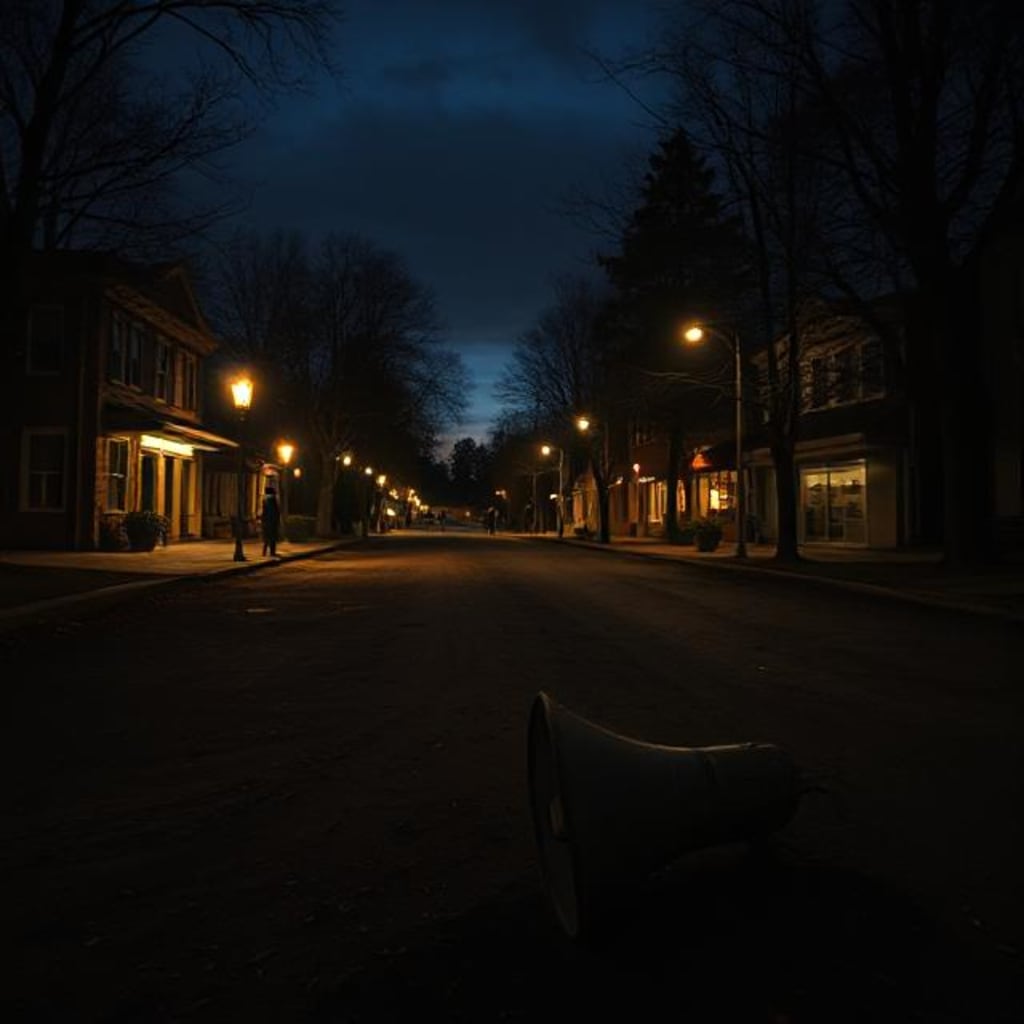
When Clara Bell moved to Merrow’s Hollow, she thought the rumors were just part of the town’s eccentric charm. A place that didn’t allow speaking after dark? Probably some quirky superstition or leftover from a bygone era. The town did feel like it was frozen in time—wooden signs, no cell towers, and clocks that all struck the same soft chime at 7 p.m.
That was when the silence began.
No cars passed. No dogs barked. No voices, no laughter, not even the rustle of wind through leaves.
It was unnatural. Unsettling.
And no one would tell her why.
She had inherited her great-aunt’s house on the edge of town after the woman died suddenly, apparently from a fall down the stairs. Clara had visited once as a child but remembered little—just the scent of lavender and old wood, and how her aunt never let her stay outside after sunset.
Now, thirty-two and recovering from a burnout-inducing tech job, Clara thought a few months in the quiet countryside would be healing. Peaceful.
It was anything but.
The silence was absolute.
At first, she tried to rebel against it. On her third night, after 7 p.m., she turned on the radio.
It crackled.
Then hissed.
Then screamed.
A high-pitched, almost human shriek pierced the room until she ripped the plug from the socket. The air felt heavier afterward, like the room had exhaled something foul.
The next day, no one mentioned it.
She asked the grocer if the radio interference was normal. He smiled politely but avoided her eyes. “Just best not to make noise after dark, Miss Bell. That’s all.”
One evening, curious and fed up, Clara left her house after sunset with a voice recorder in hand. She didn’t speak—just walked, listening. The stillness was unnatural, suffocating. Not even insects hummed.
She clicked the recorder on. It blinked red. Recording.
When she got back home, she played it back.
At first, it was just her own footsteps. Then, about four minutes in, something else emerged:
“Where are you?”
A voice. Raspy, childlike, but not hers.
“Where are you?”
Closer now.
Then the unmistakable sound of breathing. Right next to the microphone.
She dropped the recorder.
The next morning, it was gone.
Her neighbor, an old woman named Mrs. Rowley, finally broke her silence—literally—by whispering during daylight, while watering her garden.
“You shouldn’t have recorded them.”
Clara blinked. “Them?”
Mrs. Rowley didn’t answer right away. She trimmed a rose bush and said softly, “You’re not the first outsider. We try not to talk about it, but someone always gets curious. Always thinks we’re just superstitious.”
“What happens to them?”
Mrs. Rowley met her eyes for the first time. Her pupils were oddly dilated. “They don’t leave. Not all of them, anyway.”
Clara started digging.
Old newspapers. Town records. A library archive older than the building itself.
The Silence Pact was real.
In 1891, a group of settlers arrived in Merrow’s Hollow and found strange stone markers deep in the surrounding woods. Symbols carved into them—language unknown. One night, during a winter storm, three children followed a sound into the forest.
Only one came back.
He was mute.
From then on, every time someone screamed, shouted, or made loud noise after nightfall, people began to vanish. Or return twisted—unable to speak, eyes wide and empty.
The town made a choice.
A pact.
Silence after dark, or they would come again.
Clara didn’t want to believe it.
She refused to.
Until the night she received the call.
Her landline—an old rotary phone that hadn’t worked until now—rang at exactly 2:03 a.m.
Shaking, she picked it up.
A child’s voice: “I found you.”
Click.
Then the scratching started—inside the walls.
She tried to leave the next morning. Packed her bags, started the car. But the road out of town led only back into town. No matter the direction.
She asked the sheriff. He only said, “It’s best not to fight the Hollow.”
That night, she sat in her living room, staring at the old grandfather clock ticking toward 7.
And then, foolishly—out of desperation, defiance, madness—she screamed.
The house fell instantly silent.
Not just quiet.
Dead.
No electricity. No sound. The clocks stopped ticking. Her breath turned to fog, though the air was warm. Her voice was gone—no matter how much she tried to yell, nothing came out.
Then, they appeared.
Figures—childlike but wrong. Elongated limbs, mouths too wide, eyes like polished stone. Crawling from the corners of the room, from the cracks in the walls, from shadows that weren’t there seconds before.
“Found you.”
They whispered in unison.
She doesn’t remember what happened after that.
Now, she tends her garden every morning.
Smiles politely at the grocer.
Avoids eye contact.
At 7 p.m. sharp, she turns off all the lights and sits in her rocking chair, still and silent.
She no longer questions the pact.
Because now, she hears them in her dreams.
And sometimes, when the wind is just right, she can still hear her own voice—screaming in the woods.
The Silence Pact
You can speak in the light.
But in the dark, only silence keeps you safe.
About the Creator
Reader insights
Nice work
Very well written. Keep up the good work!
Top insight
Expert insights and opinions
Arguments were carefully researched and presented
Keep reading
More stories from farooq shah and writers in Fiction and other communities.
Flower Bloom 369
FLOWER Bloom 2/25/26 Wednesday By Mariann Carroll Karen had been with Tony for 7 years. Tony started acting strangely after her surgery. He would mow the lawn in the rain and be on his cellphone. He started pushing Karen away. Tony came clean about seeing someone. Karen moved out two months later. Karen moved in with a friend. She felt betrayed.
By Mariann Carroll3 days ago in Fiction


Comments
There are no comments for this story
Be the first to respond and start the conversation.