
The Silence in the Sound: How AI Vocal Removers Changed Everything
From Basement Demos to Studio Masterpieces, the Unsung Hero of Modern Music Emerged
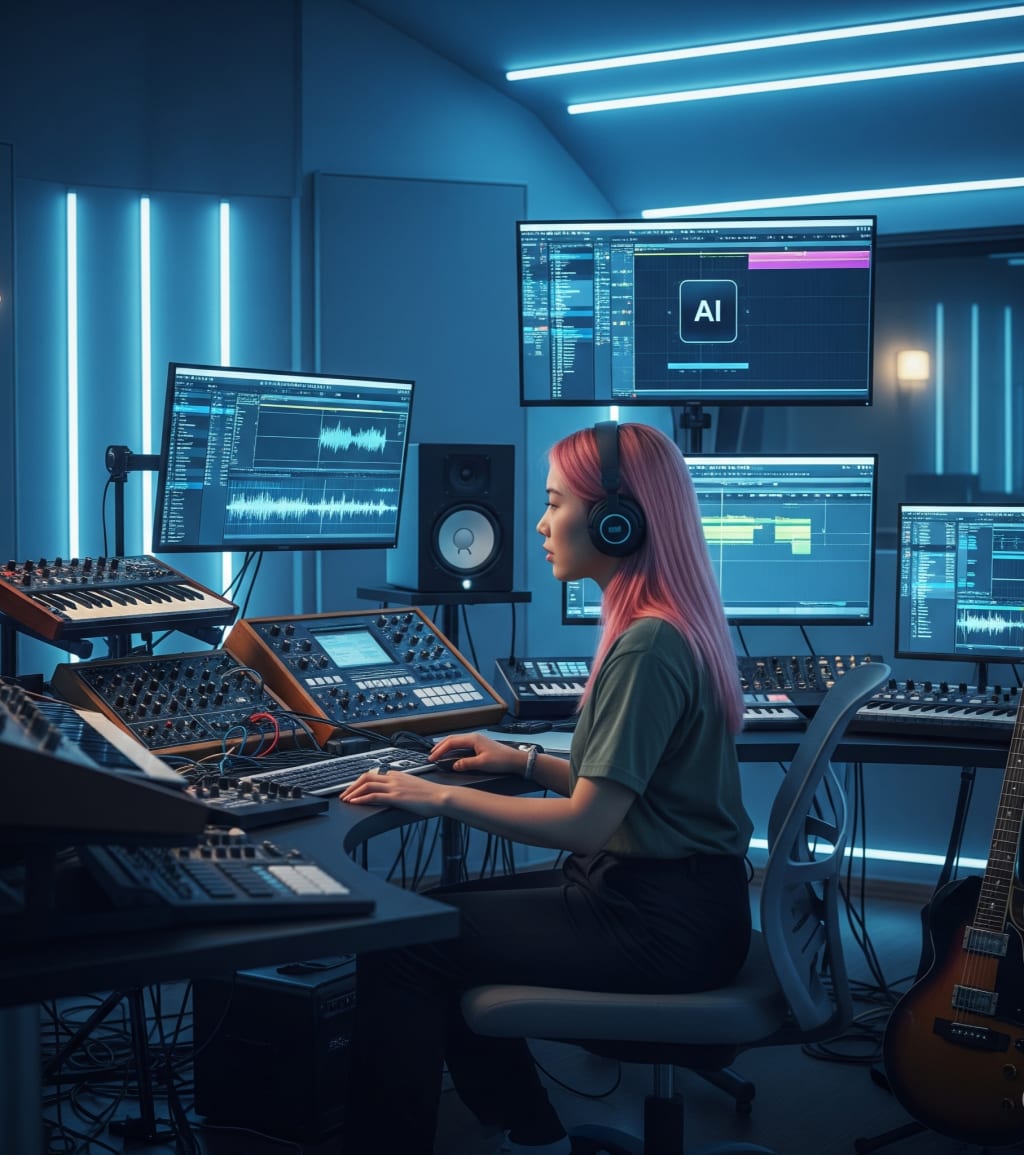
Liam stroked the worn threads along the frayed edges of his loyal old acoustic guitar, a ghost melody in his head. His band, "Echoes of Jupiter," had been the subject of local legend for years, their indie-rock ballads echoing out of dingy clubs and university campuses. But their one big hit, their magnum opus, just wouldn't materialize. The music itself wasn't the problem – their instrumentals were tight, innovative, and full of power. The problem was their lead singer, Marcus.
Marcus's voice, gravel on silk, memorable and distinctive but also reliably explosive. Live, his imperfections were part of the package. In the studio? A nightmare. Every misbegotten breath, every off-key note, every quivering vibrato that had been acceptable in a sweaty club was a screaming mistake under the cold light of professional recording. They'd squandered God knows how many hours, and additional money, trying to fix Marcus's vocals, using every gimmick in the book – punching in lines, tediously tuning out individual notes, even trying to re-record entire passages. It was an agony-to-think process that sucked the fun out of creating.
It was on one particularly infuriating late night in the studio that their exasperated sound engineer, irascible old Mr. Henderson and his perpetually coffee-stained shirts, let out a beseeching "If only we could just. extract the vocals, fix them, and seamlessly stitch them back in." He'd spoken as a rhetorical gesture, but Liam, never to leave a harebrained idea to its own devices, started digging. That's when he stumbled into the beginnings of AI vocal removers.
At first, the technology was clunky. Websites offered “karaoke versions” that sounded like they’d been dragged through a blender, leaving behind ghostly echoes and watery instrumental tracks. But Liam, a self-proclaimed tech nerd, saw the potential. He started experimenting with open-source models, spending sleepless nights poring over academic papers and online forums. His bandmates initially scoffed. “Liam, we’re a rock band, not a science experiment!
Maya, their hot-shot drummer, had vowed, beating time on the couch in the studio.
Then Liam unrolled his first major breakthrough. He had labored over one of their most problematic tunes, an epic ballad named "Cosmic Dust," where Marcus's typically solid vocals had splintered on the chorus. Liam played the tune through his new AI model, messed around with some parameters, then, taking a deep breath, played the result.
Silence. Not absence of sound, but absence of Marcus's imperfect vocal, with a clean instrumental in its place. The band stared at each other in shock, mouths hanging open. Then Liam dropped in a clean, re-recorded, meticulous pitch- and timing-edited vocal of Marcus's. He layered it over the AI-cleaned instrumental. The result was breathtaking. "Cosmic Dust" was no longer a good song; it was a perfect song.
This wasn't a case of replacing human talent, Liam told his awestruck band members. This was a matter of releasing it. Marcus could now focus all his energy on the raw feeling of his performance, confident that any small technical mistakes could be ironed out in the background later on. The stress of perfect performance in the studio was removed, and their imagination could actually work.
The impact was instant. Sessions were no longer takes and retakes ad infinitum but about capturing character of what they did. Marcus, no longer fearing errors, experimented with new tones, pushed his range, and delivered performances that were both authoritative and fragile. The AI never was a crutch but a safety net that gave wings.
Their debut album, "Nebula Dreams," was an overnight sensation. Critics admired the faultless production, the cut-glass clarity of the vocals, and the across-the-board sonics perfection. No one suspected a word of the subtle, digital magic happening behind the scenes. Liam started telling his story, though, on online music production discussion forums. He showed how AI vocal removers that had been gimmicks were becoming big guns capable of eliminating vocals, manipulating them, and replacing them with mind-bending precision.
He spoke of independent artists who, unable to pay for commercial studios and vocal tutors, now were sending home recordings to a pro standard. He explained how producers were using the technology to make perfect remixes, peel out acapellas for club DJs, and even revive dusty old archive recordings whose voice was destroyed by noise. The once specialist software was evening the balance for artists who could no longer compete.
It was on one particular morning that Liam had received an email from one of the world's best record producers, a legend in the industry, who had heard whispers of Liam's forays into AI. He wanted to collaborate on a project – a reissue of a vintage 70s album where the master tapes had been lost, and vocals could hardly be heard. It was a test, one that Liam, now armed with his improved AI models, took on.
He spent weeks slavishly working his way through the original tapes, using his AI to extract the vocals from the crackle and hiss, and then slowly rebuilding the sound note by note, syllable by syllable. When he played the producer, the rough old man famous for his hardness of heart, the cleaned vocals to hear, the old man cried. "It's like they're in the room with us again," he'd whispered, talking of the band long past.
This was the actual revolution. AI voice removers weren't so much about fixing tiny flaws as about saving, retrieving, reviving lost sound. They were about taking the amateur to the next level, making the pro professional. They were about the silence in the sound, the cared-for quiet that allowed the real heart of the music to flow through.
Liam, now a very popular music industry consultant, still dabbled. He dreamed of a world where AI was no longer a band-aid but rather a artistic partner, a tool that could offer harmonies, construct virtual singers to experiment with, or just interpret the subtleties of lyrics from one language into another. The possibilities were endless, all stemming from that initial desperate search for a solution for Marcus's vocal breaks. While "Echoes of Jupiter" made their rounds around sold-out stadiums, their sound now a byword for perfection, Liam would close his eyes and just listen. He would listen to soaring melodies, booming rhythms, and Marcus's booming, deftly etched voice. And between the notes, in the silence, he listened to the silence revolution that had created it – the digital ghost within the machine, the unsung hero of modern music, the AI vocal eliminator.
It was a witness to the extent to which human ingenuity, when married with technological advancement, could actually change the way we make, listen to, and understand the universal language of sound.
About the Creator
I Learned Too Late That Love Needs Translation
Not the kind you can fix with dictionaries or subtitles. Ours was deeper than that. It lived in tone, timing, and the spaces between words. I didn’t realize it at first. Love, in the beginning, feels universal. You assume feeling is enough.
By Salman Writes6 days ago in Fiction


Comments
There are no comments for this story
Be the first to respond and start the conversation.