
The Shape of a Broken Heart
Definition of dystopia: a society characterized by human misery, as squalor, oppression, disease, and overcrowding. What if an entire society didn’t realize they were already living in it?
The Shape of a Broken Heart
By Charissa Darland
Definition of dystopia: a society characterized by human misery, as squalor, oppression, disease, and overcrowding.
What if an entire society didn’t realize they were already living in it?
“I just started my period…”
I thought the world had stopped before, but I was wrong. The world stopped at those words. My heart sank, and the rest of me onto the couch with it. My right hand clung to the phone while my left hand dug into the soft upholstery, hoping to siphon some of its comfort into my own soul. I would need all the comfort and strength I could muster for this conversation-- for her. Not this month. Not again.
After all we had been through this past year. “Oh hon…” I started, unsure of what to say. What could I say? “I’m so sorry,” I finally decided.
Though I couldn’t see her, I could feel my best friend shrug on the other line. “I was so sure this month. My numbers were good-- great, even. Something just seemed… different.”
I sat quietly, letting her continue; my left hand still clutching the sofa. There’s been a lot of different lately. A year ago, we would never have imagined this kind of normal: the two of us, in our separate homes, on our couches.
“I was even three days late-- I’m NEVER late!” she asserted.
“You are the most punctual person I’ve ever met,” I joked, trying to add some levity to the moment, however inappropriate it might be. I cringed as I said it. Why am I trying to joke at a time like this? I wasn’t wrong, though. Even during “the Crises”, my friend kept everything together—kept everyone together. Why couldn’t the universe just give her this?
“I guess if I never have kids, I can save a bunch of money and spend it traveling…” she let her sentence trail.
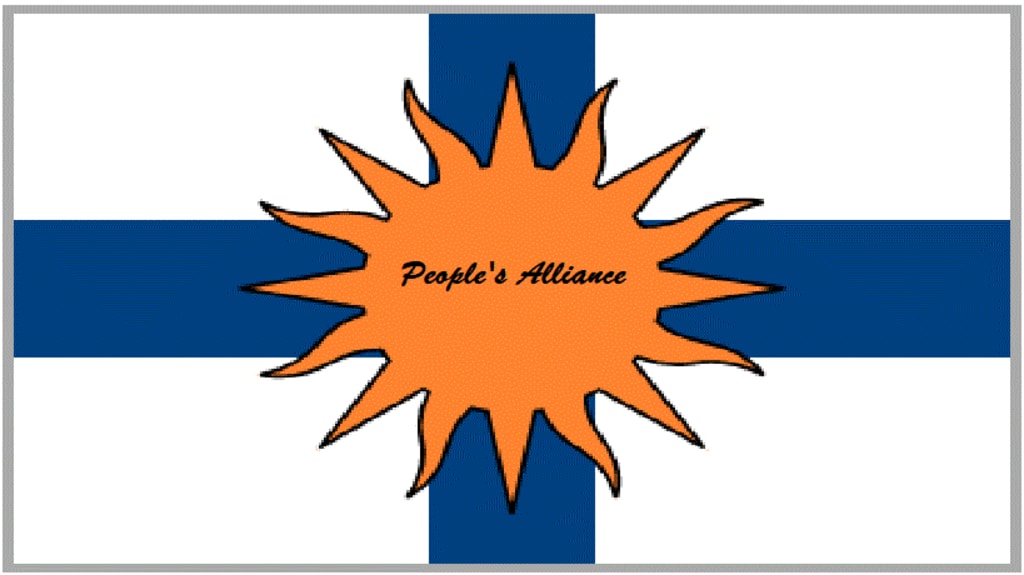
A smirk came across my face. “There’s nowhere left to travel to,” I reminded her. “And you’re a schoolteacher—even before, you’d never be rich enough to save money,” I joked again. Silence followed my jest. I closed my eyes tight, embarrassed at my flippancy. This wasn’t helping. I held my breath and counted. 20 seconds more of a lull in conversation. I thought upon all we had been through the last 365 days. The bombings. The raids. Being separated, sold, and then freed by the People’s Alliance, with their promises of returning everything to a “new normal”. They had, to an extent, kept that promise. We were back home. Last night I took a bath for the first time in a year with warm, running water. People were returning to work, factories were being rebuilt; and now on the one year anniversary of the Crises I was talking to my best friend on own my phone, on my own couch. After rising above a global catastrophe, why couldn’t I rise to this moment? Could you lose 20 years of friendship in 20 seconds?
“Rebekah?” I reached out in earnest. There was no answer. Was she lost in her thoughts, as I was lost in mine? Why would I say those things, at a time like this? Did I just not know what to say?
No… that wasn’t it. I actually knew EXACTLY what to say. So why didn’t I say it? Why couldn’t I say it?
“Maybe I just wasn’t meant to be a mom,” she pondered aloud, her voice finally breaking the silence.
“You know that’s not true.” I said with conviction. “You would be a great mom. You WILL be a great mom.” But even as the words came out, I knew they sounded empty to her. My fingers finally left the couch and found their way up by my neck. Without thinking they wrapped themselves around the one thing I had managed to keep with me this past year—my heart shaped locket. This was my secret: I understood. Every pain she was going through I had felt before; every tear she that was shed by her was once shed my me—was STILL shed by me. A global catastrophe was… catastrophic-- but a personal one was devastating. I was one who understood. Why couldn’t I tell her that?
My eyes closed again with the memories from before the Crises I had tried so hard to repress: me, sitting on the toilet; the stick turning pink; the intense fear, but also excitement and sense of purpose I felt then, only to start my period a week later. A “chemical pregnancy”, they called it. An extremely early miscarriage. I had lost two babies this way.
“Should I come in?” I asked a nurse in the OBGYN office, back when there was such a thing.
“Not unless it doesn’t pass,” she answered rather dismissively. “You can take over the counter pain meds until it does if needed.”
“Pass?” Why did she use language like this? Like this baby was a kidney stone my body wanted to get rid of. The guilt started to creep in. Was this something I had done? Did I bend over too many times? Lift something too heavy? Cognitively I knew it was just the luck of the draw, but emotionally I felt the weight of it all. Even though this baby had just started, it was my job to grow its body and I failed. I failed my child. I started to cry thinking about my body expunging the single most important thing that would ever have happened to me.
“You can try again,” the nurse’s haughty voice came back to haunt me. “Chemical pregnancies are very common. Most people don’t even know they were pregnant, unless they took an early results test. Maybe next time you should wait until the week after your missed period. Then you would never know…” I was too caught off guard by her lack of empathy to respond. I just remembered thinking about all the really amazing nurses I had known over the years—why was it my luck to have gotten this one?
And so it began. I no longer needed to blame myself—it seemed as if anyone I told did that for me. Why did I take a test that early? Why would you want to have a baby when you and the baby’s father aren’t even together? And the “at leasts”: At least it happened right away and not at 6 or 8 weeks. At least you don’t have to bury the child. At least you didn’t buy anything that would just be a reminder of the baby that would never be.
And after a year of surviving the literal end of the world, I understand what they mean. Or rather, I understand THAT they mean it—but why do we do that? Why do we rank the tragedies of those around us, as if one cancelled out the other? I am incredibly grateful that I didn’t have to bury a child in an unmarked grave as so many had this past year. But I also never heard my child’s heartbeat. I never saw them—will never have a picture of them—not even via ultrasound. I will never even know if the child I carried was a girl or a boy. I had no memorial to plant flowers at. I didn’t even have people who acknowledged my loss. All I had was a bottle of Tylenol as I waited for my baby to “pass”, only to be flushed down the toilet when it finally did-- like it were a fish. Or a kidney stone. I could not imagine the tragedy of “those who had it worse”--but it would be nice if they could try to imagine mine.
As the years passed the “at leasts” turned into unsolicited solutions. “There’s in-vitro,” someone would say. I worked at a grocery market-- I couldn’t afford a $20,000 fertility treatment. “You could start a go fund me!” they would respond. No one is going to give me $20,000. “There’s always adoption,” another would conclude. What agency is going to give a single woman making minimum wage a child? “Well, if you want it hard enough, you’ll make it work,” the others decided.
Where were the real solutions? Even before the Crises, our society made no sense. I believed in being able to plan your own family, but I also found it hypocritical that if I wanted to stop having children, my insurance would pay for that procedure. If I wanted to prevent getting pregnant, my insurance would cover the meds at 100%. But when my body doesn’t work enough to create or carry those children, I am left with an impossible $20,000 bill to pay, or I don’t “want it hard enough”? Only the rich could have IVF. Only the well off could adopt. Only the privileged could have children if your body was made like mine. People live for their children. People DIE for their children. And the possibility of their existence was denied to me because I didn’t have money. And now, with my age and the state of the world, it was too late.
My eyes opened and brought my mind back to the present—my fingers still wrapped around the heart shaped locket. I open it—it is empty. No pictures, no memories of the little ones who will never be. In fact, I often pretend the locket is in a shape of a broken heart, although I’m not quite sure what that would look like. Sometimes it’s the little feet that never formed. Sometimes it’s the names I never gave them. But mostly, it’s the emptiness I feel and the inability to share that with those closest to me, even after the past year. Perhaps that’s how I contribute to this dystopia: I have all of the understanding, all of the survival, but none of the words needed to break free.
“You were meant to be a mom,” I told Rebekah with more conviction. I was meant to be a mom.
I hear Rebekah sigh on the other end. “Okay, well, I’ll let you go. Just wanted to share that I’m going to be childless my entire life.”
I smirk again-- this time out not out of amusement, but of sadness. I cling onto the locket, hoping that one day future generations will not have to feel the pain we feel. Future generations… that will not come from me.
About the Creator
Keep reading
More stories from writers in Fiction and other communities.
🅼🅸🅳🅽🅸🅶🅷🆃 🆂🅽🅰🅲🅺🆂
"It's 10 in Tuscon! We all know what that means... It's Time for Midnight Snacks with your man, Gerald Gee! Ready to spend the night together? Me too! I'm full of snacks and can't wait to regurgitate them all back into your hungry ears. Crack a brew! Pop some corn! Anything to get ready for one hell of a show where the talk maybe cheap but the words cut deep...
By Lamar Wiggins6 days ago in Fiction
The Lone Mouse
A lone mouse scurries through a vast, desolate desert landscape under an awakening twilight sky. The sand dunes are sculpted by wind into abstract, flowing forms. In the distance, the silhouette of a broken, geometric structure hints at an ancient civilization. There is a dramatic contrast of chiaroscuro lighting, emphasizing deep shadows and stark highlights... a highly detailed concept art style.
By Novel Allen6 days ago in Fiction


Comments
There are no comments for this story
Be the first to respond and start the conversation.