
The Seat He Left Empty
A quiet bus ride, an invisible passenger, and the truth we notice too late
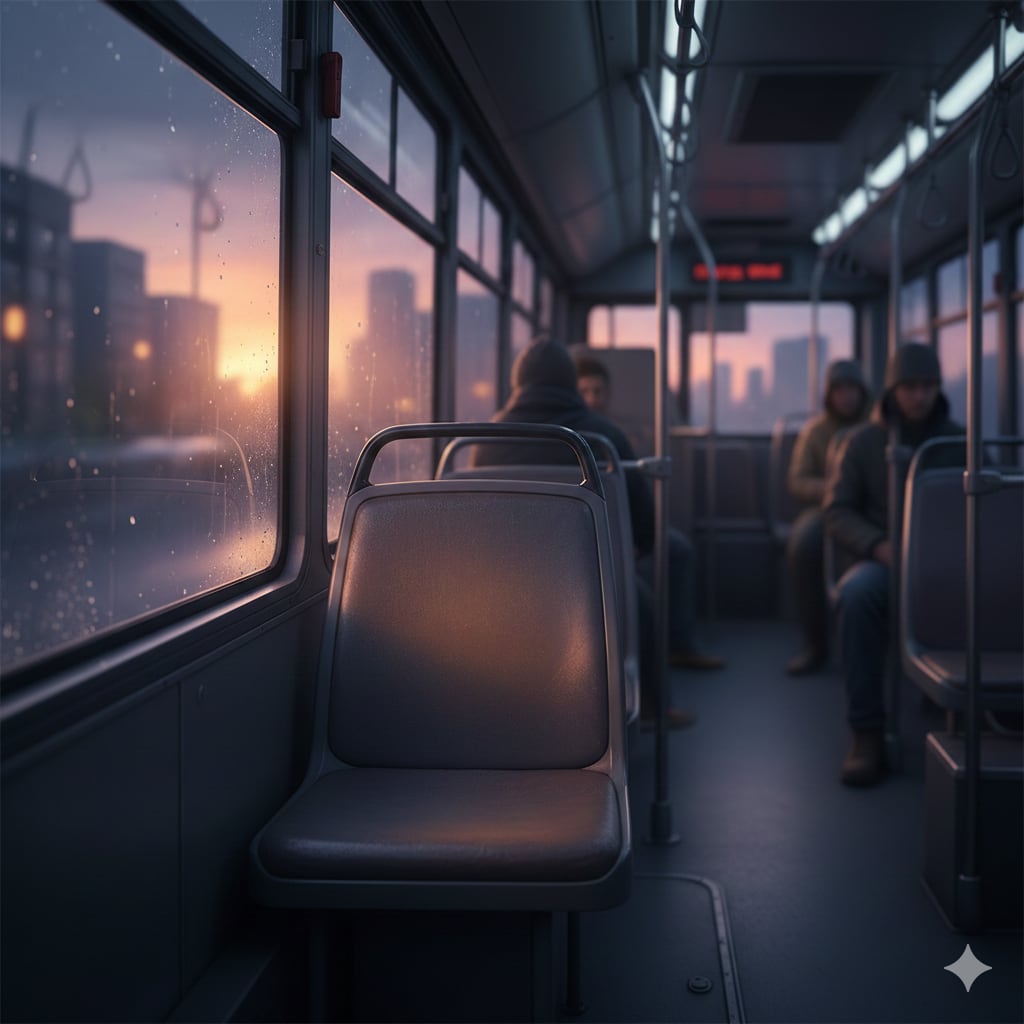
Every evening at exactly 7:10 p.m., Bus Number 47 arrived at the old hospital stop.
And every evening, one seat remained empty.
It was the third seat from the back, beside the window. Not the most comfortable, not the best view, yet somehow important. The driver noticed it first. At the beginning, he thought it was coincidence. Cities are full of patterns that mean nothing—until they repeat long enough to demand attention.
For nearly three years, the same man boarded at the same stop.
Mid-fifties, neatly dressed, always carrying a small cloth bag. He paid the fare carefully, thanked the driver in a voice so soft it was almost swallowed by engine noise, and walked straight to that seat.
Always that seat.
He never spoke to anyone. Never used his phone. Never slept. He simply looked out of the window as if the city outside was replaying memories only he could see. His face held no obvious sadness, but it carried a tired stillness—like someone who had already said goodbye to many things.
For three years, this was routine.
Then one evening, he didn’t come.
The bus arrived. Doors opened. Passengers boarded. The seat stayed empty.
The driver waited a second longer than usual before pulling away. He told himself the man might be late.
He wasn’t.
The next day, the same thing happened. And the day after that.
At first, no one mentioned it. People are busy surviving their own lives. But absence has weight when it belongs somewhere specific.
The conductor noticed. The woman who sat two rows ahead noticed. Even the college student who boarded later noticed, though he couldn’t explain why the seat made him uneasy.
People avoided sitting there without realizing it. Some tried once, shifted uncomfortably, and moved at the next stop. Others glanced at it and chose to stand instead.
The seat felt occupied—even when it wasn’t.
One evening, after two weeks had passed, the driver finally spoke.
“You remember the man who used to sit there?” he asked the conductor quietly.
The conductor nodded. “Every day. Same place.”
“He hasn’t come back.”
The conductor shrugged, though his eyes lingered on the seat. “People disappear.”
But this one stayed.
A month passed.
One night, the woman who sat nearby broke the silence. “He used to get off at the cemetery stop,” she said softly.
The word settled heavily in the bus.
From that day on, the driver slowed slightly at that stop. The iron gates stood open, unchanged. Sometimes he thought he saw someone waiting there. Sometimes he imagined it.
No one boarded.
Winter arrived. Then spring.
The seat remained empty.
Then, one evening, something changed.
The bus was half full when the conductor noticed a folded piece of paper placed carefully on the empty seat. No one had seen who put it there. No one claimed it.
He picked it up slowly, as if afraid it might dissolve.
The paper was old, edges worn. Inside, written in shaky handwriting, were a few lines:
“If you’re reading this, I didn’t make it back.
Thank you for carrying me when no one else noticed.
That seat was the last place where I still felt like myself.”
No name.
No date.
Just gratitude.
The conductor showed the driver at the next stop. Neither spoke for a long moment.
They didn’t report it. They didn’t tell the company. Something about the note felt private—earned.
The driver placed it back on the seat, folded exactly the same way.
From that day on, the seat was no longer avoided out of discomfort.
It was respected.
No one sat there anymore.
Not because they were afraid—but because they understood.
Passengers came and went. Life continued loudly outside the windows. Yet that one seat remained a quiet reminder of something most people forget.
That some people survive invisibly.
That some routines are the only places where they still exist.
That being seen doesn’t always mean being spoken to.
Years later, a new driver took over the route.
On his first evening, he glanced at the empty seat. “Why does no one sit there?” he asked casually.
The conductor paused, then said, “Because someone still belongs there.”
The new driver didn’t ask again.
And every evening at exactly 7:10 p.m., when the bus reached the old hospital stop, the driver slowed down—just a little.
Just in case.
About the Creator
shakir hamid
A passionate writer sharing well-researched true stories, real-life events, and thought-provoking content. My work focuses on clarity, depth, and storytelling that keeps readers informed and engaged.
Keep reading
More stories from shakir hamid and writers in Fiction and other communities.
Love Beyond the Office Walls: A Story Based on Real Life
Story (Based on a Real Story) Some love stories are born in poetry. Others begin in offices, meeting rooms, and quiet moments between deadlines. This is one of those stories — not perfect, not dramatic, but deeply real.
By shakir hamid27 days ago in Fiction
How, Too
Many people wonder how, too. You are not alone, and I am an expert. I will teach you how, too! First, you need to remit a small application fee and fill out an application describing the nature of your financial situation and how often payments will be made, as this will have great bearing on how well I teach you how, too.
By Harper Lewis5 days ago in Fiction
The Hollow Hunt
Every year, the small town of Willowcreek hosted its beloved Easter egg hunt in the sprawling meadow near the woods. Families would gather, baskets in hand, to search for the brightly colored eggs hidden among the grass and trees. It was a cherished tradition, a wholesome event that brought the community together. But this year, something was different.
By V-Ink Stories5 days ago in Fiction




Comments
There are no comments for this story
Be the first to respond and start the conversation.