
The science of black holes.
The Science of Black Holes: Unraveling the Mysteries of Gravity's Ultimate Abyss

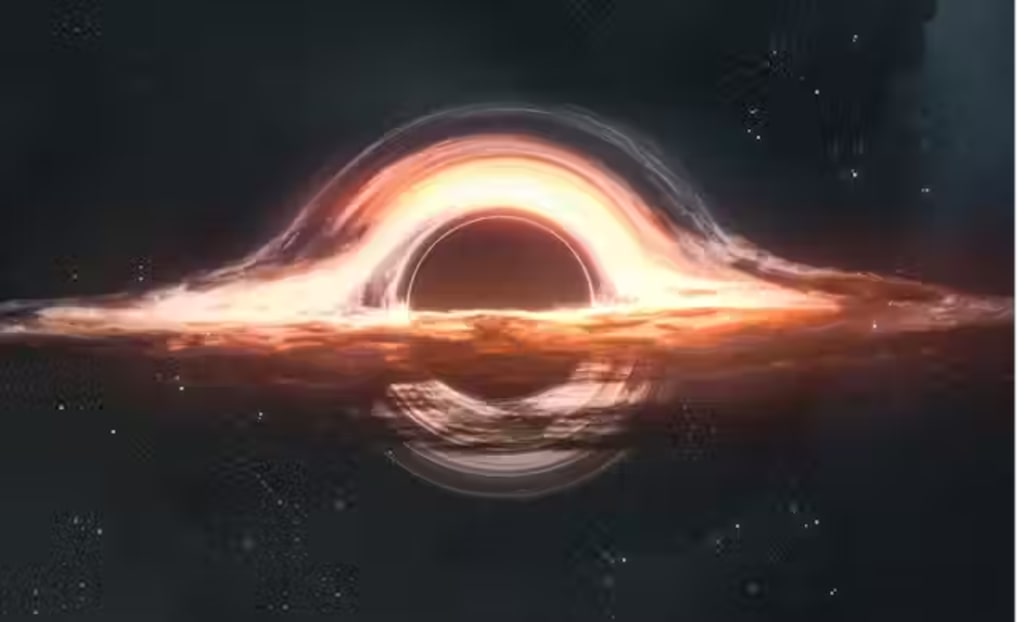
The Science of Black Holes
Black holes are among the most fascinating and enigmatic objects in the universe. They represent Regions in space where Gravity is so strong that nothing, not even light, can escape their pull. Predicted by Albert Einstein's General Theory of Relativity in 1915 and first discovered indirectly in the mid-20th century, black holes have become a cornerstone of modern astrophysics, challenging our understanding of space, time, and the fundamental laws of physics.
What is a Black Hole?
A black hole forms when a massive amount of matter is compressed into an incredibly small region, creating a gravitational field so intense that the escape velocity exceeds the speed of light. The boundary beyond which nothing can escape is known as the event horizon. Once something crosses this threshold, it is forever trapped.
The core of the black hole, where the gravitational force is theoretically infinite, is called the singularity. At the singularity, the laws of physics as we know them cease to function. This makes black holes unique laboratories for studying the interplay between quantum mechanics and general relativity.
Formation of Black Holes
Black holes are formed in several ways:
Stellar Collapse:
When a massive star exhausts its nuclear fuel, it can no longer support itself against gravitational collapse. If the remaining core is more than about 2.5 times the mass of the Sun, no known force can stop the collapse, and the core compresses into a black hole.
Supermassive Black Holes:
Found at the centers of most galaxies, these black holes are millions to billions of times the mass of the Sun. Their formation is still a mystery, but scientists believe they may grow from the merging of smaller black holes or the accretion of matter over billions of years.
Primordial Black Holes:
These hypothetical black holes might have formed shortly after the Big Bang due to extreme density fluctuations in the early universe.
Types of Black Holes
Stellar Black Holes:
These form from the collapse of massive stars and typically have masses ranging from a few to dozens of solar masses.
Supermassive Black Holes:
These giants, found at the centers of galaxies, can have masses millions or billions of times that of the Sun. An example is Sagittarius A*, the supermassive black hole at the center of our Milky Way galaxy.
Intermediate Black Holes:
These are thought to form through the merger of smaller black holes and have masses between 100 and 100,000 times the Sun's mass.
Micro Black Holes:
These are hypothetical tiny black holes that might have formed in the early universe or could be created in high-energy conditions, such as in particle accelerators.
How Do We Detect Black Holes?
Black holes themselves cannot be observed directly because they do not emit light. However, their presence can be inferred through their interactions with their surroundings:
Accretion Disks:
When matter falls toward a black hole, it forms a disk-like structure called an accretion disk. The matter in the disk heats up due to friction, emitting intense X-rays and other radiation.
Gravitational Waves:
When two black holes collide and merge, they release ripples in spacetime called gravitational waves. These waves were first detected by LIGO (Laser Interferometer Gravitational-Wave Observatory) in 2015, providing direct evidence of black holes.
Stellar Motion:
Astronomers observe the motion of stars orbiting an invisible object. The high velocity and unusual orbits of these stars suggest the presence of a massive black hole.
Shadow Imaging:
The Event Horizon Telescope captured the first image of a black hole's "shadow" in 2019. This shadow is the result of light bending around the event horizon.
Time and Space Near a Black Hole
Black holes profoundly affect the fabric of spacetime. Near the event horizon, time slows down relative to an outside observer—a phenomenon known as gravitational time dilation. This effect, predicted by Einstein's relativity, means that an astronaut falling into a black hole would appear to freeze in time from the perspective of an external observer.
Inside the event horizon, spacetime is so warped that all paths lead toward the singularity. The concept of "up" and "down" loses meaning, as does the passage of time.
Hawking Radiation
In 1974, physicist Stephen Hawking proposed that black holes are not entirely black. Due to quantum effects near the event horizon, black holes can emit a faint glow known as Hawking radiation. Over time, this radiation causes the black hole to lose mass and eventually evaporate. This discovery bridged quantum mechanics and general relativity, hinting at a deeper, unified theory.
Mysteries of Black Holes
Despite decades of research, black holes remain shrouded in mystery. Key questions include:
What happens inside the singularity?
Can black holes act as gateways to other universes (as suggested by some theories of wormholes)?
How do supermassive black holes form so quickly in the early universe?
Conclusion
Black holes are not just destructive forces; they are essential players in the cosmic drama. They shape galaxies, influence star formation, and serve as cosmic laboratories for testing our understanding of the universe. As technology and theories evolve, black holes continue to inspire awe and curiosity, reminding us of the vastness and complexity of the cosmos.
About the Creator
Badhan Sen
Myself Badhan, I am a professional writer.I like to share some stories with my friends.
Keep reading
More stories from Badhan Sen and writers in Fiction and other communities.
Psychological Thriller Movies
Here are some of the most mind-bending and brain-twisting psychological thriller movies ever made: 1. Se7en (1995) Directed by David Fincher, Se7en is a masterpiece that pushes the boundaries of psychological thrillers. The film follows two detectives, played by Brad Pitt and Morgan Freeman, as they investigate a series of gruesome murders inspired by the seven deadly sins. What makes Se7en so chilling is its dark atmosphere, complex characters, and an ending that is both shocking and deeply unsettling. The film’s psychological depth revolves around the motivations of the killer and the emotional toll it takes on the detectives. The final revelation leaves audiences with a sense of dread, questioning the nature of evil and human depravity.
By Badhan Senabout a year ago in Fiction
The Case of the Missing Ring
It was an average Moonday. My mead was hitting me in the right spot as the elvish weed propped me up and forced me to consider the day ahead. I had a feeling in my guts that there would be a very serious disturbance to my day, like two orcs fighting over who gets to eat a dwarf, or whatever those thugs like to chow on. I was in no mood for big surprises, but I also wanted to pay my rent for the month. You can only have so many elves wondering if the loves of their lives are cheating on them before you develop a rep as the bearer of bad parchment. No one really wants the truth...but they want the things they lost to get found, even if it's from a hobbit on his last drop of mead.
By Kendall Defoe 6 days ago in Fiction



Comments
There are no comments for this story
Be the first to respond and start the conversation.