
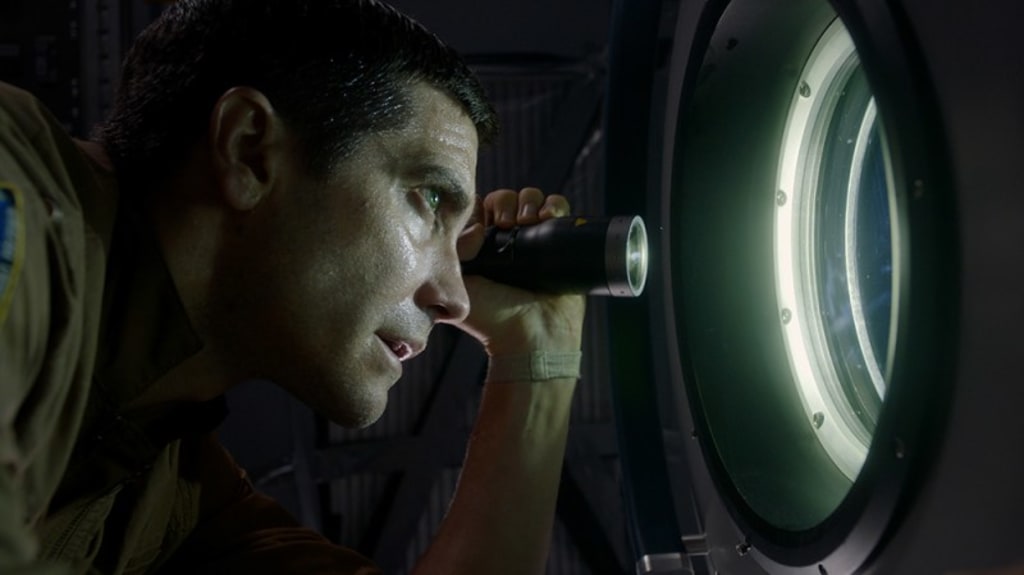
Two images are rapidly changing before your eyes: our vast planet and a dark void. The Earth picture is shrinking by the second as you fly away from the spaceship into an endless vacuum. You're unsure of what to do next. The International Space Station orbits 250 miles above the Earth's surface, and spacewalks are a regular part of the astronauts' work there. Astronauts have spent over 11,000 hours in the black abyss to this day. Thankfully, no one has ever drifted away into outer space without returning, as depicted in movies. However, astronauts face other equally terrifying dangers during spacewalks. One such incident occurred in 1966 when Eugene Cernan wore a jetpack to perform repairs in outer space. The jetpack, which helps control flight in zero gravity, became extremely hot. Eugene wore special metal pants to protect himself from the heat, but they failed to redirect it away from his body.
The suit was heavy and uncomfortable, like a knight's armor, rubbing against his skin and limiting his movements. Working in zero gravity is physically demanding, and Eugene had to endure the added challenge of his suit heating up. Inside the space suit, he felt as if he were in a hot bath. The high temperatures and strenuous work led to overexertion, dehydration, and significant weight loss. His face was drenched in sweat, and the drops impaired his vision. During that spacewalk, Eugene lost around 13 pounds of weight. Fortunately, other astronauts came to his rescue and brought him back to the spacecraft. To cool him down, they sprayed him with cold water from a hose.
In a way, venturing into the vast expanse of space requires astronauts to don a suit resembling a body cage. Another dangerous incident occurred in 1973 when two astronauts, Pete Conrad and Joe Kerwin, went into outer space to repair a solar wing on the Skylab space station. The wing refused to rotate, and the astronauts attempted to move it manually using force.The stuck Wing was turned, but it gave them a strong push that threw both astronauts aside. They didn't have time to grab onto something nearby and started floating away into space. Luckily, they had safety cables that prevented them from drifting away completely. The astronauts returned safely in their modern space suits, which have more than 10 protective layers. These suits protect against extreme temperatures, tears, and moisture leakage. This protection is crucial to avoid depressurization. In 2007, Rick Mrao went into space for repair work and discovered a hole in his glove during the fourth hour of his mission. He immediately reported it and was ordered to return to the ship. Inside the ISS, there are various chemicals used for space work, such as ammonia, which freezes surfaces. Leakage of this substance is highly unlikely on the ISS. This incident happened to astronaut Robert Keram during his first spacewalk in 2001.Robert was allowed to freeze, but his movements were severely restricted by the ammonia.
The main issue was that he couldn't go back to the ship because the ammonia could enter the station, potentially causing an emergency. Robert had to remain in outer space for one and a half hours, waiting for the leak to stop. After that, he successfully returned to the station and realized how challenging it is to work in outer space. To understand what a space suit is, we need to know that it weighs 280 pounds, which is as heavy as a scooter. Despite not feeling its weight in zero gravity, it still makes you sweat. Astronaut Chris Hadfield described it as every movement inside the space suit encountering resistance. The suit can scratch your skin, squeeze your bones and joints, and require twice as much energy for simple movements. In such conditions, you start sweating and your eyes become wet. This moisture can fly inside the helmet and blind you until it evaporates. However, if there is too much moisture, it can be life-threatening for an astronaut. A similar incident occurred in 2013 with astronaut Luka Parmitano. While measuring something outside the station, he felt the back of his head getting wet. He informed the others and was ordered to return to the station. As Luca was coming back, he had to turn upside down, causing water to rush into his helmet, covering most of his face. Luca couldn't see or hear and struggled to report the trouble to the base as the water covered his mouth.
Fortunately, his partners rescued him and helped him return to the station. When they opened the helmet, almost half a gallon of water poured out. Astronauts' cables are one of the most reliable defenses against floating away into space. What if a strong push caused a break or if the astronaut didn't secure it properly? To provide additional protection, there is a backpack called Safer Simplified Aid for Eva Rescue. It functions like a jetpack, releasing gas from small tubes to change the direction of your flight. If you're spinning in space, Safer stops and aligns your movements. You can take manual control and fly using a special joystick. Safer was first used in 1994, but before its creation, there was the Man Maneuvering Unit (MMU) in 1984.
Astronaut Bruce Mandas used it for the first time. You may have seen the famous photo of him floating in outer space without a cable. The problem was that Bruce was the first tester of such a jetpack, and he wasn't completely sure if it would work. He went into outer space and unhooked the cable from himself, with nothing else to keep him from flying into the infinite black abyss. His team wouldn't be able to save him. Imagine how scary that must have been. Fortunately, the jetpack worked. However, after three missions, NASA decided to stop using the MMU as it was deemed unsafe. After that, engineers invented safer jetpacks and reliable safety systems with cables. But the best protection for an astronaut in space is their skills. Each astronaut undergoes six years of higher education and several more years of training. They spend many hours training in virtual reality with spacewalk simulations, building their physical endurance and mental strength. The main thing in a dangerous situation in space is not to panic and stay calm.
About the Creator
Keep reading
More stories from writers in Fiction and other communities.
The Baby in the Break Room
At 9:00 a.m., the siren sang its polite two notes—ding, ding—and the building returned its practiced silence. Mara set her mug on the corner of her desk where the ring stain had been carefully outlined with a thin strip of tape. She’d done it on her first day, back when she thought it mattered.
By Flower InBloom2 days ago in Fiction
Boundless
A geographical map could take you there. To the places I've been, to the sights I've seen, to the landscapes I've climbed. But no compass could point you in the direction of my memories. To the experiences I've lived, to the happiness I've felt, to the wonder I've held so close to my heart.
By Alyssa Mussoabout 7 hours ago in Writers



Comments
There are no comments for this story
Be the first to respond and start the conversation.