
The Return of the Cardinals
A lost old man searches for meaning in the birds that disappeared the day his wife died.


Almost everything about the house was in some stage of decay. White paint chipped and peeled off the exterior, rippling like alligator skin. Trumpet vines and ivy dripped off a crumbling wooden fence attempting to enclose the backyard. Dandelions and crabgrass infiltrated the brick pathway leading to the front door. In the front hall leather bound journals with yellowing pages overflowed into the walkway, each with notes sticking out of them forming spiral staircases of paper. Yellowed maps and old farmers almanacs littered the floor below a coat rack from which two old pairs of skates hung. The bookshelves were shrouded in dust, graying just like the old man. Beyond the front hall was the kitchen from which the old man watched the world. He spent most mornings sitting by the window with his glasses pressed up against his binoculars, taking detailed notes on the world outside. He exited the house at hourly intervals to scribble the temperature, weather, humidity, and dew point in the margins of his journal pages. He woke early each day before the birds started stirring, he liked to watch them waking and discovering the day, as he himself had just hours before. He gazed upon redwing blackbirds, their streaks of red like swatches of paint in the sky, and the angry flock of geese that frequented the pond behind his home. He caught the occasional blue heron nestled among the cattails balancing on its thin, bamboo legs. He squinted to see the muted yellow feathers of female goldfinches nesting in late July. But no bird held a candle to the cardinal. They had been there all his life, but always as part of the scenery, not as characters. She taught him to love the birds, always pointing them out and emptying facts from her head into his. Every spring he would find her sitting on the bench in the backyard staring at the woods for hours. How busy it was, she would say, and yet so still at the same time. She loved cardinals. They adorned all her potholders and linens, carved wooden ones were tucked in every corner of every bookshelf. Her stationery too had those little red birds on them; with all of her messages came a cardinal. All his life the cardinals had been there but he had not been looking. Since her death, he had not seen a single one. Now looking was all he did.
The man filled his yard with bird feeders to attract the cardinals. Stakes with bird houses on the tops dotted the lawn every 5 feet or so. Small houses hung from the shaky branches of a dogwood tree to the left of the house. Cylindrical tubes full of seed knocked against the front windows with the slightest breeze. The willow tree in the back yard had seven houses alone. He kept the feeders stocked with seed every day, using up the grocery money to feed the birds. The cardinals did not come. Some mornings after the strain of filling the feeders, the man sat on the bench tucked away in the corner of the yard. It had once been dark green, but the paint was peeling off and the light brown pine was peaking through, the surface worn by time like so many other things. She used to sit beside him on that bench. On summer evenings they would watch the trees swaying in the breeze and feel the fading sunlight dance upon their faces. In the winters she would drag him out to that bench, two pairs of skates slung over her shoulder. They would sit and lace up their skates and hobble the short distance to the pond in the woods, sporadically clutching each other's shoulders for balance. He liked that little pond best in the winter, all frozen on the surface but alive underneath. He could see the lily pads sticking to the ice as he glided along. On those days her cheeks were rosy and full of life. Her gloved hand held his, their bodies laced together like the skates on their feet. He wondered at what point she’d forgotten that memory. Was it one of the first to go, or did it survive longer? He told himself it did not matter anyways. Time had not spared a single moment. It knotted her mind until it broke, leaving it twisted like an old oak tree.
One February the snow kept coming as it always did that time of year. The old man sat bundled on the sofa in the living room. He slept there not just for the warmth of the radiator and the fireplace but because the bed always felt cold now, even in the summers. It was too big and too empty. He liked the living room because he could sit by the window and watch the lights flicker on in the house across the street. A young couple lived there and the old man liked to watch them in the evenings when they played music and danced in the kitchen. He could see their shadows moving behind the curtains, silhouetted against the warm glow of kitchen lights. The sounds of singing and laughter filled the air around their house and carried within reach of the old man’s ears. He could close his eyes and for a second pretend it was his body swaying to the music, her voice singing along.
Around three in the morning the man woke to a thundering crack followed by a booming groan. He felt the tree hit before he heard it, the foundations of the house shivering. It collapsed onto the right corner of the roof. He stumbled out of bed and switched on the hallway light. Gazing into the dimly lit kitchen he saw a beam support was split badly and barely holding. In the roof lay a gaping hole where the frosted branches of the pine tree were poking through like icy fingers. The chill of the outside began creeping in and filling the room. The old man stuck a bucket under the hole in the roof to catch any melting snow and propped a step ladder up to support the weakened beam. He shut the kitchen door, stuffing hand towels from the bathroom at the base to keep the draft from reaching the living room. He’d assess the damage more tomorrow morning, going out now would be a frigid, thankless task. Bundled on the sofa, the old man found sleep again. His lined face was peacefully frozen in slumber whilst his mind came alive with dreams of ruby red cardinals, of bubbling laughter, of her. He awoke the next morning having almost forgotten the events of the night before. He put on his coat and boots and wrapped a flannel scarf around his neck. Stepping outside into the snow, he saw the couple from across the street standing in his yard surveying the damage. “Good morning!” the couple said cheerily. They were still in their pajamas and the young man held out a cup of coffee to the old man. He took it, feeling the warmth seep into his palms. The woman took a step closer to him, snow crunching beneath her boots. She said, “We heard the noise last night but thought it came from deeper in the woods. Is there anyone we can call for you? Someone to come take care of all this, to assess the damage maybe? It was an awful, awful storm, you know, the worst here in a while the news said!” The old man simply shook his head, put the mug of coffee down in the snow, and hurried back into his house, locking the door behind him. Her hair, her voice, it was all too similar. His heart ached, threatening to break inside him. God how he missed her. He watched from the edge of the window as the couple exchanged words and the man went back across the street, but the woman turned and headed for the front door. She hesitated, then knocked. With shaking hands he reluctantly pulled open the front door. The woman smiled politely and said, “Hello again, I'm very sorry if this is an intrusion, my husband and I just want to make sure you’re alright, that’s quite a bit of damage you have there. Do you live here alone?”
“Yes” he squeaked out and the words felt heavy in his throat
“Well here’s our number, please call if you need anything, we have a friend we can call too about the tree and repair costs on the house if you’d like, you just say the word”
“Alright…i suppose… thank you both” he mumbled.
“Of course, we’re just across the way if you need anything”
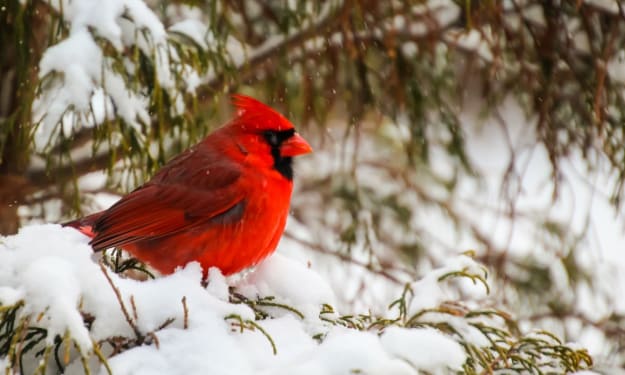
The woman turned and walked down the steps. The old man closed the door and released the breath he’d been holding in. This was why he hated to leave the house. The outside world held too many reminders of her, too many things that looked like her, moved like her, all amplifying his loneliness until it was too much to bear. All he wanted was a sign. Something to tell him she wasn’t completely gone. Even if it was only false faith he wanted it, needed it. He didn't know how else he could go on. He found himself opening the back door and walking outside through the forest path and to the pond. It was frozen, as expected. After all the years it had not changed one bit, he half expected her to come gliding across the ice toward him, her face young and happy, a smile of recognition playing across her lips. He walked the woods all day and as the last rays of sun sank into the evening sky, he started to speak to the air about a woman with stories in her head. He said even after she’d forgotten everything, she could name every bird they saw. He said they walked through the forest for hours searching for cardinals together. He said was afraid he was forgetting what she felt like, the way she’d forgotten him. He said he wanted it all to come back, the bright blue of her eyes, the breathless laughter, the memories of loving her. He said that was why he searched for the cardinals. They had disappeared with her, along with his sense of purpose and his joy. He wanted just one. A sign she was not completely gone from him and his world. At dusk he walked the path back to the house, a faint half moon illuminating the snow before him. As he emerged from the woods he saw it. Sitting on their old bench, its beak ruffling its feathers, was a cardinal. Its red wings were unmistakable even in the twilight. The old man's eyes filled like tidepools. Tears rolled down his face, collecting in a bouquet at his chin. He smiled at the sight. Standing in the cold night air he felt his heart beating in his chest, its pulsing the only sound in the still evening, and for the first time since she had died, he did not resent its persistence.
About the Creator
Niamh McDade Clay
I am a college student dreaming of becoming an author. I write to make sense of the world and to help others remember that they are not alone in the trials of the human experience.
Keep reading
More stories from Niamh McDade Clay and writers in Fiction and other communities.
The Return of the Cardinals
Almost everything about the house was in some stage of decay. White paint chipped and peeled off the exterior, rippling like alligator skin. Trumpet vines and ivy dripped off a crumbling wooden fence that attempted to enclose the backyard. Dandelions and crabgrass infiltrated the brick pathway leading to the front door. In the front hall of the house, leather-bound journals with yellowing pages obstructed the walkway, each with notes sticking out forming spiral staircases of paper. Yellowed maps and old farmers almanacs littered the floor below a coat rack from which two old pairs of skates hung. The bookshelves were shrouded in dust, graying like the old man. Beyond the front hall was the kitchen from which the old man watched the world. He spent most mornings perched by the window, glasses pressed up against his binoculars, taking detailed notes on the world outside. He exited the house at hourly intervals to scribble the temperature, weather, humidity, and dew point in the margins of his journal. He rose before the birds started stirring. In the daytime, he gazed upon redwing blackbirds, their streaks of red like swatches of paint on the winter sky. He watched the angry flock of geese that frequented the pond behind his home, occasionally catching a great blue heron nestled among the cattails balancing on its thin, bamboo legs. At night when sleep evaded him, he sought barn owls perching in the forest. He squinted to see the muted yellow feathers of female goldfinches nesting in late July. But none of these birds held a candle to the cardinal. She taught him to love the birds, always pointing them out and emptying facts from her head into his. Every spring she would traipse around the woods for hours, coming home breathless and smelling of pine. How busy it was, she would say, and yet so still at the same time. She loved cardinals best. They adorned all her potholders and linens, and carved wooden versions of the birds were tucked in every bookshelf. Her stationery had the little red birds on them; with all her messages came a cardinal. All his life the cardinals were there but he had not been looking. Since her death he had not seen a single one. Now looking was all he did.
By Niamh McDade Clay4 years ago in Fiction


Comments
There are no comments for this story
Be the first to respond and start the conversation.