
The REAL Stories Behind 5 Famous Disney Movies
Part Two
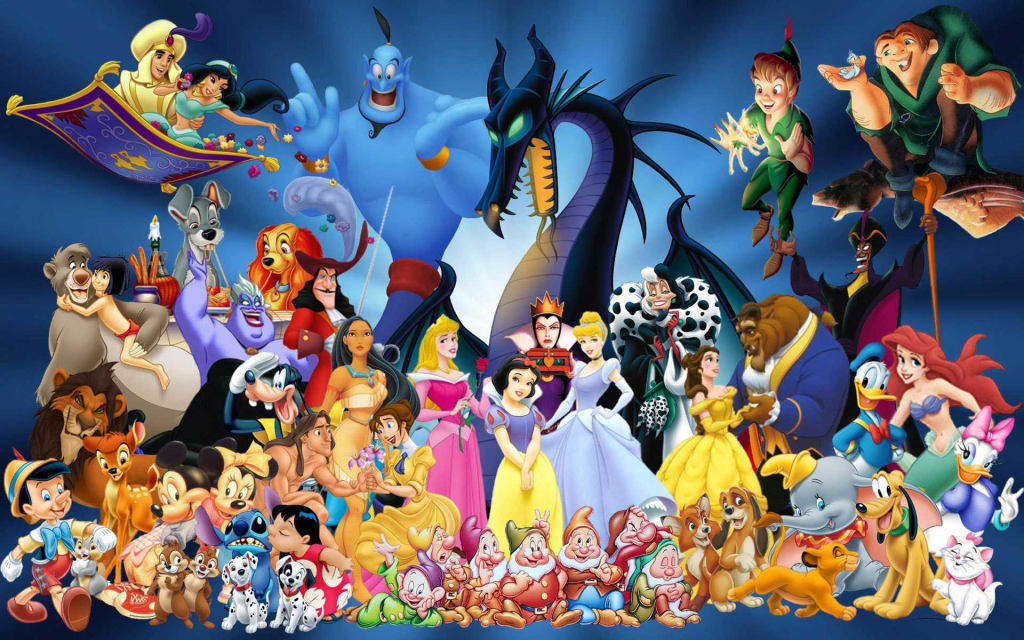
The Disney Corporation is vast, and its movies are adored by billions of individuals globally. However, it may come as a surprise to learn that a few of their most renowned works are inspired by actual events and peculiar tales. Here are five Disney productions that might astonish you with their origins, some of which would not have been suitable for children if not for alterations.
The 1940 film "Pinocchio" is narrated from the perspective of Jiminy Cricket, who recounts the tale of woodcarver Geppetto, who creates a wooden puppet named Pinocchio and wishes for him to become a real boy. One night, after witnessing a shooting star, Pinocchio miraculously comes to life. As he walks to school one day, he is lured into joining a traveling show, where he performs alongside other puppets. When he attempts to return home to Geppetto, he is imprisoned by the show's owner. Fortunately, a magical fairy intervenes to rescue him. However, when Pinocchio lies about his adventures, his nose begins to grow. Eventually, both Pinocchio and Jiminy Cricket make their way home, only to find that Geppetto has gone to sea in search of him and has been swallowed by a whale. In a brave attempt to save Geppetto, Pinocchio ventures into the whale's belly but drowns in the process. His goodness is recognized, and he is revived by the fairy, who removes his puppet strings, transforming him into a real boy. This film is a classic adaptation of Carlo Collodi's original "The Adventures of Pinocchio," which presents a much darker narrative. Initially published as a weekly series in a children's comic newspaper, Collodi's work portrays Pinocchio as a disobedient and wretched boy who mocks and steals from his creator, Geppetto. In these tales, Jiminy Cricket is portrayed as the complete opposite of the wise guide friend of Pinocchio. Instead, he faces a tragic end when Pinocchio violently kills him by smashing him with a hammer. The story depicts Pinocchio enduring starvation, torture, robbery, and kidnapping, with his wooden legs being burned off in almost every chapter. This serves as a clear indication of the author's disdain for misbehaving children, using Pinocchio as a cautionary example. Carlo initially intended for the story to have a dark ending, with Pinocchio being hanged, but publishers objected and forced him to revive the character. The introduction of a child with blue hair, who later becomes the magical fairy in the Disney adaptation, marks the turning point. Despite being brought back to life, Pinocchio continues to suffer abuse and torment in the stories, a grim reality that was thankfully omitted from the film adaptation.
Winnie the Pooh, a beloved teddy bear, was created by English author Alex Alexander Milne and later adapted by Disney into a series of short features. The stories included Winnie the Pooh's friends Piglet, Kanga, Rabbit, Roo, Tigger, Owl, and the only human character, Christopher Robin. The characters enjoy various adventures in the Hundred Acre Woods. Surprisingly, some of them are based on true characters. In 1925, Milne based Winnie the Pooh on a soldier's bear who was sent to the London Zoo when the soldier was deployed to the frontlines in France. Christopher Robin Milne, the author's son, was a frequent visitor to the zoo and adored the female bear. He named his teddy bear Winnie the Pooh, inspiring his father to create the yellow bear we know today. Behind the laughter and fun, Winnie the Pooh and his friends are believed to have a deeper meaning to their characters, although this was never confirmed by the creator. It is a widely believed theory that the characters also exhibit traits of mental disorders. Winnie the Pooh appears to exhibit symptoms consistent with multiple mental disorders. His whimsical and carefree demeanor, coupled with a disregard for rules, suggests a potential case of inattentive attention deficit hyperactivity disorder. Additionally, his intense fixation on honey and the lengths he will go to obtain it may indicate impulsivity and obsessive tendencies. Piglet is believed to experience generalized anxiety disorder, as evidenced by his pervasive nervousness and low self-esteem, which contribute to his stuttering and irrational fears. Owl seems to display signs of dyslexia, as he often spells words incorrectly and in a disordered manner. Tigger, characterized by his incessant bouncing and impulsive behavior, attracts others with his sociable nature; however, this association may lead his friends into troublesome situations, which some interpret as indicative of ADHD. Lastly, Kanga appears to show traits of social anxiety disorder, as she is an overly protective and meticulously organized mother, excessively controlling little Roo and hindering his ability to make independent choices. Kanga also attempts to care for Tigger in a similar manner by feeding him and taking care of him, even though she cannot control him. Rabbit, who is overly organized and fixated on having everything in its proper place, has led some to believe that he is suffering from OCD. Eeyore, the despondent donkey who always has a negative outlook on life, appears to be incapable of finding any happiness and is likely struggling with some form of depression. Lastly, Christopher Robin, with his vivid imagination and stuffed animal companions, is speculated to have created all the characters in his mind to represent his own emotions. Some suggest that Christopher may be dealing with schizophrenia, but similar interpretations have been made in other children's movies like Alice in Wonderland, which has been associated with drug trips. However, these theories have never been confirmed by the creators, so it may just be people reading too much into things. Regardless of your thoughts on these interpretations, let's not allow them to diminish the magic of these wonderful Disney films.
About the Creator
Keep reading
More stories from Brian Dickerson and writers in Fiction and other communities.
The REAL Stories Behind 5 Famous Disney Movies
The Disney Company is a colossal entity, and its films are cherished by billions globally. However, it may come as a surprise that several of their most iconic titles are inspired by real events and extraordinary tales. Here are five Disney films that reveal unexpected origins, some of which would not have been suitable for children had they not undergone significant alterations.
By Brian Dickerson2 years ago in Fiction
Our Song
Evening has given way to night. Gently, I settle next to you on the comfortable, old love seat and reach for your hand. You snatch it away, again. It cuts me to the quick, but I hide the pain, understanding that the reaction is but part of your demented state. Since the accident, your presence here in our cozy home has been clouded by a haze I can't see. Nevertheless, I feel the frigidity of your expressions and it serves as an excruciating reminder of the immeasurable distance between us.
By Dana Crandella day ago in Fiction



Comments (1)
This is exactly what I needed to see today.