
the real reason the Dodo went extinct
the real reason
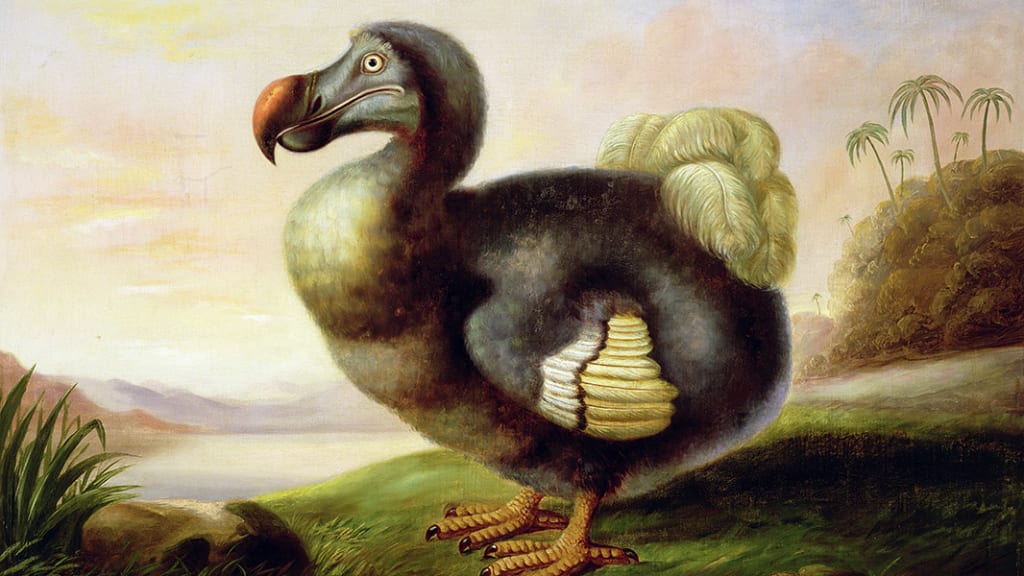
This is a dodo. Most people were taught that these birds disappeared because they were physically and mentally slow. If you believe this, you've been misled. The real reason for their extinction has a lot to do with evolution.
Let's go back 140 million years. A chunk of land broke away from Africa, later splitting into Madagascar and India. India decided it wanted nothing to do with Madagascar and drifted up to Asia at a blistering pace of 16 centimeters per year—about two and a half million times slower than a garden snail. This speed was enough to form an underwater mountain range called the Mascarene Plateau. A few mountain tops emerged above the sea, creating islands including Mauritius. The entire dodo population lived exclusively on Mauritius. But at that point, it was just a barren rock.
Before long, transported by strong ocean currents, gusty winds, and other means, many plants made their way to the island, covering it in greenery. Unfortunately, no animals had arrived yet. Animals face a much tougher challenge traveling over a thousand kilometers of open ocean—unless you’re a bird. With the power of flight, birds can reach the most remote corners of Earth, including Mauritius. Around 4 million years ago, an ancient relative of the pigeon found the island. It was a paradise, lush with trees, fruits, and nuts, and devoid of predators. Naturally, the pigeons decided to stay.
Over millions of years, these birds evolved. Thanks to the abundance of food and isolation, they grew much larger, a phenomenon known as island gigantism. Their beaks evolved from small and sharp to huge and claw-like to better consume the island’s fruits. These birds grew from 15 centimeters tall to nearly a meter, becoming the second-largest animals on the island, just after the tortoise.
This brings us to the first of four main factors that influenced the dodo's extinction. Meet Steve, a dodo. Due to the abundance of food and lack of predators, Steve’s ancestors grew larger and lost the ability to fly. Steve didn’t need to flee from danger, so he lost the fight-or-flight instinct that had helped his ancestors survive. He became fearless, to the point of being unfazed by any threat, even the scariest creatures. Steve had the defensive abilities of a vegetable. But as long as he and his buddies remained isolated, they were fine.
Then came humans. The first visitors were likely Arabians, followed by the Portuguese, and then the Dutch, who settled the island. The Dutch were known for killing dodos, but the real threat came from the animals they brought with them—dogs, cats, rats, and monkeys. These predators found a paradise on Mauritius. The dodos, which didn't run away and left large eggs everywhere, were easy prey. Dogs and cats killed the birds, while rats devoured their eggs, preventing them from reproducing.
To make matters worse, the Dutch realized Mauritius had valuable hardwood trees. They began deforesting the island, destroying the dodos' habitat. The last sighting of the dodo was in 1662, just 24 years after the Dutch settled. The dodos were driven to extinction by predators, habitat destruction, and competition.
The dodo’s story shows how a species can become vulnerable when it adapts to a predator-free environment. Much like humans who have grown reliant on modern comforts, the dodo became accustomed to an easy life. When predators finally arrived, the dodos stood no chance.
What if we hadn't interfered with Mauritius? Perhaps we'd have dodo livestock or even Kentucky Fried Dodo. Who knows?
About the Creator
Keep reading
More stories from Shinzou Wo sasageyo and writers in Fiction and other communities.
why dragons are everywhere in every culture
Dragons are mythical creatures that breathe fire and terror in European stories, while bringing good fortune to Chinese celebrations. From the frigid peaks of Scandinavia to the scorching sands of Arabia, why do these magical animals appear in nearly every culture on the planet? In today’s video, we’ll investigate the enigma of the dragon’s global fascination. How do cultures separated by oceans and millennia all tell legends about these powerful creatures? We’ll explore the fascinating realm of dragons, investigating their origins, various forms, and profound significance in human society. Prepare to embark on a journey through time and myth to learn why dragons appear everywhere.
By Shinzou Wo sasageyo2 years ago in Fiction
A More Human Vocal
When we launched Vocal nearly a decade ago, the world was a very different place. LLMs did not exist, and stories were created one at a time by people sitting down to write, revise, and share something personal. Many of our assumptions about publishing, trust, and participation were built for a world where effort and output were inseparable.
By Justin @ Vocalabout an hour ago in Resources




Comments