

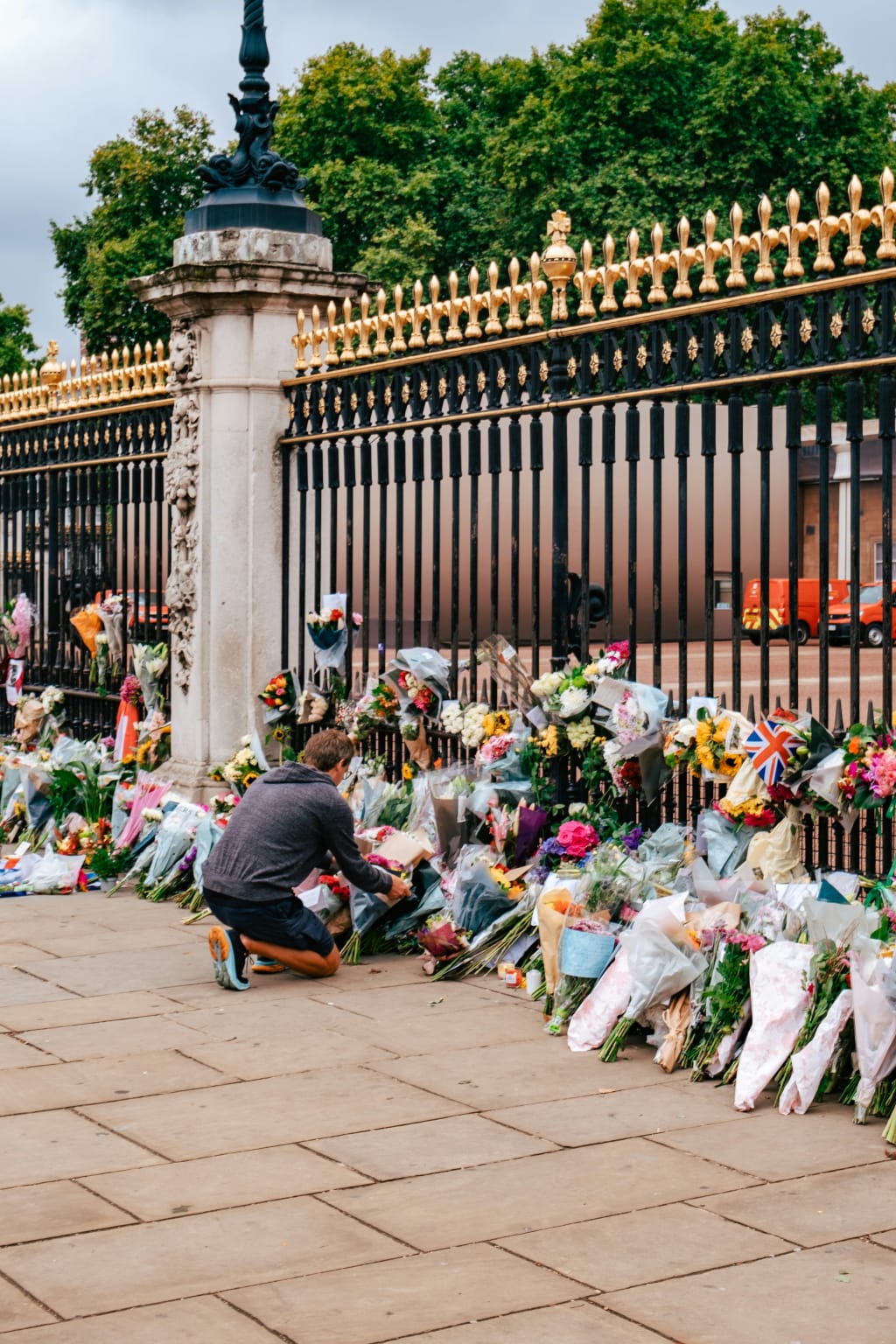
The river ran backwards on the day the Queen vanished. This strange phenomenon quickly captivated social media, igniting a frenzy of theories and speculation. Was it a sign from the heavens? Had supernatural forces kidnapped the Queen? Or was this nature’s way of expressing the upheaval caused by her sudden absence? The online world was teeming with theories, and numerous hashtags were trending within minutes, each more fantastical than the last.
Queen Lativa was born into a world where royalty was respected, and the internet was largely absent. In those early days, the public rarely glimpsed the private lives of their sovereigns. Her early reign was marked by privacy, dignified appearances, and carefully managed communication. She had devoted her life to service and was bound to tradition. She was once beloved for her warmth and wisdom.
However, a new force emerged as the years passed: social media. At first, it was merely a background hum, a minor disruption to the established order. But it soon became the country’s primary means of information, communication, and governance. In this brave new world, the private lives of public figures were not merely scrutinized—they were commodified. As scandals and conspiracy theories infiltrated every level of society, they drew ever closer to the Queen herself.
At first, she tried to ignore the swirling rumors, but it was impossible. A viral post would claim to expose a rift in her family, and her official channels would be flooded with questions and demands for explanations. An unflattering photograph would surface, and criticism would multiply, dissecting her appearance, clothing, and demeanor. Old friends and trusted advisors became liabilities in the digital world; each interaction was scrutinized and reimagined until she hardly recognized her life.
The scandals crept closer into her inner circles. Allegations against her advisors, theories about her family, and stories questioning her legitimacy to rule flooded the media. She saw once-trusted allies fall one by one, accused, disgraced, and ultimately removed from her side. The pressure grew, and it felt like the walls were closing around her.
One night, after hours spent reading the latest speculative articles about her, Queen Lativa reached a breaking point. She had held herself together, trying to maintain her dignity, but inside, she was exhausted. The world she’d known, the one she had cherished and served, had turned on her. She felt like she was drowning in a sea of rumors and judgment. And so, she decided: she would vanish.
Her plan was meticulous. She arranged for a close friend to take her to a remote island, far from the prying eyes of the media and her advisors. The Queen crafted an elaborate exit, leaving only faint clues to suggest she had been taken or, perhaps, perished. She knew the media would devour the story, and she hoped she could escape from their relentless scrutiny by creating an aura of mystery around her disappearance.
At first, the isolation was a balm to her battered soul. She no longer needed to worry about her every action and word. For the first time in years, she could be Lativa without the title or the scrutiny. The friend who had helped her disappear would check in occasionally, bringing food, supplies, and letters from her family, urging her to return. But she was resolute. She wanted peace and felt she could only find it in seclusion.
However, as the months passed, she began feeling a different strain. Her days stretched long and silent, and the solitude grew heavy. Where once she had been driven by purpose and surrounded by people, now there was only the quiet of the island, the gentle lapping of the waves, and the endless expanse of the sea.
It took her six months to understand that she had merely traded one kind of pressure for another. She realized that while she had escaped the relentless noise of social media, her loneliness was just as suffocating. She missed the company of her friends and family, the sound of her advisors’ footsteps, and even the peculiar way her secretary used to clear his throat before delivering news. Her family’s letters became a lifeline, each one reminding her of the world she had left behind.
It was on a misty morning, just as the waves were lapping against the shore that she decided. Queen Lativa would abdicate. She would give up her throne, relinquishing the title and the wealth that had once defined her life, and return to the world as a private citizen. Her friend, reluctant but loyal, agreed to help her. Together, they drafted her abdication letter, and within days, the world knew of her final departure.
For the next six years, the Queen —now known as Lady L —lived a modest life devoid of the luxuries she had once taken for granted. She rented a small house near a quiet lake, where she grew her vegetables and took long walks without the ever-watchful eyes of the world upon her. Her existence was peaceful, her days filled with simple pleasures, and the shadow of social media’s scrutiny became a distant memory.
In her final moments of life, surrounded by those who still cherished her, she whispered her last thoughts. She shared that she had found something on that lonely island that had eluded her in the gilded cage of her former life. Though she missed the comforts of her past, she had found something far more precious: the peace that came from living in the moment, free from the judgment of others.
Lativa passed away quietly, knowing she had made the right choice. She had found peace not in riches or titles but in the simplicity of a life lived on her terms, a choice few had ever dared to make.
About the Creator
Anthony Chan
Chan Economics LLC, Public Speaker
Chief Global Economist & Public Speaker JPM Chase ('94-'19).
Senior Economist Barclays ('91-'94)
Economist, NY Federal Reserve ('89-'91)
Econ. Prof. (Univ. of Dayton, '86-'89)
Ph.D. Economics
Keep reading
More stories from Anthony Chan and writers in Fiction and other communities.
Fleeting Leaves
Autumn leaves drift down, Beauty fades as time rushes Life, too, feels so brief.
By Anthony ChanExclusive • 6 months ago
Becca
"Everything is so... flat." Denille said stupidly as she looked around her new neighborhood. She looked around at the muted desert where even the smallest sign of life seemed to have given up. The plant life was shrubs that were half cooked by the heat and where there should have been a lawn, a mess of white rocks laid glistening in the sun. Even the sky looked stretched thin, like the sun had ironed it smooth. She’d moved from Riverside, where at least there were hills, but here in Barstow, everything felt baked and brittle.
By Sara Wilson2 days ago in Fiction
The City That Never Sleeps
The sun hung high in the sky, bright and unyielding, its glare washing the streets in relentless light. People emerged from their homes squinting, rubbing their eyes, but no one complained. The world insisted on being normal, and so they followed. Children skipped down the sidewalks carrying blankets, pretending they were nightcaps, while their parents waved cheerfully and called out to neighbors who, like them, acted as though the sun’s permanence was nothing out of the ordinary.
By Lukáš Hrdlička4 days ago in Fiction
Early March 2026: 4 Goals Accomplished
It's early March and I've now accomplished my 4th writing goal for the year of 2026. Before diving into the behind-the-scenes of it... why not tell you up front what that accomplishment was? I was published in a 2nd publication for this year. Published in Helix Literary Magazine out of Central Connecticut State University. You can read it for free right now!
By Stephen Kramer Avitabile2 days ago in Writers



Comments (1)
A well crafted moralistic tale. I just hope her successor was a worthy ruler. Well done.