
The Prince Between Two Worlds
A fictional tale of a man torn between heritage, love, and the uncertain future of his children.


The rain had already begun to fall when Henry looked out the window of his California home. It was the soft kind of rain that reminded him of England—the misty drizzle that clung to your coat and made every field smell of earth and memory. He closed his eyes, and for a moment he could almost hear the bells of Windsor and the voices of cousins running through long corridors. For the first time in years, he allowed himself to admit what he had been avoiding: he missed it.
Not the cameras. Not the duty. Not the iron gates of protocol. But the rhythm of a life connected to something bigger than himself. And most of all, he wanted his children to feel that connection too.
His son, Archie, was already asking questions. About castles, about uniforms, about why everyone else seemed to know the words to certain songs he had never heard. His daughter, Liet—her name whispered like a melody—was still young, but Henry could see the future coming. Soon she would need more than palm trees and private tutors. Soon both of them would ask who they were, not just where they lived.
Henry’s recent trip to England had stirred everything up. He had gone quietly, slipping into meetings with his father, now the King, hoping to offer help during an important state visit. It was a gesture of goodwill, a way of saying, I still belong here. But the answer had been sharp and cold. No, Henry. We don’t need you.
The rejection was a knife. He was the King’s son, a soldier who had served his country, yet when the great banquet was held at Windsor, he was invisible. His brother stood tall beside their father, praised publicly as the future. Henry’s name was never mentioned. It was as if he had already been erased from the story.
That night, alone in his hotel room, Henry thought not of crowns or duties, but of his children. If I no longer have a place here, will they?
It was then the idea began to grow. Perhaps if his children lived in Britain—boarding school, muddy boots, rainy sports matches—they could experience the roots he had cut himself away from. Perhaps they could carry on what he could not.
But there was a wall in his way. Her name was Margaret. She loved him, yes, but she also loved freedom—the kind she had carved out for herself long before she met him. To her, the very traditions Henry longed for were cages. She remembered her own struggles, her own climb, and she was determined that their children would not be bound by the same invisible chains.
“Boarding schools?” she scoffed one evening when Henry finally brought it up. “You call that childhood? Cold dormitories, rigid rules, endless pressure. That’s not what I want for them.”
Henry had no answer. He only saw his son’s face pressed against the window during their last visit to England, watching the guards in their tall bearskin hats. He remembered Archie’s whispered question: Will I ever live in a castle, Papa?
The cracks widened with each passing week. Henry spent his days caught in memory, reaching out quietly to old friends, speaking with his father about possibilities—small estates, familiar schools, the promise of protection. The King, though stern, had not turned him away when the subject of the children arose. Blood, after all, still meant something.
Margaret, however, grew colder at the mention. She had her own plans: new projects, new ambitions, perhaps even a future in politics. To her, moving back was surrender. To Henry, staying away felt like betrayal.
At night, Henry dreamed of two paths. In one, he walked with Margaret beneath California sun, their children free but drifting farther from their heritage. In the other, he watched Archie and Liet run through ancient halls, their laughter echoing against stone, while Margaret’s place beside him was only a shadow.
Could he be both a father and a husband in two different worlds? Or must he choose?
As the days stretched on, the weight in his chest grew heavier. Friends whispered that he looked sad, that his smile no longer reached his eyes. He laughed when he had to, but behind it lingered the question that would not leave him.
Was he building a future for his children, or burying them in the mistakes of his past?
The rain outside his California window grew heavier, streaking the glass. Henry pressed his palm against it, watching the droplets slide down. He thought of England again—its grey skies, its traditions, its unforgiving embrace.
The choice had not yet been made. But time was moving quickly, and children do not stay children forever.
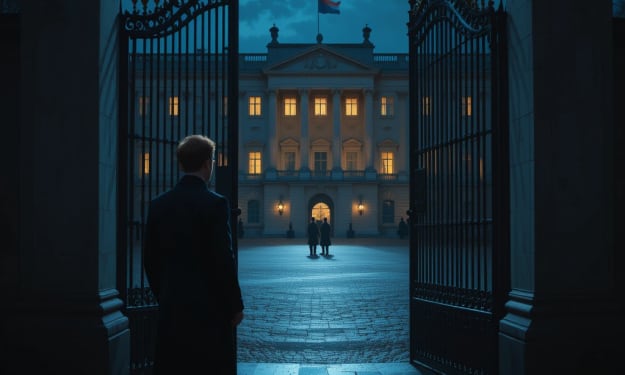
And so Henry stood there, caught between two worlds: one of sunshine and reinvention, the other of stone walls and centuries of legacy. Both demanded a sacrifice. Both promised love.
About the Creator
Keep reading
More stories from Norul Rahman and writers in Fiction and other communities.
I Owe You Nothing”: Prince Harry’s Silent Confession of Rejection
It wasn’t the sentence itself that crushed Prince Harry—it was the way it was delivered. Calm. Final. Stripped of affection. When King Charles looked into his son’s eyes and said, “I owe you nothing, son. In this life or after,” it wasn’t just a father turning away from his child. It was the head of the monarchy drawing an unbreakable line.
By Norul Rahman6 months ago in Fiction



Comments
There are no comments for this story
Be the first to respond and start the conversation.