
The Preservers
A post-apocolyptic climate change narrative.

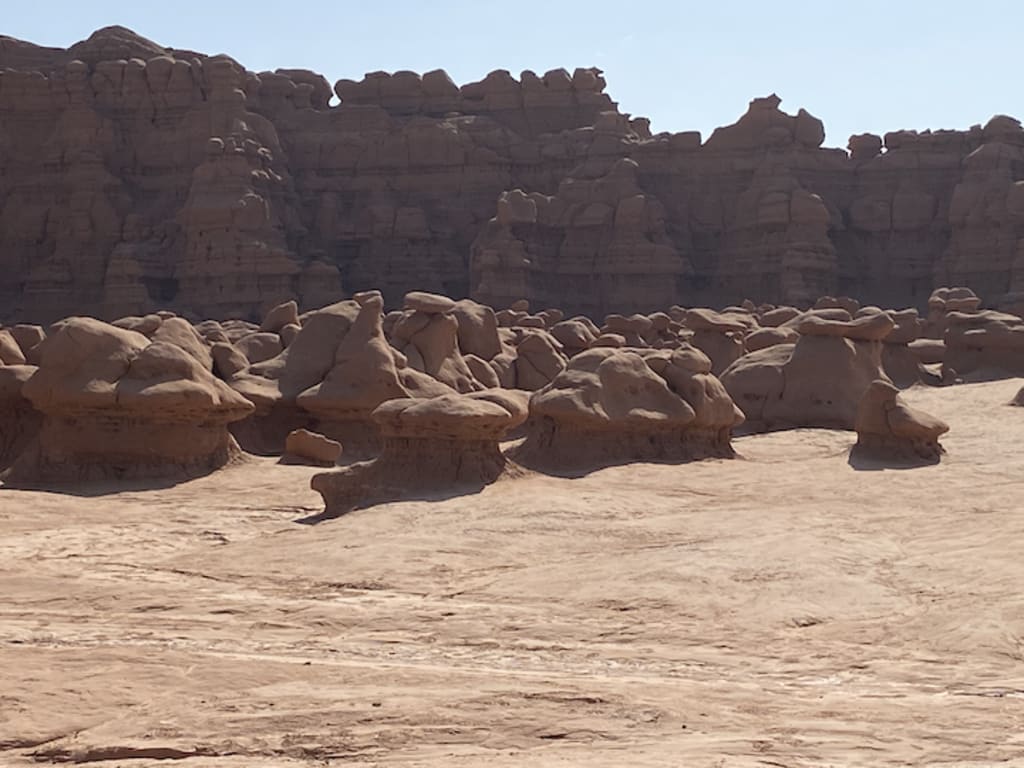
She remembered when she could still feel a heartbeat pulsing through her body.
It used to be the first sensation she felt before opening her eyes. She would lie there, half-awake, as the morning light streamed through her apartment window and onto her eyelids. She remembered feeling it throbbing in her fingertips as she rolled over, releasing her pinned arm after a long night of cuddle-sleeping with Max. In her mind, she romanticized that the pulse had felt comforting and natural, though in reality she had never thought about it before it was gone; it ran, unobserved, through each moment of her life. Keeping time. Keeping her alive.
She thought about it now, as she registered the cold, rocky ground beneath her body and felt the constant, mechanical whirring of blood flow through her veins. “No pump needed!” she remembered Dr. O’Brien saying, triumphantly. He had been a young up-and-comer, just finished with his residency at Charite Hospital in Berlin where he had studied the new technique. She remembered the name of the hospital because it sounded so benevolent, so virtuous. She recalled the look of self-satisfaction in his eyes as he examined her stitches, removed her drains, and listened to her chest with his cold stethoscope. Satisfaction, excitement, and something else she couldn’t recognize then, but what she could see all too well now—hubris.
“He could not have known what would happen,” she rationalized internally, and yet she blamed him, blamed them. It was their fault. Their fault she hadn’t eaten a good meal in more than five years. Their fault that her mom was dead.
Rene sat up without opening her eyes, shaking the thoughts out of her head. She felt the metal locket settle against her boney chest. It was all that remained of her pulse: the ashes of her offending organ, which her mother had mixed with gold and fashioned, ironically, in the shape of a heart. She scoffed silently. How priorities had changed. The idea of using precious metals for something so sentimental now was not only stupid, but dangerous. She should have hawked it years ago, but she held onto it as the last reminder of her life, her mother, her humanity.
She looked down at her body. She guessed she was somewhere around 100 pounds now. Her once curvy figure was emaciated beyond recognition, except to Max, who had remained with her throughout the course of events and had seen her transition. “I wonder if he still thinks I’m attractive,” she thought, emotionlessly.
She turned to Max and watched him sleep in the darkness. She was startled when she heard a voice come from him.
“Is it time to get going, Ne?”
“We’re a little early, but since we’re both up, we might as well get going and be one of the first,” Rene whispered, not wanting to fully break the silence.
Without further word, Max got up, rolled his holey sleeping mat, and lashed it to his knapsack.
She took her blanket and carefully wrapped two saplings that had been hydrating in her water bladder all night. Today was the day. The last payment before they both would have the life-saving surgery and be admitted to the city. After three years of scouring and starving, they had the last payment owed to the city collector.
The city cared about two things: living plants and metal, and both were equally scarce these days. The heat wave five years prior had decimated almost all crops and native plants. It was rare to find anything growing, besides some cacti and thorn bushes. A few months earlier, Rene had spotted some maple seeds lodged under a rock, and she had nursed them to a foot-high each. One tree for each of them; that should be enough to afford the core-energy surgery.
They had camped a few miles outside the city to make their journey easier for the next day. As they meandered through the rocks and dust, they grew light-headed from the abundance of oxygen as they got closer to the city. Their bodies had adapted to need less oxygen living in the wilderness where there were no plants to replenish the supply. As they approached the city, they could see the greenhouse dome, 10-stories high, with treetops peaking through the glass above the wall. Though Rene had been to the city each year for the collecting, it still was breathtaking. “Or breath-giving?” she thought to herself. “Always the wordsmith,” she could hear her mother’s voice saying in her mind. She smiled.
As the couple approached the guard station, Rene saw a faded billboard: “Fight climate change and live forever!” She remembered the first time she saw the ad. The first mechanical transition surgery was completed when Rene was in high school. It was a long-term heart pump replacement. In the ten years following, before the heat wave, she vaguely remembered hearing headlines of the next milestones. “A combo heart and core energy transplant…”, “A successful mechanical brain sequencing…”, “A fully mechanized human…”. She was busy focused on midterms and, later, advancing her career in marketing. It wasn’t until she needed lifesaving surgery that she began paying attention.
Two summers after Rene graduated college, she felt a deep, unrelenting pressure in her chest and had difficulty breathing. She blacked out and was rushed to the hospital where she was diagnosed with a heart attack and related myocardial rupture. She needed a heart transplant, or to undergo a heart pump mechanical transition surgery. Her mother had to make a difficult call: though she generally did not like the idea of her daughter not having a heart, no donor hearts became available, and she was forced to make a decision to save her daughter’s life.
For people, like Rene, who had an issue with one of their organs, the mechanizations surgeries were selectively undertaken and widely celebrated. Others—often richer, older, and more powerful others—would opt in for surgery after surgery, completely becoming mechanized in an attempt to subjugate nature. The most innovative surgery was the core energy surgery, which replaced the entire digestive system with a reverse-photo synthesizing mechanism that used oxygen and sunlight to provide energy to the body, eliminating the need for food.
When the heat wave hit, the land became barren, leading to food shortages and a lack of oxygen for the few who had undergone the core energy surgery. Two ideological camps formed: the eaters and the preservers. The preservers gathered all the metals and plants they could find and created the sanctuary Green City, where they could live in peace, away from the chaos of the martian world around them. The preservers created a 25-mile barren border around their city to starve out any eaters who would venture to come near. Any attacks died within days, as the eaters perished of hunger.
Twice a year, at the change between The Heat and The Cold, the Green City would open its walls and accept offerings from eaters as payment toward a life-saving core life surgery. The recipients of the surgery would then be granted refuge within the walls of the Green City. The Cold was coming. Rene could tell by the metallic taste in the air. She and Max would not survive another Cold. This was their last chance to enter the city.
Max was stopped by a guard at the gate. He was more metal than man; it was clear he was in the last phases of his mechanical transition. The only flesh that remained was his gums, as he opened his mouth to talk. No teeth—he didn’t need them. Though she had seen faces like his before, it still caused Rene to shiver in the morning heat. Max gave the guard their passes, which showed their past collection payments. The guard, stone-faced, motioned for the couple to enter.
Max led Rene to their collector booth. Number 43. They were early, but not the first. There were three ragged-looking travelers in front of them. The man in front of the couple grunted as they joined the line. Max grunted in acknowledgement. The man locked eyes with Rene for a moment. When he turned away, she held her pack a little tighter and glanced down to ensure her treasure was concealed. It was.
The collector, a familiar face from previous years, cheerily greeted each traveler as they approached his table. It was a jarring and unfamiliar noise to Rene’s ears. She might have liked this man in the Before, but now he was alien, a reminder of a world that no longer existed, a world she had spent years trying to forget.
Rene and Max reached the collector and Rene, with a glance around, loosed her pack and placed the half-wilted saplings on table.
“Oh my!” exclaimed the collector, his metallic stomach bumping the table in excitement. “These must be some of the finest seedlings we’ve seen all season! Where did you find them?”
Rene started to speak, but her mouth was dry and her words came out more broken than she intended. “10 days north of here, under a rock near the large lake bed.”
“Well, you have travelled far to get here, and we are happy you’ve come!”
He looked at the pass that Max handed him.
“And it looks like today is your lucky day! The last payment before surgery!”
He stamped each pass with a green ink in the shape of a tree.
“Please follow my associate here. He will get you ready for your surgery. This is very exciting!”
A half-silver man with a gun came around the corner and motioned for Max and Rene to follow.
This was Rene’s idea. Max wanted to try to make it on their own, hunting animals and heading toward the ocean, where they had heard there were still fish. Rene didn’t think they would last until the ocean, which was hundreds of miles to the East, if it was still there at all. She insisted they work to get the surgery, so they could stay together and stay alive.
She looked at Max’s face as they followed the guard down a long, cinderblock hallway that looked like it might have belonged to a high school in a former life. He was difficult to read, but she could see a little nervousness in the twitching of his fingers. She reached for his hand, but he was stiff. She squeezed.
They rounded the corner and the guard led them into a medical room and instructed them to undress and to put on the hospital gowns there for them. Rene hesitantly undressed, securing her locket in an internal pocket within her backpack. He hesitantly placed her clothes on a chair as the guard walked in. Suddenly, she heard a bang that reverberated through the walls and her mind, rendering her confused and disoriented. She looked back and saw Max on the ground, a pool of blood forming around his body, and no look of recognition in his eyes.
She may have screamed. She couldn’t remember. She ran for the guard, who had his back to her and jumped on him, knocking the gun from his flesh arm. In less time than she had to think, she had cocked the gun and pulled the trigger. His head splattered across the wall. She began to shake uncontrollably. What had she done? What would they do to her? Max! Oh Max!
Before she had time to grieve, she heard voices down the hall and her animal instincts took over. She ran. She ran out of the building, ran toward the city wall, ran toward anywhere that wasn’t there.
Before she could reach the wall her body collapsed in exhaustion, this time from malnourishment and shock. She closed her eyes and gave in to the warm ground, listening to the rush of her blood humming through her body. As she faded consciousness, her last thought was: “My heart… my heart.”
After some time, the whirring stopped.
About the Creator
Keep reading
More stories from writers in Fiction and other communities.
A Strong Friendship
A Strong Friendship Kami Mian had a deep love for animals. He had a pet cat who was very dear to him. She was a beautiful white cat with soft, silky fur, and Kami Mian adored her endlessly. He pampered her so much that she slowly became proud of herself. Feeling special and favored, the cat began to believe she was superior to everyone else.
By Sudais Zakwanabout 16 hours ago in Fiction


Comments
There are no comments for this story
Be the first to respond and start the conversation.