
The Practical Marigold
A Woman Ahead of Her Time

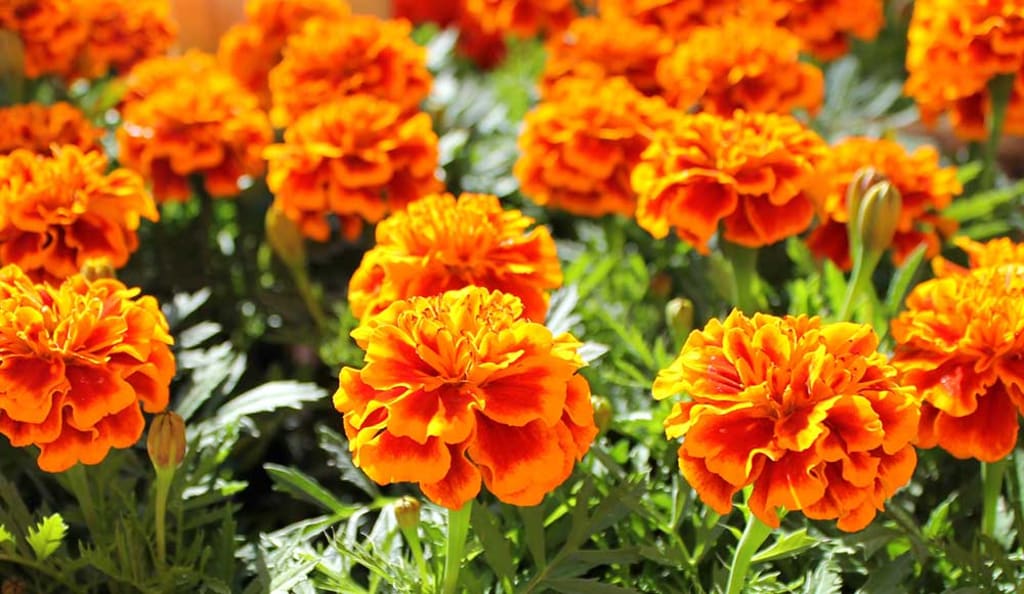
Violet. Lily. Marigold. Rose. Daisy.
My grandmother was the middle child of five daughters born to a prominent English botanist in 1893. She told me once there were certain expectations of being the daughters of an earl during the Victorian era: beauty, grace, propriety, or, at the least, intelligence. Those belonged to her sisters. Violet, the eldest, was the queen of propriety; Lily was the beauty; Rose was the graceful dancer, pianist, and vocalist; and Daisy inherited their father’s scientific curiosity and intelligence. My grandmother said that left her with the most important, and overlooked, characteristic – practicality.
Practical Marigold learned all expected of a young English lady under the tutelage of her mother and grandmother in their country estate: how to manage a household and its servants, how to play the piano, how to embroider, how to properly ride a horse, how to grow a proper orchid, and other excessive etiquette skills that bored her to tears. She recalls the turning point in her life was meeting an older Queen Victoria. A woman was the leader of the entire British Empire; yet, she was planning afternoon tea in the garden for her elder sisters to court potential suitors.
The beauty of being the middle child of five, she said, was you could disappear without anyone noticing. Around sixteen, she began escaping the countryside to visit the bustling city of London. There, she quickly fell in with a group of women known as suffragettes. The politics of these women were considered radical at the time, and many who believed in traditional roles for women would clash with the suffragettes. She ran a dangerous game, to be an earl’s daughter amidst the chaos. But she would smuggle pamphlets back to her home and spread her convictions to the women downstairs and in the village. She advocated change.
When her mother discovered what Marigold had been doing in London, she quickly placed her under house arrest. But that did not stop my grandmother. Practical Marigold placated my great-grandmother by remaining at home, practicing her embroidery, and made a beautiful piece that included a flower representing each of the girls. She gifted this to her mother, whose heart finally softened toward her daughter’s plight. But more importantly, the flowers gave Marigold an idea of symbolism. Soon, she had a stockpile of embroidered marigolds that were dispersed among the suffragettes. They wore the flower to represent both their optimism and their despair – the mixed passions of the movement.
Then, in 1912, a young businessman from America arrived in London. He noted many women wearing the flowers on sashes and lapels. Curiosity getting the better of him, he asked what the flowers meant, and who made them. Within a week, he found himself on the doorstep of a botanist’s home, inquiring after the young lady known as ‘Practical Marigold’.
For not being the proper Violet, or the beautiful Lily, or the graceful Rose, the practical Marigold married first, and married well. And she never gave up her convictions. Her fierce passion for women’s rights carried to America, and she was supported by my grandfather. She marched in Washington, DC for the Nineteenth Amendment. She invested in woman-owned businesses. She wrote for various publications on the importance of universities accepting women. She hosted dinner parties for notables of the Roaring Twenties such as Zelda Fitzgerald, Clara Bow, and Coco Chanel.
‘Practical Marigold’ was a well-known activist in the 1920's, and, now that I’m older, I understand my mother, Marigold’s only daughter. Born in 1921, under the shadow of such a powerful woman, she lived her teenage years in the Great Depression. These shaped her into a quiet, conservative lady with traditional values. All she wanted in life was to be a wife and mother. World War II took one away from her. My grandmother’s strong personality practically robbed her of the other, though not on purpose. I simply grew up admiring my grandmother and her accomplishments. We lived with her after I was born. I was surrounded with mementos of those accomplishments.
How can I see a marigold and not think of a woman that paved the road for someone like me?
But that is the problem, sometimes, with a modern mindset. I only honor the marigold for paving the way for women like me: the outspoken activists, the feminists, the suffragettes. But do the other flowers not have their place?
Proper Violet is seen as an outdated relic by modern standards. She preferred life in Victorian England where decorum was royalty. Did she not have a place in teaching practical Marigold how to organize those important dinner parties and academic luncheons where ideas were exchanged?
Beautiful Lily is seen as mere arm candy for her wealthy husband. But she was also a loving mother to her own beautiful daughter – a daughter that became a model for Coco Chanel and used her beauty to speak for freedom in fashion.
Graceful Rose never used her own artistic talents outside of securing a husband. Yet in her married years, she became a fierce patron of artists, especially female artists introduced to her by her sister. Without patrons like Rose, artists like Frida Kahlo would not have made it to the global radar.
And of course, the scientifically curious intellects like Daisy were the foremothers of ‘women in STEM’. While she may have never become a published scientist, and never received a Nobel Prize, she advocated a love of science in her own children, grandchildren, nieces, and nephews. Without moms passing on their love of science to their children, there is no future generation pursuing science.
I never gave enough credit to the other flowers of that beautiful garden my Practical Marigold came from when I was younger. The flower beds in my front yard were once a solid sea of golden orange marigolds in her honor. But when I look at pictures of those flower beds, I realize, the same flower can be quite boring. Beauty is in diversity.
Now my garden represents the importance of all the flowers that paved the road for me: violets, lilies, marigolds, roses, and daisies.
About the Creator
Ashley Maureena
I am a resident of north Texas and hold a degree in History Education from UTDallas. I worked in the school system and for non-profits.
Please feel free to follow me on social media:
facebook.com/ashleymaureena
ashleymaureena.com
Keep reading
More stories from Ashley Maureena and writers in Fiction and other communities.
The Greek Shark
“Mother, you can go to California, but, it’s no place for Elizabeth.” My mother’s protest to my grandmother echoed in my mind as the Skylark turned down a beachfront street. The protests were dismissed. My grandmother was funding my education, after all, and she demanded to spend the summer with me in warm sunshine before I left for college.
By Ashley Maureena 4 years ago in Fiction
Summoned
Caves have an odd smell: mineral, fungal, traces of the feces of bats and the slow rot of silent, blind fish in dark, subterranean pools. I have heard the young men of the village mock each other by sniffing an exhalation and declaring: "Cave breath!" as though it were a mortal insult, some potent hex. I know what they mean, now. Imagine that the petrichor, the rich and pungent cologne that rain dapples soil with, became concentrated, corrupted, and was breathed into the mouth of someone who will never, fully exhale.
By D. J. Reddall5 days ago in Fiction




Comments
There are no comments for this story
Be the first to respond and start the conversation.