
The Power of Mirror Neurons:
How You Feel What Others Feel Without Knowing It
Have You Ever Cried During a Movie? Here’s why
Have you ever found yourself tearing up during a sad scene in a movie—even though you know it’s fiction? Or felt anxious because someone around you was nervous, even if they didn’t say a word?
You weren’t being dramatic. You were simply being… human.
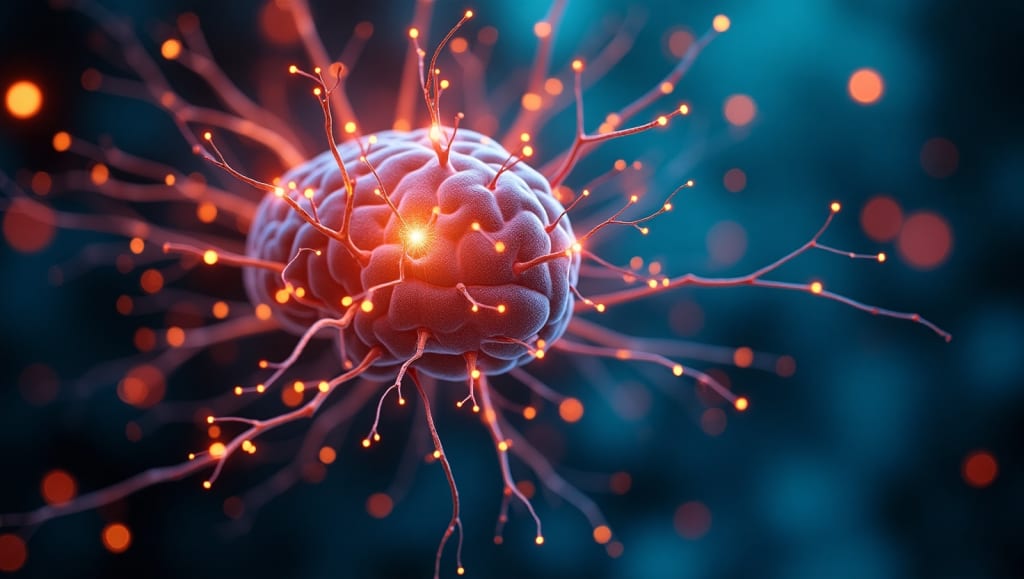
And behind these invisible emotional ripples lies a powerful and fascinating part of your brain: mirror neurons.
These tiny neurological messengers are the reason you can feel someone else’s pain, joy, embarrassment, or even physical discomfort—without a single word spoken.
________________________________________
What Are Mirror Neurons?
Mirror neurons are a special type of brain cell that "mirrors" the emotions and actions of others.
Discovered accidentally in the 1990s by a group of Italian scientists, mirror neurons were first observed in monkeys. When a monkey watched a researcher grab a peanut, the same brain area lit up as if the monkey had grabbed it themselves.
That changed everything.
Later studies in humans confirmed it: when you see someone smile, cry, fall, or flinch in pain—parts of your brain light up as if you were doing or feeling the same thing. You don’t just watch. You experience.
________________________________________
Why It Matters: The Root of Empathy
Mirror neurons are believed to be at the core of empathy—our ability to emotionally connect with others.
Think about it:
• You wince when someone stubs their toe.
• You laugh when your friend laughs uncontrollably.
• You feel secondhand embarrassment when someone makes a social mistake.
You’re not faking it. Your brain is wired to feel what others feel.
It’s almost like you have an internal emotional Wi-Fi that’s always connected to those around you.
________________________________________
Everyday Examples You’ve Already Experienced
Mirror neurons are not just for extreme situations. They influence everyday social life in ways you’ve probably never noticed:
→ Yawning is contagious? Thank mirror neurons.
When someone yawns, your mirror neurons simulate the action and make you want to yawn too.
→ You feel sad when your friend is down—even if nothing bad happened to you.
Your brain reflects their sadness like a mirror, and now you’re feeling it too.
→ Watching a sports game gives you adrenaline? Or your leg twitches when someone kicks a ball?
Your brain isn’t just watching; it’s mentally participating.
________________________________________
Why Some People Feel More Than Others
Not everyone experiences emotions with the same intensity. Some people are more “sensitive” to others' emotions—those we often call empaths or highly sensitive people (HSPs).
This may be linked to more active or responsive mirror neuron systems.
They:
• Absorb energy from a room.
• Feel emotional shifts quickly.
• Can’t "turn off" their connection to others.
And on the other end, those with conditions like autism may have different mirror neuron activity, which can affect social understanding or emotional reciprocity—not due to lack of feeling, but differences in how it’s processed.
________________________________________
The Double-Edged Sword of Empathy
While the mirror neuron system is what makes us compassionate and socially connected, it can also lead to:
• Emotional burnout (especially for caregivers or empaths)
• Absorbing other people’s pain or anxiety
• Over-identifying with someone’s struggle
You might find yourself drained after being around emotionally intense people. That’s not weakness—it’s your mirror neurons doing their job too well.
________________________________________
How to Use This Power for Good
Knowing how mirror neurons work can help you:
✅ Become a better communicator
Your facial expressions, body language, and tone are being mirrored constantly. Smile genuinely, and it spreads. Stay calm during conflict, and others will start to reflect that.
✅ Develop deeper empathy
When someone is upset, just being present—matching their tone softly, listening with intention—can make them feel deeply understood.
✅ Guard your emotional energy
If you’re highly sensitive, set boundaries. Step away from chaotic environments when needed. Recharge so your empathy doesn’t turn into emotional exhaustion.
✅ Practice positive influence
You can change the emotional temperature in a room with your presence. Kindness, patience, and positivity are surprisingly contagious—because the brain is wired to reflect what it receives.
________________________________________
Conclusion: You Are Not Alone—And That’s Beautiful
Mirror neurons are proof that we were never meant to go through life in isolation. Our minds are wired to connect, reflect, and resonate with one another—even in silence.
When someone smiles at you and you smile back without thinking—that’s biology and emotion in perfect sync.
When you feel moved by a stranger’s story—your neurons are literally mirroring their experience.
In a world that often feels divided, our mirror neurons quietly remind us that, beneath all the differences, we are deeply linked.
So next time you feel someone else’s joy, pain, or peace—know this:
It’s not weakness. It’s the most human thing about you.




Comments
There are no comments for this story
Be the first to respond and start the conversation.