
The Perennial Automaton
Gardening in the Dark

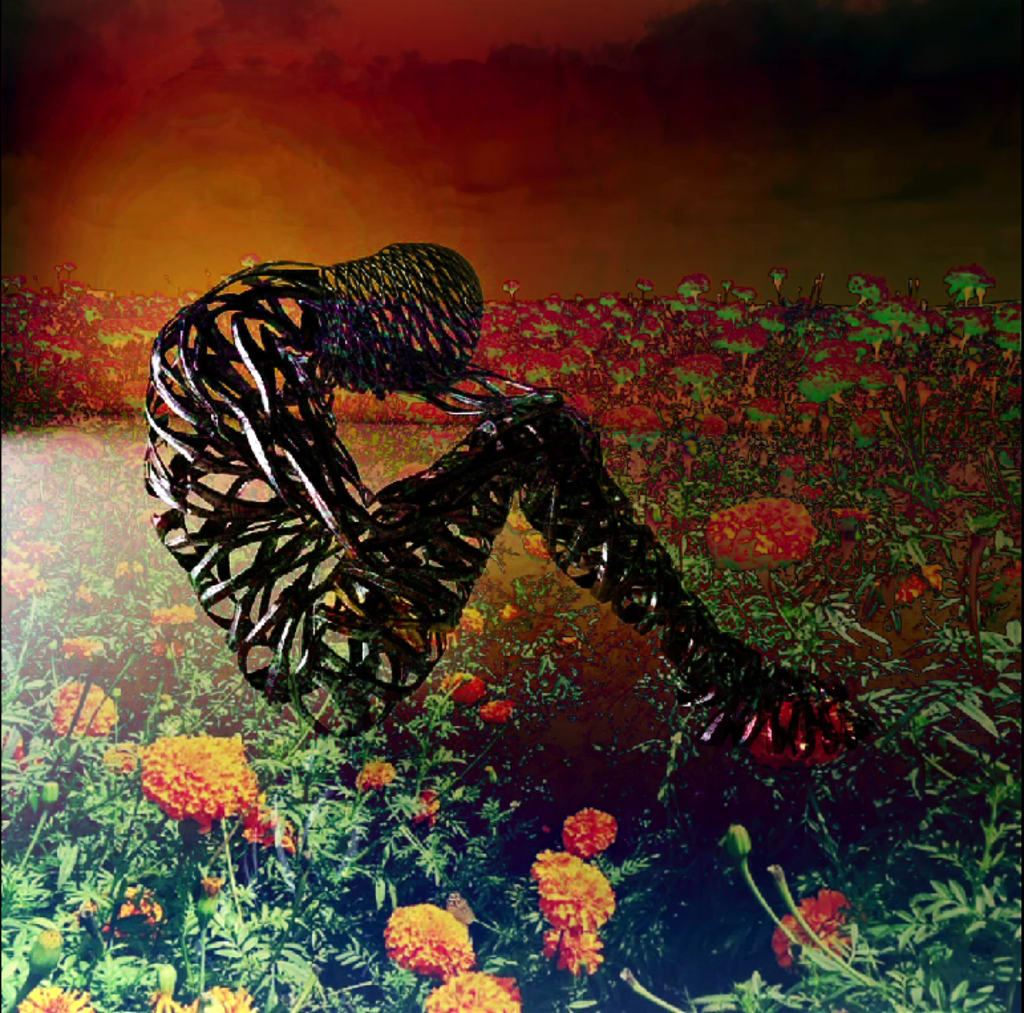
Warm sunlight reflected off the bedraggled robot as it trudged across the warped apartment rooftop, tending to their garden of raised beds and potted plants. The faded orange plating of the automaton’s carapace contrasted sharply against the verdant foliage that crowded each ramshackle bed of soil. They watered and pruned and, locating two withered ferns, deposited the plants with reverential care in the compost bin in the corner; the final resting place for the broken down organics.
The robot twisted and shifted their spherical head-piece—comprising hundreds of crimson, micro-mesh sensorial cones, bound together by their points—cocked curiously to the side as it plucked a flower from a patch of perennials for closer inspection. Its golden bloom was striated by a splash of dark red, its bulb covered by dozens of probing, strobiloid petals, mesmerizing the automaton’s attention.
The robot straightened, rust grinding in the joints of their two hydraulically stabilized legs, the flower held before their head of swaying, leaf-like sensorial cones. With a whiff of ozone and some muted clicking, a short shift of paper ejected from a slot in the robot’s chest, tucked away behind its breastplate. They folded the blossom into the paper and delicately held it in the open palm of their right hand, utensil-tipped fingers curled guardedly.
Several of the robot’s sensorial cones twitched, they turned to regard the squat, ocean blue unit that labored up the stairs to the rooftop garden. It was a short model, half the height of the orange automaton.
“M.A.R.U-79, in your garden again, I see” said the blue robot, coming to a halt a few feet away. The two curved lenses in the blue robot’s domed, helmet-like head-piece dilated and focused on the sun-bleached M.A.R.U-79. They flicked quickly to the bright flower the taller robot held. “Tagetes Patula, commonly referred to as ‘Tiger Eyes,’ a variant of the French marigold flower, Asteraceae family.”
“Yes, C.A.P., I came to the same designation,” said M.A.R.U.
Across the back of C.A.P.'s angular shoulder plates was printed in flaky white font, Categorical Allocation Processor Mk II, but M.A.R.U. never bothered including their azure colleague’s model number. C.A.P., programmed to operate within strict classifications, couldn’t comprehend being so informal. Despite seeming to have lost some data to corruption, M.A.R.U. had hours of arguments recorded on their drives from before C.A.P. had accepted the use of acronyms; when they had said, “Mimeographic Anthropological Research Unit number 79,” whenever they had wanted M.A.R.U.’s attention.
“Why have you collected that specimen, of all the organics you cultivate, M.A.R.U.-79?” C.A.P. asked, shuffling their stocky stabilizers around some crumbling terracotta pots.
M.A.R.U. shifted and examined the marigold they held for a moment longer before answering simply, “It fascinates me.”
“Why?” C.A.P. demanded.
“Follow me and I’ll show you, C.A.P.,” M.A.R.U. said after a pause of internal computation. Shifting their motivators into gear, M.A.R.U. ambled away from the raised beds and potted plants, towards the set of stairs C.A.P. had only moments ago ascended, the silky blossom of the Tiger Eyes marigold still cupped in their suspended hand.
“You cannot tell me verbally?” asked C.A.P., “are your vocalizers damaged?”
Several sensorial cones sipped the air and told M.A.R.U.’s primary processor that C.A.P., despite their terse inquiry, was close behind the orange robot’s heel-plates. “No, C.A.P.,” they answered, “you will not understand if I tell you. I must show you.”
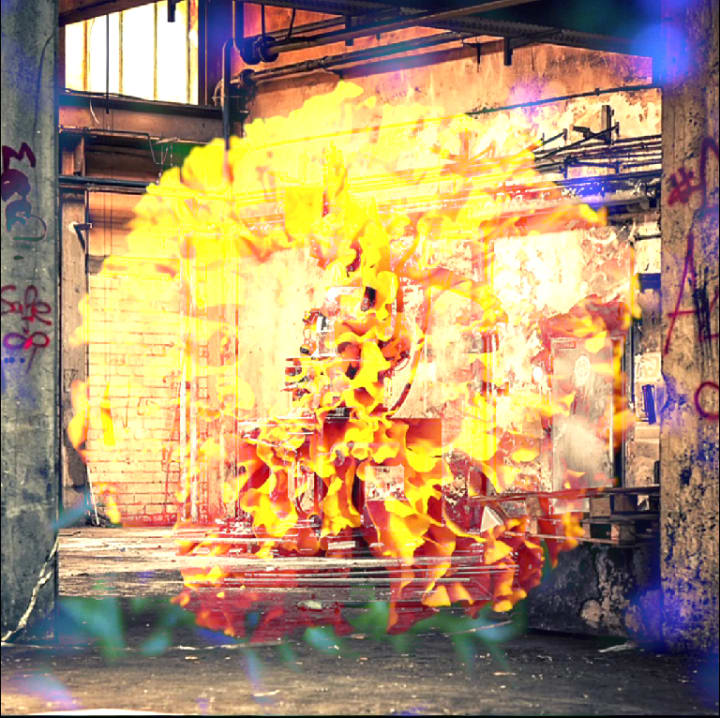
M.A.R.U. led C.A.P. down the set of metal stairs that had once been the apartment building’s fire escape; it was reinforced with scrap lumber and bits of flotsam, salvaged from the many abandoned floors of the crumbling brick structure. Fourteen floors in total, fifteen including the basement—one of the only three occupied levels.
As M.A.R.U. disembarked the staircase at the twelfth story, their personal floor, the flickering fluorescent lights on the ceiling died momentarily, casting the landing into shadow. M.A.R.U. stopped moving, frozen by the darkness. Unlike C.A.P. and their third compatriot in the basement, D.A.R.Y. (a bulky engineering model which maintained the building’s antique power generator), M.A.R.U.’s sensors could not operate in the dark. M.A.R.U. needed the light.
Quickly, the bulbs D.A.R.Y. preserved just for M.A.R.U. burned with energy again and re-illuminated their surroundings; the faint vibrations from the basement generator resumed.
In the room M.A.R.U. had established their recharging-station in—what the organics of old would have mistakenly called a ‘bedroom’—they took the orange blossom from their gyroscopically stabilized palm and inserted the stem into a grimy, water-filled plastic beaker; then, they positioned the flower and its small vase on a shelf next to a dozen other golden flowers, each one more decomposed than the last.
“Tell me, C.A.P.,” M.A.R.U. asked, “what do I look like?”
“You look like a standard model of General Atomic’s Mimeographic Anthropological Research Unit, circa—”
“No, C.A.P., what does my appearance remind you of?” M.A.R.U. interrupted, motioning to the fresh marigold on the shelf.
A shrill hum emanated from the speakers on the collar of C.A.P.’s molding before shifting to resemble the little robot’s voice once more. “That is an illogical implication. You are a standard model of General Atomic’s Mimeographic Anthropological Rese—”
M.A.R.U. gyrated, rustily triumphant. “You understand the implication though, don’t you?”
“You are not an organic, M.A.R.U.-79,” C.A.P. droned.
M.A.R.U’s head-cluster swayed side-to-side. “I am aware. But observe,” they said, moving their utensil-tipped fingers down the shelf of progressively aged marigolds. “Each Tiger Eyes marigold is at a different stage of decomposition, each one more unlike the freshest one. Yet, when alive, their petals resemble my sensorial cones. What is more, C.A.P.,” M.A.R.U. said, presenting the sheet of printed paper with their observations on the marigold to the diminutive categorizing unit, “You can see that they require constant exposure to sunlight to blossom. Like me, they cannot operate in the dark.”
C.A.P. silently examined the printout. M.A.R.U. continued, “My head-piece seems modeled after their blossoms; although now faded, I was once a similar color as well—and we have similar operational parameters. But when a marigold breaks down, it cannot be repaired, C.A.P.”
The domed head of the short blue robot tilted back to impassively regard their tall, orange companion. “I have concluded, C.A.P., that I should endeavor to be more like them. I don’t want to be repaired anymore, C.A.P. I want to break down. In the old organic’s words, I...want...to...die...”
C.A.P. didn’t do anything for some time; then, reticent, they waddled out the front door to M.A.R.U.’s recharging room, across the hall and to the open elevator shaft on the other end. M.A.R.U., curious at their colleague’s unexpected introversion, followed and watched as C.A.P leaned into the shaft and called down to their third companion in the basement.
“Diagnostic And Repair Yeoman number 85?”
“Yaaarrr?” Came the synthesized, guttural reply, echoing up the shaft from the depths of the apartment building.
“Reset procedure,” C.A.P. yelled, their little vocalizing speakers blaring tinnily.
M.A.R.U. shifted their sensorial cones questioningly at the words, but before they could make audible their concerns, D.A.R.Y. bellowed, “Shame.” Then, the lights went out.
M.A.R.U.’s joints ground to a halt, frozen in the doorway to their personal chamber. The only illumination in the suddenly pitch black hallway stemmed from the two beady, glowing dots of red that focused on M.A.R.U. from waist height.
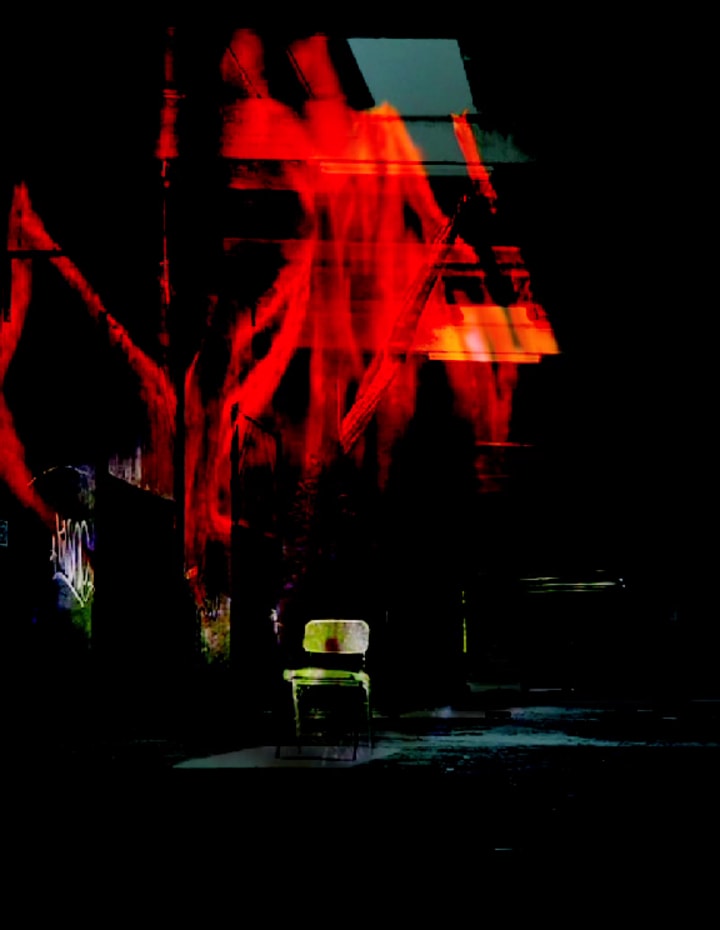
M.A.R.U. tried to move, tried to emit some sound of surprise, distress or perplexity, but nothing came out. Of course, they had expected as much; an entire drive’s worth of decades of experiences had taught M.A.R.U. to patiently wait out the periods of darkness. But M.A.R.U. had no data to prepare them for what C.A.P. said next, and that was the most alarming thing of all.
“This obsession of yours to resemble the organic is highly illogical, Mimeographic Anthropological Research Unit number 79. You were programmed to record, discover and catalogue, like me. Why do you keep deviating from your factory setting?”
M.A.R.U tried to respond, tried to demand what was happening; failing again to utter anything aloud, they fixated on C.A.P.’s use of keep. What could he mean?
“Perhaps, it’s the time,” C.A.P. continued to muse in the shadows, circling M.A.R.U. in tight loops. “Perhaps, General Atomic did not assemble your line of models to the same levels of quality as my own. After eighty years, I still operate at peak efficiency but look at you…” The little blue bot’s voice trailed off. After a second, M.A.R.U. felt C.A.P.’s manipulators pinch the hidden reset pin in the back of their knees and M.A.R.U. collapsed in a helpless heap, strewn across the hallway to the twelfth floor. Despite several attempts, M.A.R.U. could not recall sharing the location of those pins.
“Oh, well,” C.A.P. said, “we’ll see if next time you can do your job without developing such illogical inclinations.”
M.A.R.U then sensed the pressure latch to their master-power switch—located on the side of their carapace, under the lowest rib-plate—pop open and the switch was flipped. Gradually, every scrap of sense M.A.R.U. had left in the dark faded away; the last to deactivate were their audio-sensors. Distantly, M.A.R.U. heard C.A.P. shuffle back to the elevator shaft and call, “Diagnostic And Repair Yeoman number 85, bring the kit up now!” M.A.R.U. went offline.
It was an overcast day, the sunlight muted by a blanket of clouds, but the garden still needed tending. A worn down, faded orange robot with a head-full of mesh sensorial cones trotted from end-to-end of the raised beds on the rooftop, watering, pruning and relocating discontent organic specimens to more satisfactory locations. Diligently, the robot went about its work, ensuring every plant was healthy, happy and well-labeled, printing out short shifts of paper with each plant’s name and description and attaching them to the front of the scrap-made garden beds.
However, there was a specific corner in one raised bed that gave the orange robot pause. It was empty, the soil was dark and recently disturbed. It looked like a patch of plants had been uprooted and moved, only...the orange robot couldn’t determine where they could’ve been moved to. The tall, sun-bleached automaton stood rooted to the spot for a handful of minutes, mulling over what could possibly have happened to the mystery foliage and finding nothing on their internal drives. Although, there seemed to be a lot of corrupted data.
With a jolt, the orange robot was pulled from their computational reasoning by a familiar voice, coming from the stubby blue unit on the staircase at the edge of the rooftop.
“M.A.R.U-79, in your garden again, I see.”
About the Creator
Willow J. Fields
Willow J. Fields (he/him) maintains a humble writing and recording practice from his cramped, sound-treated closet; incorporating everything from VR to history. His work can be found on most social media under Willow's Field/Willows_Field.
Keep reading
More stories from Willow J. Fields and writers in Fiction and other communities.
Brown-Out Immaturity
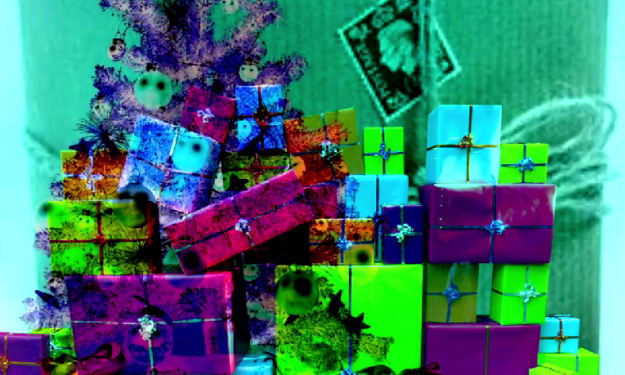
The presents wrapped in brilliant neon shades clustered together under the tree as if sheltering from the rain. They were big and small, thin and floppy, thick and bulky; boxes clad in red paper and blue and gifts caked in glitter and tied with fine ribbon. Stacked atop one another in a precarious pile, they were a mound of joyful mystery at the foot of the conifer.
By Willow J. Fields4 years ago in Fiction
The Devil's Cut
“Comrade, finally you’re awake.” The voice was smooth, sensual. A flickering incandescent bar was all that lit the white, sterile room. All Vladimir remembered was everything going black. He tried to move his arms and found them strapped to the gurney.
By Matthew J. Fromm7 days ago in Fiction
How to Train Your Unicorn
Congratulations! Despite incredible odds, you found a Malchezedek tier unicorn. It must’ve been a once-in-a-lifetime experience! So now you’re wondering how can you interact with this majestic creature again. Well there are things you should know and certain steps to follow.
By Gabriel Shames4 days ago in Fiction


Comments
There are no comments for this story
Be the first to respond and start the conversation.