
The Mysterious World of Black Holes
Exploring the Formation, Effects, and Study of the Most Enigmatic Objects in the Universe

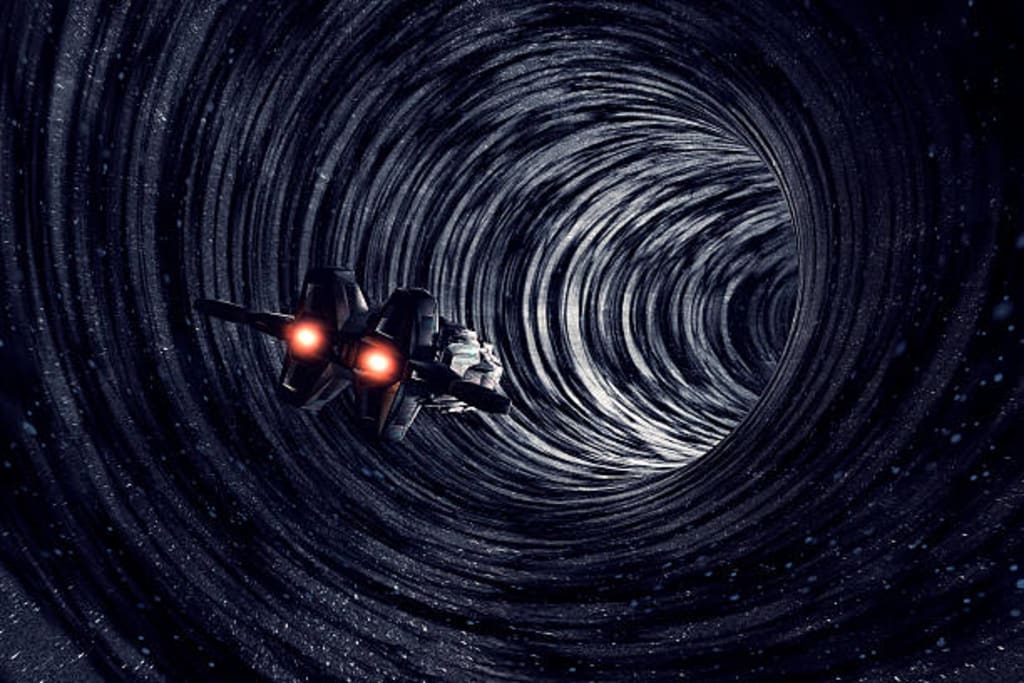
The black hole is one of the most fascinating and mysterious phenomena in the universe. It is a region in space where the gravitational force is so strong that nothing, not even light, can escape its pull. The concept of black holes has captured the imaginations of scientists, philosophers, and the general public for decades, and there is still much we do not know about these cosmic giants.
What is a black hole?
A black hole is a region of space where the gravitational force is so strong that it bends the fabric of spacetime. This bending is so extreme that anything that gets too close to the black hole, including light, is sucked in and cannot escape. The point of no return is known as the event horizon, which is the boundary around a black hole beyond which nothing can escape.
Black holes are formed when a massive star runs out of fuel and can no longer support its own weight. Without the nuclear fusion reactions that were fueling the star's energy, gravity takes over and the star collapses in on itself. If the star is massive enough, the collapse is so extreme that it creates a singularity, a point of infinite density where the laws of physics as we know them break down.
Types of black holes
There are three main types of black holes: stellar, intermediate, and supermassive.
Stellar black holes are the most common type and are formed from the collapse of a single massive star. They typically have a mass of between 3 and 20 times that of the sun.
Intermediate black holes have a mass of between 100 and 100,000 times that of the sun and are thought to be formed from the collision of several smaller black holes.
Supermassive black holes are the largest type and have a mass of more than 1 million times that of the sun. They are found at the center of most galaxies, including our own Milky Way galaxy.
Effects of black holes
Black holes have a profound effect on the surrounding space and objects. Anything that gets too close to a black hole is sucked in and cannot escape. This includes stars, planets, and even entire galaxies. The gravitational force of a black hole is so strong that it can distort the paths of nearby stars and even cause them to collide.
One of the most interesting effects of black holes is the phenomenon known as time dilation. Time dilation occurs when an object gets close to a black hole and the gravitational force becomes so strong that time appears to slow down. This means that time passes more slowly for objects closer to the black hole than for objects further away. This effect has been observed in the form of gravitational redshift, where light emitted from objects near a black hole is shifted to longer wavelengths, indicating that time is passing more slowly.
The study of black holes
The study of black holes is a rapidly evolving field of astronomy and astrophysics. Scientists use a variety of techniques to study black holes, including observing their effects on nearby objects and analyzing the gravitational waves they produce.
In recent years, there have been several groundbreaking discoveries in the study of black holes. In 2019, scientists were able to capture the first-ever image of a black hole using the Event Horizon Telescope, a network of eight telescopes around the world. The image showed the black hole at the center of the galaxy M87 and provided a wealth of new information about these mysterious objects.
Another major breakthrough came in 2015 when the Laser Interferometer Gravitational-Wave Observatory (LIGO) detected gravitational waves for the first time. Gravitational waves are ripples in the fabric of spacetime that are produced when two massive objects, such as black holes, collide. The detection of these waves provided further evidence for the existence of black holes and opened up new avenues for their study.
About the Creator
Keep reading
More stories from Uzair Khan and writers in Fiction and other communities.
The Language of Love
Once upon a time, a young woman named Leila lived in a small village nestled in the heart of a lush forest. She was known for her kind heart and gentle demeanor, but her quiet nature often left her feeling lonely and misunderstood. Despite this, she remained hopeful that one day she would find someone who understood her and loved her for who she truly was.
By Uzair Khan3 years ago in Fiction
Miss Persephone's Manual to a Seemingly Ordinary Life
Miss Persephone was found at the dining table, her blue eyes swollen, her tears arriving and retreating like the tides of the ocean. Earlier that day, her family had visited her in the retirement home where she had lived for eight years. It was her eightieth birthday.
By Imola Tóth5 days ago in Fiction




Comments
There are no comments for this story
Be the first to respond and start the conversation.