
The Missing Girl
What we call the beginning is often the end.

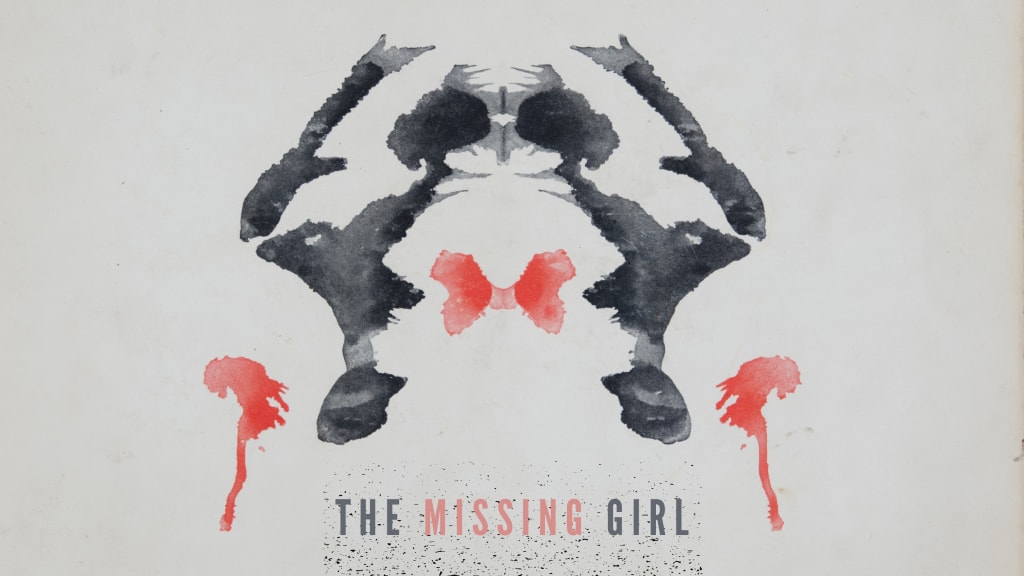
It was an unusually arctic October night when seven-year-old Jenny Parker fell into the lake. Nobody saw it happen. They didn’t know for several days until the water thawed and the cold-blue body floated to the surface and washed up on the beach. The body was discovered by a jogger out for an early morning run. It was a beautiful morning, they’d said, one of the crisp autumn kind where sunlight shined through warm-colored leaves. If you looked close enough, you could see the leaves’ veins.
It was a nice reminder, they said, that life is all around us. It was an ironic thought.
They came upon the body laying face-first in the grey sand; it wore a lightweight corduroy jacket that was slightly too big; the hair on its head hung in tangled knots. The jogger knew they shouldn’t, but they tried to turn the body over. Who was this child? they wondered. No matter what, though, they couldn't turn the body over.
Police arrived on the scene not long after, established a perimeter of caution tape and took the jogger’s testimony. It was later in the day by then; the fog had vanished and the sun was overhead in a crystal clear blue sky.
The crowd started off small, but American small towns can never let death go unnoticed. As for whether or not they would let it go unsolved is another question.
The Parkers had called police the second they’d realized Jenny was gone. Someone had told them once—they couldn’t remember who—that you had to wait twenty-four hours to file a missing person report. You didn’t. Mr. James Parker, English teacher at Norton Elementary, and his partner, Mr. Edward Parker-Lane, obstetrician at Western Health, were at the front of the crowd. They knew before they arrived what they were going to find. That didn’t mean they were prepared for it.
Police were unable to detach the girl’s face from the rock. Despite the rising temperature, the ice wouldn’t melt. Her hair was frozen so solid, scissors couldn’t cut through it. They tried hand-warmers, matches, a hammer and a crowbar. They tried smashing the rock, then tried digging it out; it might have gone all the way to the center of the Earth.
At first, the spectacle held the crowd’s attention captive, but people get hungry and cold and tired, and eventually, they dwindled and went home.
“You might as well go home too,” Mr. Terrence Cook, chief of the Norton Police Department, said to the Parkers. “I know you don’t want to, but who knows how long we’ll be out here. I’ll give you a call if anything changes.”
The Parkers left. Edward, with red, swollen eyes, fell asleep on the couch, a half-empty glass of bourbon still clutched between his fingers. James didn’t sleep a wink. The phone never rang.
The next day, Jenny Parker’s body was gone.
“We went home around five in the morning,” Cook told the Parkers. “We’d exhausted every option. We weren’t getting anywhere.”
Throughout the rest of the day, police scoured the area and interviewed nearly everyone in town. Nobody knew what happened to the body of Jenny Parker. The Parkers never laid their daughter to rest; most people assumed animals must have gotten to her first. A small, engraved plaque was erected where the body had been found.
REST IN PEACE, JENNY PARKER.
Time passed. The town moved on. The name Jenny Parker became a murmur, then a whisper. Edward Parker-Lane got into his car one evening and never opened the garage door. James Parker grew older, alone.
When the lake froze over again, the winter after Jenny Parker’s death, the town put up a sign: DANGER! Absolutely No Walking on the Ice. There were no ice hockey games or snowball fights, just a bitter wintry chill and grey trees that stretched towards Heaven like rotten, gnarled fingers, surrounding an icy lake.
And at the edge of the lake, there was still the stone in the sand, only now it felt just a bit further away from the center of the Earth. They should have been watching it, the people of Norton, but they didn’t. Why would they?
If they had, though, they would have noticed that centimeter by centimeter, the stone was rising. Slowly, yes, but if they’d looked carefully enough, they’d have seen it. Now it was three meters high and cast a long shadow over the frozen lake. It was oddly shaped, unnatural even, for nothing natural could be formed so perfectly.
James Parker had never been able to bring himself to visit the memorial, and since Edward’s suicide, James’ life had been a constant in-and-out of therapy, a daily regimen of medications and mindful practices that didn’t work. The medication helped. He liked to think it did.
The antidepressants gave him vivid dreams. He’d never, all his life, been able to remember a dream in full, but suddenly he found himself filling page after page in a journal with his dreams retold in impressive detail.
Once, he’d dreamt he lived in a cottage somewhere far away—the English countryside, perhaps—with Edward and Jenny by his side again. They had pets! So many pets. Three huskies named Echo, Spectre and Dahlia. A fat cat named Luna would sleep on his lap. There was a greenhouse out back in which Edward also housed his birds. Jenny had a pesky ferret named Tetsu that always stole recycling from the bin, but she loved him dearly and so James and Edward let him stay.
He’d woken up from the dream in his unbearably dank apartment. The heater was on the fritz. His landlord had promised to fix it a week prior, but a string of rainy days prevented the work from being done. His clothes stuck to him and made him aware of folds he didn’t know he’d had. The bedsheets were wet with sweat, but the pillowcase was damp with tears.
There were times he thought about taking all of his pills, but a sense of conviction always talked him back down. He told himself that he owed it to Edward to live.
"Are you a fan of T.S. Eliot?” his therapist had asked him once. He wasn’t, he told her. “That’s a shame,” she said with no clear inflection. “There’s a part in ‘Little Gidding’ that always stuck out to me. ‘What we call the beginning is often the end. And to make an end is to make a beginning. The end is where we start from.’ It seems to me, James, that you're missing an end, and it's stopping you from a new beginning.”
He marinated on the observation for some time. He'd felt his life had ended ten years earlier, the same day Jenny’s had. He’d carried on for ten years like a zombie, but that wasn't doing anybody any good. Certainly, Jenny and Edward would be sad to see him in such a state. He'd known this all along; it was simply one of those things someone else had to say before he believed it.
With this thought, James Parker left his apartment.
The summers were growing hotter and more humid, but the winters seemed to be waging war, arid and Baltic to the point of hostility. There wasn’t any snow on the ground; his feet crunched over dead grass and frozen earth; he felt the unsympathetic wind in his bones, and it made his false knee feel even more alien.
By the time he reached the lakeside trail where they’d discovered Jenny’s body, his fingers were pins and needles. He tucked them into his pockets but worried he’d already crossed the threshold into frostnip. He considered, for a moment, turning around and doing the whole thing a different day, but another thought reminded him that there wouldn’t be a different day. If he made an excuse this time, nothing would stop him from making excuses next time.
He carried on.
The Monolith towered above him. James Parker wondered when—and why—the town council had it installed. It didn’t seem to serve any practical purpose; it was just a large block of stone in a rather unsavory spot. There was something odd about it, he noticed, though he couldn't place it. Whatever it was, it unsettled him; he wanted to get home as soon as possible.
But he had something to do first. From within his jacket, he pulled a flask, a lighter and a neatly wrapped, old handkerchief. He considered the flask, uncapped it and winced at the smell, but drank some anyway. At the very least, it helped warm him.
He read the name on the plaque out loud. “Jenny Parker.” He unwrapped the handkerchief and held the small yellow legal pad in front of him, a task made difficult by the slick material of his winter gloves. The wind blew the notebook open, the pages fluttering down in a blur, allowing him only glimpses of the simple child’s drawings inside. He wanted to look through it one last time. He couldn’t.
He laid it on the stony ground, doused it with whisky and carefully brought the point of his lighter to the corner of the legal pad; it went up in flames immediately. The small fire barely lasted twenty seconds, and the notebook was gone.
There was silence. Of course there was; what had he been expecting? His life wasn’t a film, and Jenny wouldn’t reappear before him to give the goodbye she had been unable to before. He would not feel Edward’s firm hand on his shoulder.
There was just the wind and his breath.
Then, something else. It was faint, barely more than a whisper in the wind. He might not have noticed it at all had he not been familiar with the tune. Someone was humming the old nursery rhyme, “For Want of a Nail.” His mother had sung it to him as a child, and he, in turn, sang it to Jenny when she was a baby.
James Parker’s mind went through the usual mental gymnastics. I'm imaging it, he thought. It's just the wind. He tried to rationalize his thoughts until the humming came so close and was so clear it was undeniable—someone was humming.
They were right behind him.
His body remained rooted to the spot. His hair stood on end. He felt the urge to sneeze. Someone was staring at him. He turned his head.
There was no one. Just the strange, stone pillar obstructing his view. He rose to his feet, steadied himself. He was being ridiculous. It was the cold. It must be the cold. The cold and the whisky he’d drunk on an empty stomach. He’d have a nice bath when he got home, and then—
“Daddy?” He heard the words, but he refused to let himself believe he’d really heard them. He took a step. “Daddy!" There was a tapping, like a small fist on a bedroom door. He told himself not to look; it didn’t work. She wasn't there. He knew she wouldn't be. Why did he get his hopes up? But there was the knocking again, this time louder. It was coming from inside the Monolith. He pressed his ear against it.
“Jenny?” he said.
“Daddy. Where are you? I can’t see you.”
“I’m right here, honey,” he said. He didn’t want to say it. “I’m right here.” He wanted to cry, but it was too cold for that.
“Is she there, too?"
“Who?”
“The lady,” she said. James heard a burble in the water behind him.
“No,” he told her as if he could convince himself. “She isn’t.”
“Okay, good.” There were footsteps now. Icy, crunchy footsteps. James swallowed. “She’s nice normally, but she can be scary sometimes too.”
“When’s that?” James asked. How many steps had he counted now? Five? Six? He was about twenty feet from the edge of the lake.
“When she’s hungry.”
What we call the beginning, James thought, is often the end.
About the Creator
Austin Harvey
A human trying his best.
Writer for Giddy, FFWD Dating, and ghostwriter of unspoken projects. Editor for Invisible Illness on Medium. Bylines in IDONTMIND, Start it Up, Mind Café, History of Yesterday, and more.
www.austinharveywrites.com
Keep reading
More stories from Austin Harvey and writers in Fiction and other communities.
Miss Persephone's Manual to a Seemingly Ordinary Life
Miss Persephone was found at the dining table, her blue eyes swollen, her tears arriving and retreating like the tides of the ocean. Earlier that day, her family had visited her in the retirement home where she had lived for eight years. It was her eightieth birthday.
By Imola Tóthabout 22 hours ago in Fiction
A Journey of Pickles
Stuart looked at his hamburger. “Perfect, except for one detail.” He walked to the pantry, looked at the shelves for a few long moments. He sighed. “We’re out of pickles.” He sighed again. Deeper. “I hate the basement.” He looked at the door leading down to the deep, dark basement. “Fine.”
By Jamais Jochim2 days ago in Fiction
Getting Serious About Comedy (Part I)
If I were asked to remark on my life and the childhood that paved some road leading me to this point, I would have to say something about all the funny people who surrounded me for the last 26,872 days (and counting). Somewhere along that road, I became a big fan of laughter and the comedy that spawns it – and, I mean not only my own laughter, but the laughter of others, some of which I have actually been responsible for inducing.
By John Oliver Smith7 days ago in Humor


Comments
There are no comments for this story
Be the first to respond and start the conversation.