
The Man Who Always Waited at 4 PM
Every day, he sat alone on a park bench. No one knew why—until someone asked.
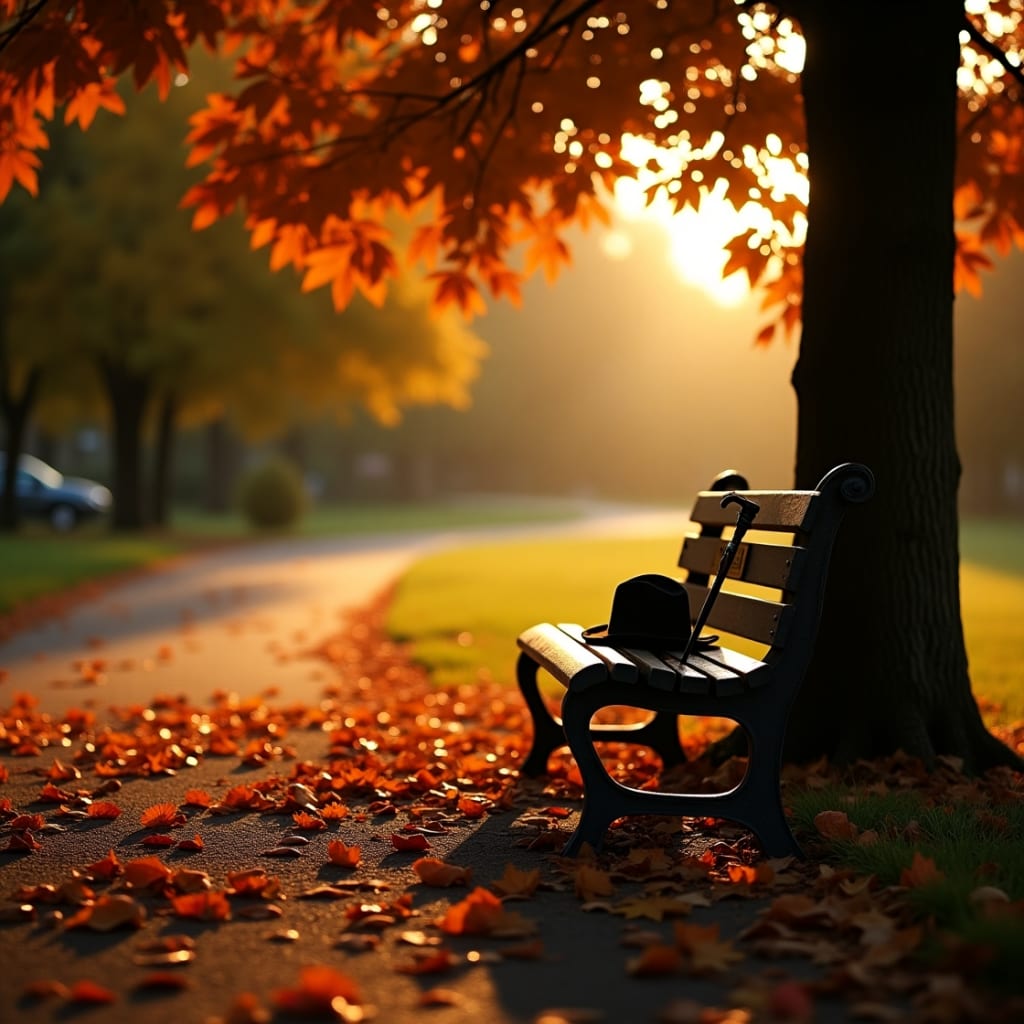
"The Man Who Always Waited at 4 PM"
At exactly 4:00 PM every day, the old man would appear on the park bench beneath the crooked elm tree in Rosehill Park.
Rain or sun, wind or snow, he was always there. Same place. Same time. Same posture — back straight, hands clasped on a cane, eyes scanning the path like he was expecting someone.
The neighborhood had long noticed him, but no one ever asked.
Children whispered that he was a retired spy waiting for a secret message. Others said he was a ghost who didn’t know he was dead. Some believed he had simply lost his mind.
But one day, 17-year-old Jamie Hughes decided to find out the truth.
Jamie had grown up seeing the man on the bench. As a child, he’d pointed him out to his mother and asked, “Who is that?”
She always replied, “Just someone with nowhere better to be.”
Now older — and slightly braver — Jamie found himself in the park on a warm October afternoon. Leaves fell like slow confessions, and the air smelled of baked earth and distant bonfires. He checked his phone: 3:58 PM.
The old man came into view right on schedule, dressed in a pressed coat, fedora, and polished shoes far too formal for a park bench. He sat without a word, nodding once to the elm tree as though it were a longtime friend.
Jamie approached cautiously. “Mind if I sit?”
The man looked up, startled but not annoyed. “If you must.”
Jamie sat a few feet away.
They sat in silence for two full minutes. Then Jamie spoke.
“Why do you come here every day at four?”
The man didn’t answer at first. He tapped his cane lightly on the ground, then sighed. “Everyone sees me. No one ever asks.”
“I’m asking now.”
The man studied him, as if measuring how much to reveal. Then he nodded, slowly.
“I come here,” he began, “because of a promise.”
Jamie tilted his head.
“A long time ago, I fell in love with a girl named Lillian,” the old man said. “We met right here, under this tree. She was reading a book and scowled at me for blocking her sunlight. I apologized. She didn’t smile.”
He paused, a fondness brushing his features. “I sat beside her anyway. We talked for hours. That was June 17th, 1965. We met here every week after that. Wednesdays. Four o’clock. Her idea — she liked consistency.”
Jamie leaned forward.
“We courted for three years. I bought a ring. She said yes.”
He shifted on the bench. “But I got cold feet. The day before our wedding, I didn’t show. I was young. Afraid. A coward, really.”
Jamie’s mouth parted, unsure what to say.
“I came back to the park the next day to explain. She wasn’t there. She never came back. I wrote letters. She never replied. I heard she moved away, eventually married someone else.”
Jamie looked down at the fallen leaves. “And you still come…?”
The man nodded. “Fifty-eight years now. Same time, same place. I wait. Not because I think she’ll return — I know she won’t.”
“Then why?”
The old man smiled, a bittersweet thing. “Because this is where I loved her best. This is where I was whole. Coming here is my way of saying, ‘I remember. I was wrong. I still care.’ It’s the least I can do for someone I hurt so deeply.”
Jamie was silent for a while.
Then he asked, “Did you ever find happiness again?”
The man didn’t answer right away. “Happiness is a strange thing,” he said. “Sometimes we only recognize it when it’s gone. I’ve lived a life — a long one. But no one ever quite replaced her.”
A breeze stirred the leaves. The light shifted.
Jamie stood. “Thank you for telling me.”
The man looked up and gave a short, respectful nod.
As Jamie walked away, he glanced back. The old man was still sitting there, gazing down the path, as if still hoping the impossible might appear around the bend.
That evening, Jamie wrote about the old man in his journal.
The next day, he returned at 4:00 PM with a thermos of tea and sat beside him. No questions. No stories. Just shared silence.
And from then on, sometimes others joined them. A child. A dog walker. A tired young mother. Word had spread. The bench became less about one man’s wait and more about remembering that every person carries a story deeper than what we see.
The old man passed away in spring, seated in the same spot, his cane leaning gently against the bench.
Someone placed a small brass plaque there a week later. It read:
"He waited at 4 PM — not for who would come, but for what once was."
And every day at four, the bench is never quite empty.
About the Creator
Azmat
𝖆 𝖕𝖗𝖔𝖋𝖊𝖘𝖘𝖎𝖔𝖓𝖆𝖑 𝖘𝖙𝖔𝖗𝖎𝖊𝖘 𝖈𝖗𝖊𝖆𝖙𝖔𝖗
The Better Man
They called her Mother, Witch, Angel, and once—only once, to her face—sir, Mary Ann Bickerdyke. It was in a burned-out courthouse in Tennessee, windows punched open by cannon fire, when a Union quartermaster mistook Mary Ann Bickerdyke for a man because she stood where men stood and spoke the way orders wished they could speak for themselves. When he realized his error, he laughed. When he finished laughing, she was still standing there, arms folded, eyes steady, waiting for him to answer her question about the missing bandages.
By Dagmar Goeschickabout 7 hours ago in Fiction
Autonomy Is The Real Privilege
Good morning, freedom-seekers! Today we’re gonna be looking at autonomy. A strange word, I know; one many would probably look at blankly and run away from on sight. We’re gonna figure out what it actually means, consider how it’s achieved, and decipher just how deeply most of us are tangled up in dependence without realising it.
By That ‘Freedom’ Guy2 days ago in Humans



Comments
There are no comments for this story
Be the first to respond and start the conversation.