
The Long Road to Somewhere
A story of borders, battles and becoming
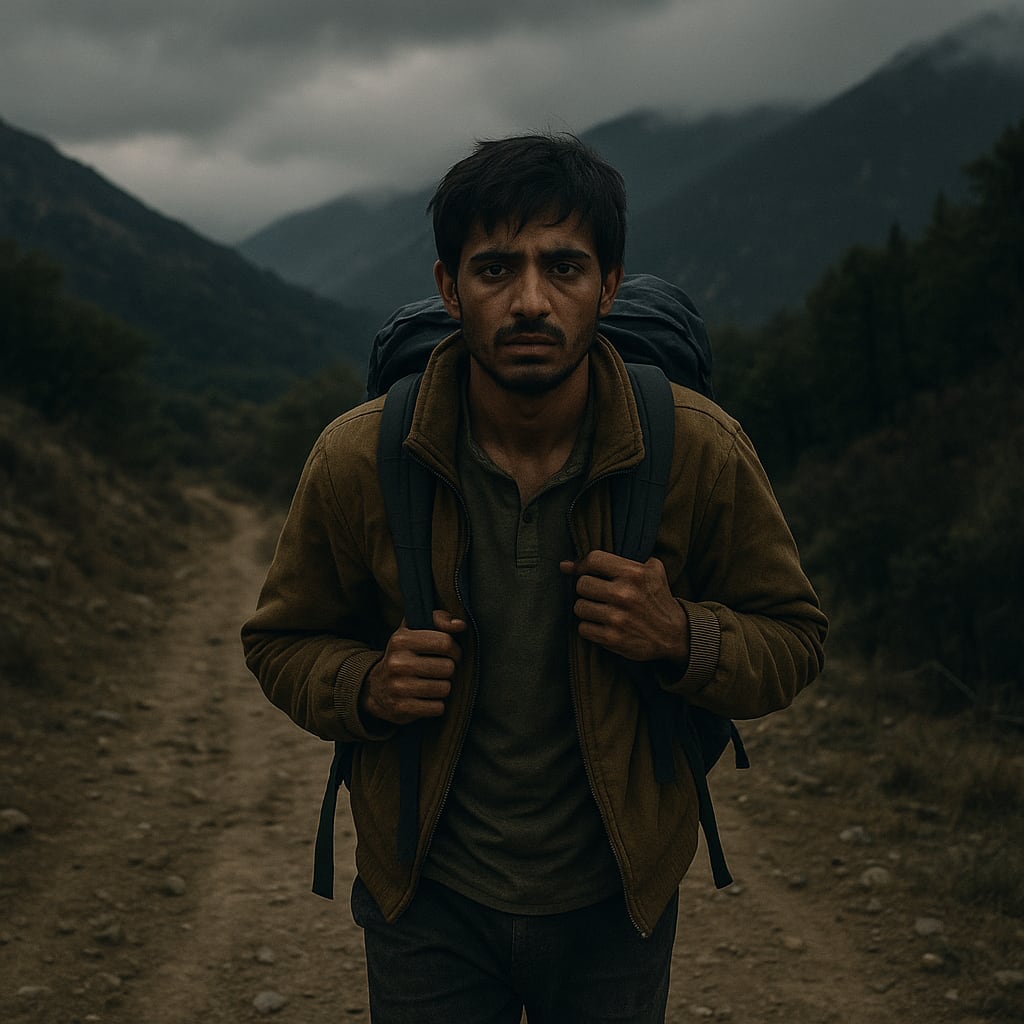
I. The Beginning of the Road
The sun had barely risen when Adeel zipped up his old, frayed backpack for the last time. The streets of Lahore were still asleep, but his thoughts were not. He was leaving behind more than just dust and familiarity—he was abandoning his past, his people, and a country that had forgotten how to make space for his dreams.
He wasn’t flying to his future.
He was walking to it.
No passport could carry the weight of his desperation. No visa could stamp out the ache in his chest. He wanted more—not just money or status, but dignity. In a world where value often came wrapped in designer brands and bank balances, Adeel wanted to stand shoulder to shoulder with those whose lives looked nothing like his own.
At home, his family was quietly crumbling under the weight of poverty. His younger brother, Zain—only thirteen—had taken up shifts at a motorbike workshop, hands blackened with grease before he had even learned algebra. His mother, once a schoolteacher with eyes full of poetry, had stopped smiling long ago. Every time the electricity went out or the price of flour doubled, she seemed to shrink a little further into herself. She wrapped her prayers around Adeel like shawls, but she knew—faith alone would not feed them.
And so, he began.
II. The Heat of Iran, the Edge of Death in Turkey
Iran came first—a land of cracked earth and eyes that watched every step. He moved through it in the backs of trucks, in suffocating silence, with strangers who carried stories they never told. Nights were cold and filled with whispers of betrayal. Mornings brought new guides, new dangers.
Then came Turkey—the “death border,” they called it.
He didn’t understand the name until he saw the first body—half-covered in snow, face eaten by time and cold. Still, Adeel walked. The terrain mocked his shoes. His lips split under a frozen wind. His stomach roared in protest. There were no paths, only guesses.
At night, the mountains swallowed the sun. He huddled under trees that creaked with ancient voices. Wolves howled. Sometimes, he howled back—just to remind himself he was still human.
III. Lost in Bulgaria
He disappeared for seven days in the mountains of Bulgaria.
No one knew where he was—not his family, not his smugglers, not even the stars.
He wandered forests thick with silence. The trees didn’t care he was dying. His water ran out on the second day. On the third, he found a puddle so foul that even flies had given up on it.
He drank anyway.
He was no longer a man. He was a ghost drifting through woods too old to remember kindness.
Back in Lahore, his mother didn’t sleep. Every night she lit a small oil lamp near the window and whispered prayers into the wind, hoping they would find him across continents. Her face grew pale with grief, her hands trembling even while preparing meals they could barely afford. Neighbors stopped asking about him. The silence grew like vines on the walls of their one-bedroom home.
Zain, too young to understand death but old enough to fear it, would press his ear against the phone hoping for it to ring. Sometimes he cried into his pillow so their mother wouldn't hear. Other times, he sat with her in silence, holding her hand—both of them sinking slowly into dread.
IV. The Winding Road: Utrish, Hungary, Serbia
But Adeel didn’t die.
Not then.
He woke up in a small flat in Utrish, wrapped in scratchy blankets and surrounded by men who looked just as lost as he did. The kindness of strangers felt like a miracle.
From there, he moved like a shadow—Hungary, Serbia—each country a blurry painting smeared with cold rain and aching feet. Sometimes he rode in trucks with boxes of illegal dreams. Sometimes he walked through wheat fields under a sky too vast to care.
He slept in parking lots, under bridges, in the backrooms of cheap shops. Hunger became a companion, not an enemy.
At one checkpoint, he was nearly arrested. The officer looked him over—too tired, too dirty, too broken. Then the man looked away.
Adeel walked on.
V. Arrival in Italy
Italy wasn’t golden.
It was grey. Rain fell the day he arrived—soft, relentless, as if the sky itself was washing him clean.
Rome was big, loud, and cold to outsiders.
He worked in kitchens that stank of burnt oil and unspoken insults. He slept on floors with men who no longer had names. Every euro he earned was folded and sent home, like paper birds carrying hope.
The first time his mother’s phone buzzed with his message—
“I am alive, Ammi.”
She collapsed onto the floor, weeping. Zain helped her sit up. That night, they had tea with sugar—something they hadn’t done in months.
Adeel missed home—but he couldn't return. He was still running. From poverty. From invisibility. From the smallness that had once chained his soul.
But he was alive.
He had made it.
VI. The Boy Who Walked Through the World
Now, Adeel stands at a train station in Milan, watching people rush by with phones in one hand and coffee in the other. No one knows what he has seen. No one knows that his feet have walked across nations, across nightmares, into a life built from blood and belief.
He smiles.
Not because everything is perfect.
But because he made it.
He walked where others fell. He drank from puddles no dog would touch. He screamed at the sky and was met with silence.
But he kept walking.
Not for riches.
For worth.
✍️ Author’s Note:
This story is dedicated to the thousands who take the journey not for luxury, but for survival.
To those who cross invisible borders on foot, with nothing but will in their veins.
May your stories never be forgotten.
About the Creator
Keep reading
More stories from Khalid Khan and writers in Fiction and other communities.
Where the Heart Writes
Where the Heart Writes I wrote you first in lines of light, Where shadows bowed to morning’s might. No voice had named you — still, I knew, The way the sky leans into blue. Before your hands had touched my skin, You lived in every song within. Each verse I penned, each silent prayer, Held pieces of you, unaware. Love is not found — it’s softly grown, In words we speak when we’re alone. It blooms between the lines we share, In ink, in breath, in whispered care. I write of you not just in rhyme, But in the turning wheel of time. In fleeting glances, held too long, In aching silence between song. You’re there in pages left unread, In thoughts I think but never said. In coffee warm and nightfall's hush, In every bloom, in every blush. You linger like a sacred hymn, Soft on the air, yet full and brimmed. A rhythm only hearts can feel, Too wild to name, too true to steal. I’ve seen you in a stranger’s laugh, In mirrored dreams split clean in half. I’ve heard your voice in waves that break, In every dawn my soul could take. And though the world may never see The full, unspoken depths of “we,” I’ll write — as if the stars conspire To set these trembling lines on fire. For love, when true, needs not be loud. It speaks in hearts, not to the crowd. And if my words are all I give — Then know: in them, we’ll always live. So let the poets think it art, But what I write — I write from heart. Each letter shaped, each phrase begun, Is proof that two can live as one.
By Khalid Khan8 months ago in Fiction
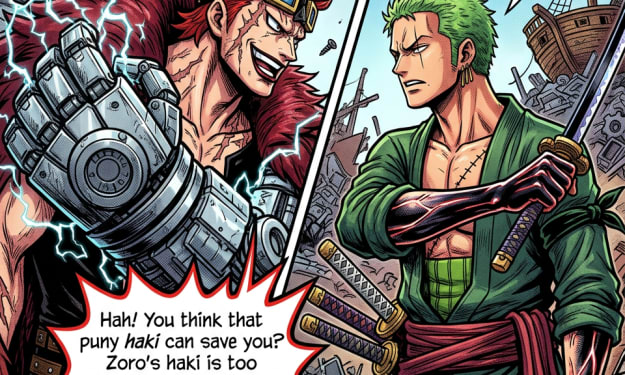
Captain Kid vs Roronoa Zoro
Eustass Captain Kid is a Supreme King of proven strength. He departed his forsaken homeland after enacting a vengeful massacre. Roronoa Zoro is also a conqueror. He's gambled his life numerous times as if he enjoys tempting fate. Between these two powerful pirates however, there's One who reigns supreme over the other.
By Twilights Cavern4 days ago in Fiction
When the Shelter Closes
Across the street from my house, a man slept under a tree, his dog by his side. My first, naive thought: he must be traveling through. But he kept coming back, often sleeping there during the day. Then it hit me—that person might not have a home.
By Bride of Sound8 days ago in Humans


Comments
There are no comments for this story
Be the first to respond and start the conversation.