
The Lingering Ghosts of the Land
A recall of forgotten memories

In the heart of the highland mountains there had once been a great lake on the west end of an ancient city, vast enough to earn the name of ocean,
though its waters were never bitter nor salty, but fresh and life-giving. During the cool winter when it hardly snowed, it was quieter, calmer. From
the mountain ridges you might mistake it for a vast, carefully trimmed plain, the surface gleamed like polished jade, soft and luminous, the city
scattered like black beads, its stillness animated only by the passing of white gulls. In summer, the rest of the ocean flooded. The paddy fields
were bathed in its spill as it seeped through the fortress walls of the ancient city, slipping onto the bluestone streets, into the rock-patterned grounds of
households. The children used to launch reed boats there, watching them spin down the rivulets, or caught small fish for a quick afternoon snack to
share with their friends when their mothers weren't home; the elders washed rice and vegetables in bowls of the same clear water. Festivals were timed to the rhythms of the tide, and lovers met beneath lanterns that swayed with the breeze drifting off its shore.
The elders used to say that a dragon slept beneath, curling its body along the deepest caverns, scales glimmering faintly when moonlight touched the ripples. Its naps kept the ocean steady, its slow breathing rocking the fishing boats like a cradle. They greeted it with a city that naturally mitigated the excess water through the natural slope of the north-south inclination. Openings and weepholes on the city walls absorbed and released water, organically linking the underground channels to the traffic system above. In return, occasionally when the dragon resumed its gaze over the city from its nap, which was usually during summertime, it blessed everyone residing in the city with fresh water from a hidden underground spring, sweeter than any they had tasted.
The ocean was vast but never loud; the dragon was mysterious but never foreign or commanding. Together, they nurtured the land, the people, and were a strong part of their memory, identity, storytelling, and sense of belonging.
But one day, the ocean was met with travellers from another place. They didn’t like the ocean, nor did they believe the dragon. The flooding was unnecessary, burdening, and overwhelming to manage; its vastness terrified the weak; its waves intimidated those who never grew up there nor took the time to understand its rhythms.
So, an erasure was necessary to announce their arrival. They poured concrete into the fringe. They stumped steel framework into the paddy fields where children once flew kites during the warmest days of spring.
The ports grew quiet. The willows bent lower each year. New vegetation species were introduced, and the water was no longer clear.
But they didn’t stop there.
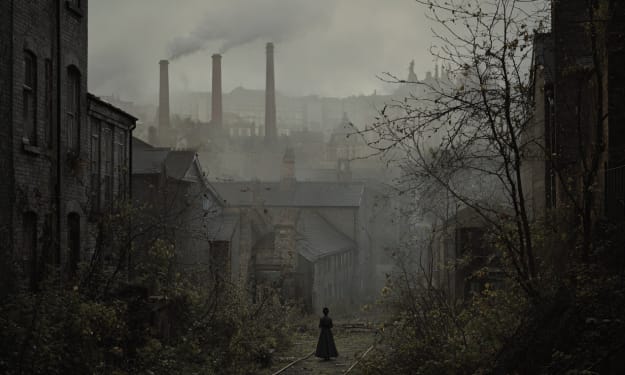
All of a sudden, the walls were deemed too old, too irrelevant to the present, the stone pavements too narrow, too tactile for their vision, and the streetscape a maze that unsettled their sense of orientation. The markets and alleys where people once strolled with songbirds in finely crafted bamboo cages—delicate and light—before sitting down to savour assorted delicacies with fragrant tea, were declared obsolete. Homes, tea houses, neighbourhoods, and small alleyways—once places of amusements, stories, and a resort for the pondering mind—were demolished and replaced. The spring was quiet and dry, no waters breaking forth, no gurgling sounds, the dragon gone as if for good—its only remaining trace a drifting thread of white smoke.
The travellers thought themselves builders of the future.
I never saw the ocean as they spoke of it before I left the city, nor the streets, nor the city walls. They live only in the memories of those before me. Yet whenever I walk near the basin, or look down from the mountain, I can feel them still through the wind as they brush against me, insistent, half-formed. I imagine the children running past packhorses on the bluestone pavements, their voices bright like the morning sun of April, singing about the city wall and riddles as old as time. Grandfathers watering their potted plants after they return from the morning market. Grandmothers telling interesting tales to their young grandchildren while they peel the fava beans together. The moss shimmers emerald in shaded courtyards, and mothers rinsing their porcelain-like hands in water so clear that their skin seems to glow brighter. I imagine the ocean itself, restless, unbowed, pressing always against the frame that tried to contain it. And on the old streets that still glimmer with traces of their glories, I imagine how the afternoon would feel with a plate of delicate pastry by my side; some savoury and aromatic, made with flour, ground pepper, and a hint of dairy; some pale rice-flour slices laced with walnuts, tender yet nutty; and light, flaky-skinned pastries filled with moist, sweet rose paste. While from the city’s heart drifts the distant rise of prayers, chanted in Arabic or in Sanskrit.
What remains whisper, and in their whisper, there is grief, but also endurance. For even if the ocean is gone, its pulse lingers in the soil, in the roots, in the dreams of those who walk the land. The ghost of water is still water enough to remind us, to awaken us, and to guide us.
It was not, perhaps, an ocean in any technical sense. Yet in memory, it weighed more than any sea. And for that, there will always be hope—to protect what is left, to keep alive the memory of what once overflowed every boundary, and a chance for us to rebuild with knowing gentleness.


Comments
There are no comments for this story
Be the first to respond and start the conversation.