
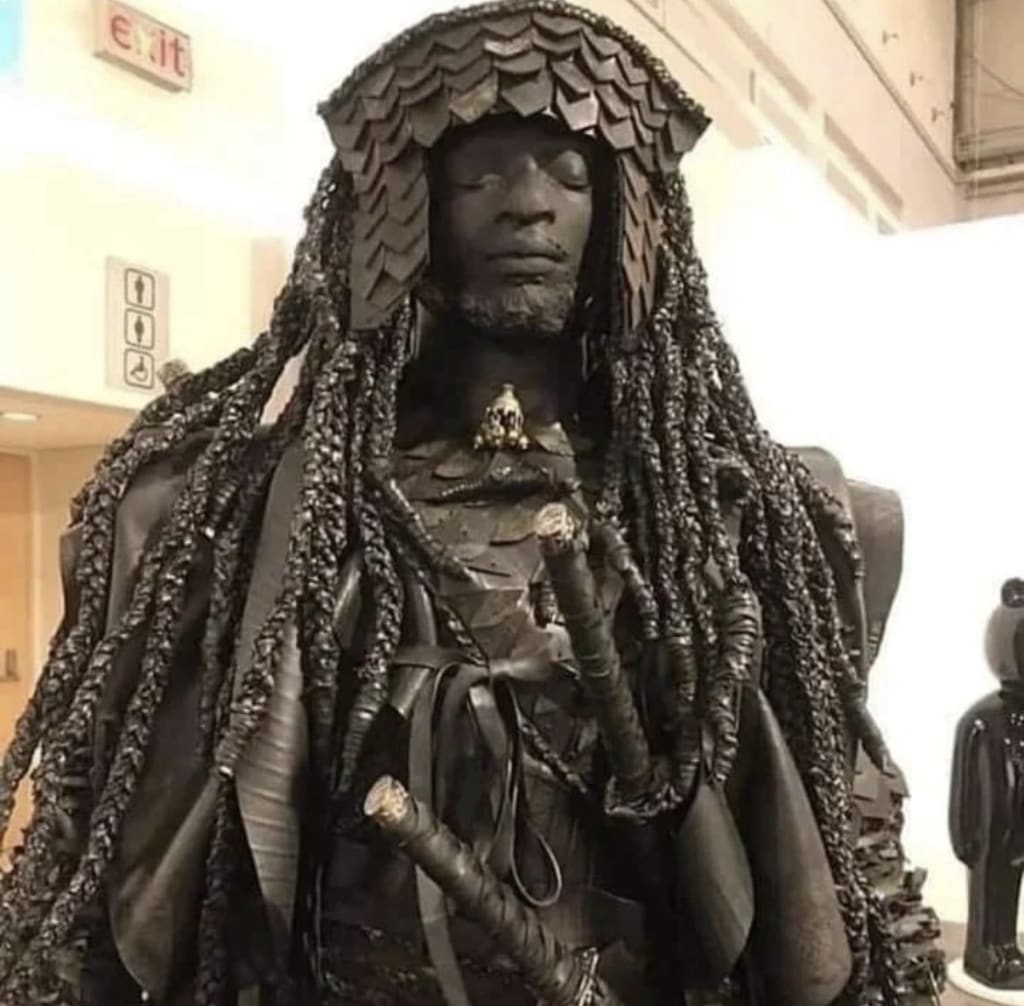
The legend of Yasuke, the first and only black samurai to have existed in Nobunaga's army, has captivated people's imaginations for centuries. While historical records about Yasuke are limited, there are some accounts that provide insight into his life.
Yasuke's exact place of birth remains unknown, although it is believed he might have originated from Mozambique in Africa. Other claims suggest Sudan or Ethiopia as possible birthplaces. The first Africans to arrive in Japan were from Mozambique, which supports the theory that Yasuke hailed from there. In 1579, Yasuke arrived in Japan alongside Alessandro Valignano, an Italian Jesuit, who was on an inspection tour.
It is unclear whether Yasuke was a slave during his time in Japan. Some experts argue that he might have been a slave, while others believe he was a servant or bodyguard. Historical evidence is scarce, making it difficult to ascertain his exact status.
During his stay in Japan, Yasuke had the opportunity to meet the renowned warlord Oda Nobunaga. The two formed a close relationship, as Nobunaga was impressed by Yasuke's towering height of 6'2" and his physical strength. Both men shared an interest in drama and poetry, and Yasuke had some knowledge of the Japanese language. Nobunaga was initially intrigued by Yasuke's dark skin, mistaking it for black ink. However, after Yasuke was cleansed, Nobunaga's admiration for him only grew, and he expressed a desire to learn more about Yasuke's culture. This open-mindedness was unusual in a time when Japan was relatively isolated and racism existed among some segments of society.
In about a year, Yasuke became the first black samurai. Historians debate the possibility of Yasuke achieving such a status without prior fighting experience. It is likely that he underwent rigorous training and proved his skills to gain the title of a samurai.
Yasuke's loyalty to Nobunaga was demonstrated during a tumultuous event when one of Nobunaga's generals, Akechi Mitsuhide, betrayed him and set fire to Nobunaga's palace. Nobunaga, choosing to uphold his honor, performed seppuku, a ritual suicide involving self-disembowelment. As part of this ritual, he asked Yasuke to decapitate him, a task often entrusted to a loyal samurai. Nobunaga also entrusted Yasuke with delivering his head and sword to his son, which symbolized immense trust within samurai and seppuku culture.
After 1582, there are few mentions of Yasuke, and his fate remains unknown. However, his courage, strength, and determination to become a warrior of honor continue to captivate people's interest even after more than 500 years.
Yasuke's story has inspired various adaptations in popular media. There is a movie, series, and anime dedicated to showcasing his remarkable life, ensuring that his legend lives on.
About the Creator
Keep reading
More stories from writers in Fiction and other communities.
After the Storm
After the storm of winter snow there sat a small bear by the name Ted, of course. He loves the snow and likes to roll around in it making all sorts of trails and whatever he has a mind to do. He wondered where all the people are, but in a way, he is hoping that they are all snug in the homes maybe drinking hot chocolate-one of his favorite drinks with mini-marshmallows and eating something homemade for he likes this winter wonderland all to himself to romp and play and maybe even catch some fish down by the river.
By Mark Graham4 days ago in Fiction



Comments
There are no comments for this story
Be the first to respond and start the conversation.