
The Last Speech That Was Never Heard
Fiction A speculative story where Imran Khan writes a final speech before going underground or being silenced, but it never gets delivered. A young journalist discovers the lost manuscript years later, and it changes their life and maybe their country

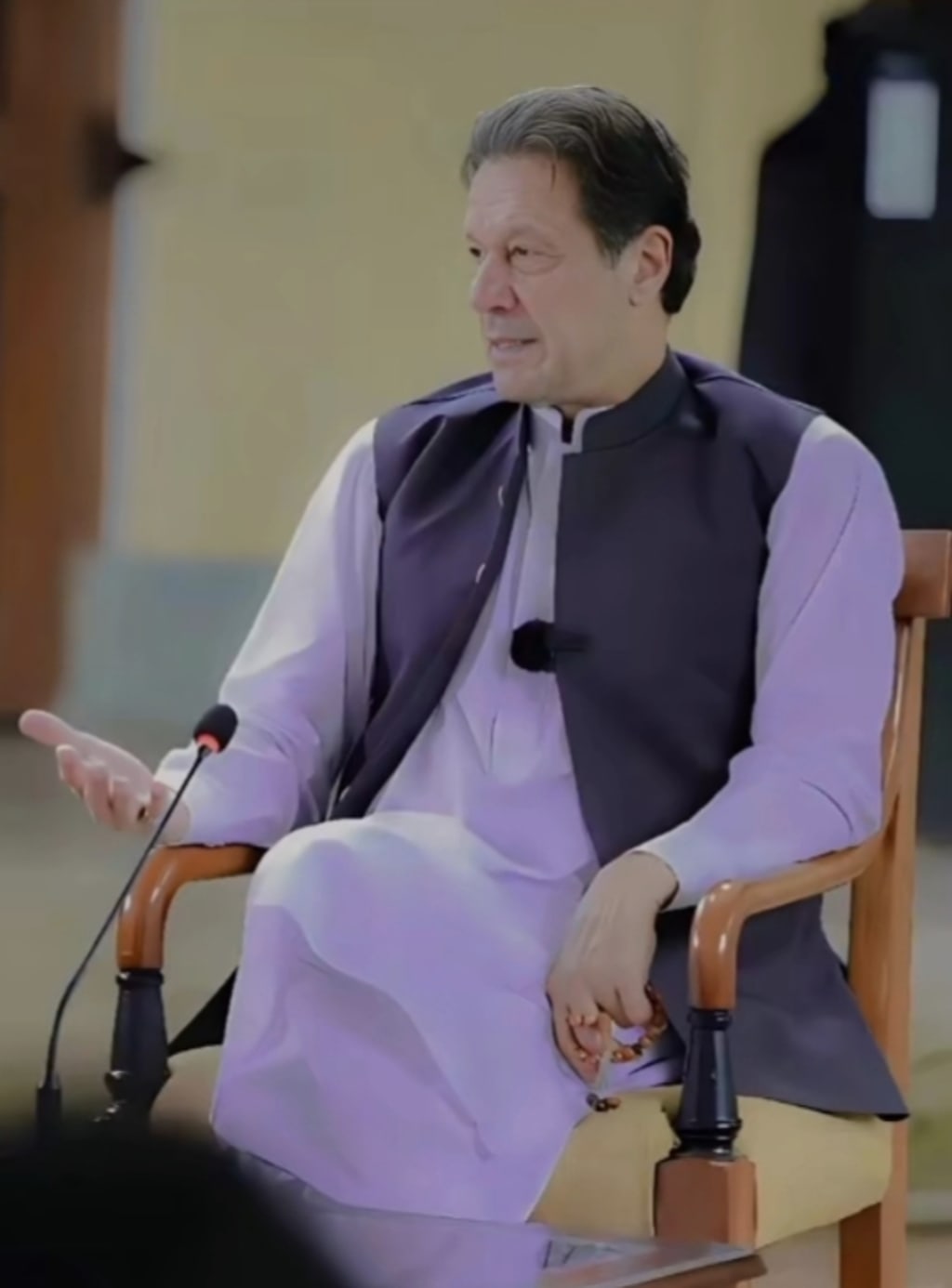
They say truth is the first casualty of war. But in the war between silence and memory, it is truth that returns—sometimes quietly, sometimes with a roar.
The envelope had no name, just an old ink stamp: “Bani Gala, May 2024.” It had been stuffed behind a crumbling brick inside a forgotten safehouse in Rawalpindi. A place that once belonged to a politician, now vanished from memory. It would have remained lost if not for Meher, a 27-year-old freelance journalist with more curiosity than credentials, and just enough recklessness to still believe words could change things.
She found it while helping her uncle clear the old place. Dust fell like ash when she pulled the brick free. Inside was a leather folder, brittle with time, the corners curled like dried leaves. Inside, twelve pages. Handwritten. Ink slightly smudged, as if tears or rain had kissed the lines. And at the top, in unmistakable penmanship:
“To the People of Pakistan – My Final Speech. —Imran Khan”
Meher froze.
The world remembered Imran Khan in pieces. The cricketer. The philanthropist. The Prime Minister. The prisoner. Then, the ghost. No one knew where he had gone after his last house arrest. Some claimed exile, others whispered assassination. The government never confirmed anything. His name had become a myth—invoked at protests, etched on broken walls, and kept alive in folk songs that rose from street corners like incense.
But here it was. A voice thought lost to history, trapped in pages waiting to be heard.
---
The speech began simply.
> “If you are reading this, I may no longer be free to speak. Or alive to do so.
But I want to speak to you one last time—not as your leader, but as your brother, your father, your son.”
It wasn’t political. It wasn’t even angry. It was human.
He spoke of fear—not of death or defeat, but of forgetting. Of a nation so used to pain that it began to accept it as permanent. He wrote of children learning silence before speech. Of mothers who buried sons wrapped in flags. Of youth fed promises like candy, only to find they were chewing glass.
> “Power never belonged to me. It always belonged to you,” he wrote.
“But you gave it away, little by little, every time you chose comfort over courage.
I know—I did the same, once.”
There were moments where the pages felt like confessionals.
He admitted to mistakes. To ego. To trusting the wrong people. He wrote of nights when he sat alone in Bani Gala, reading old letters from supporters, wondering if he had already become what he once fought against.
> “I tried to change the system,” he wrote. “But the system changed me, too.”
But then came a turn. A flicker of fire beneath the ash.
> “Even if I’m gone, do not stop. Do not let silence win. You don’t need a leader.
You need memory. You need truth. And both live in you.”
---
Meher read it again. And again. Her hands trembled, not just with awe, but with responsibility. She knew what she had. But she also knew what it meant.
Publishing it would make her a target.
But not publishing it would be a crime against time.
So she made a choice.
On March 23, 2032—eight years after the man vanished—The Last Speech was published anonymously on a small independent news site. It spread like wildfire. Screens lit up across Pakistan. University students recited parts of it in dorm rooms. Truck drivers painted its lines on the backs of their vehicles. Mothers printed it and placed it in their sons' pockets like talismans.
The government tried to dismiss it as fiction. A hoax. A forgery.
But the people remembered that handwriting.
They remembered the voice that once told them to rise.
They remembered the silence that followed his disappearance.
And now, the silence was broken.
---
A year later, Meher sat on a rooftop in Lahore, watching the city breathe beneath her. She wasn’t a ghostwriter anymore. She wasn’t even anonymous. Her name was on bookshelves now. But more than that, it was whispered at rallies, in schools, in prisons where hope had long since gone quiet.
She looked at the sky, heavy with stars, and smiled.
Some speeches are never heard in their time.
But some—like seeds—wait for the right soil.
And then they bloom.
---
—End—
About the Creator
GooD BoY
Trust yourself, for you have that capability. Find your happiness in others' joy. Every day is a new opportunity—to learn something new and move closer to your dreams.


Comments
There are no comments for this story
Be the first to respond and start the conversation.