
The Last Parcel
The year is 2080...

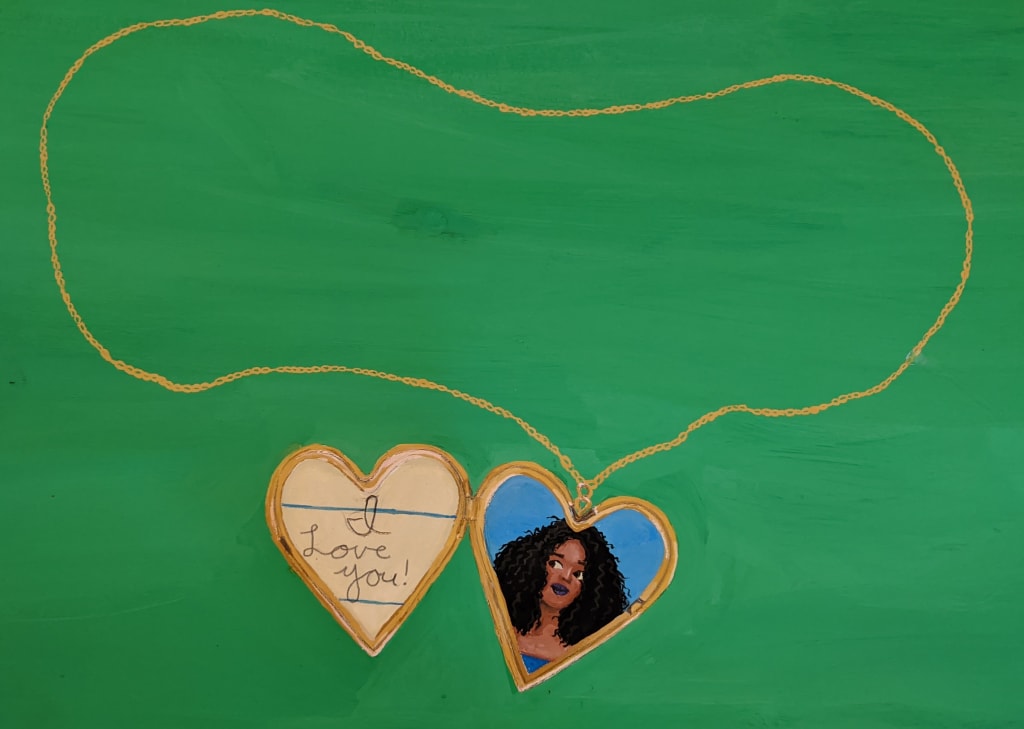
I'm taking my daily trip to the research center when I come across a new Last Parcel stand, and the sight of it stops me in my tracks. They practically line the streets in the city, where people flock every day to work. The sleek, white booth bearing piles of small plastic-wrapped bundles isn't a sight I'm used to seeing in such a sparsely populated area.
It’s set up in front of the abandoned building by my bus stop. Standing behind the piles of parcels is a teenage boy. He looks up as I approach, and I mentally prepare myself for the discomfort of a situation I’ve been put into far too many times.
“Hello ma’am!” the boy over-enthusiastically greets. “Would you be willing to donate 12 credits in exchange for the opportunity to get to know those who have been lost? All proceeds go towards Mortecorp’s disease research.”
It’s a spiel I’ve memorized at this point, but it never fails to ignite an intense feeling of guilt. For the past sixty years or so, diseases have run rampant, wiping out citizens at a rate previously unheard of. It started in 2020 with COVID-19, and just got worse from there. Scientists were unable to keep up. New ailments spawned too quickly to give each one a unique name, never mind develop some sort of vaccine.
Now, whenever someone is unwell for more than a couple of days, they’re automatically diagnosed with “the Sick,” and it’s essentially a death sentence. You’ll rarely meet anyone with more than one or two people to call their family. People don’t put any effort into making new connections because everyone knows that the pain of losing someone isn’t worth knowing them for what is sure to be a horrifically short amount of time.
One of Mortecorp’s most successful business endeavors, the Last Parcel program, was created with the intention of boosting public morale. Now, people can get to know somebody without having to deal with losing them in person. When someone gets diagnosed with the Sick, they have the option to set aside a few of their possessions to be put into a parcel that will be sold in order to raise credits for disease research. This means that dying people who don’t have any living family and friends left get to feel like they’ll be remembered when they pass on, and healthy people can “get to know” someone via the material things that meant the most to them without having to actually watch them die.
I know firsthand, though, that the proceeds don’t actually go towards research; ever since I started visiting the research center that has become evident. The staff is underpaid, the rooms are unsanitary. Research rarely actually occurs, and when it does it simply consists of asking test subjects the same questions they’ve already been asked since the day they volunteered themselves.
While the conditions of the research center deteriorate, Joseph Mortec’s vacations and adventures on his reality show “Life of Mortec” become more and more extravagant and expensive. I can tell where the credits are really going.
Of course, the boy at the stand isn't aware of this. He’s probably just volunteering to get some high school credit and to feel like he’s making a difference in such a tough time. He doesn’t know that he’s simply a small piece in Mortecorp’s giant game of Monopoly.
I avoid looking into his eyes as I say, “Not today sorry.”
“Are you sure? We just got a huge shipment of parcels from up North.”
I sigh. The guilt worsens. The Sick has hit Northern states especially hard. Overpopulation became a huge problem there since the great floods of 2066, and now the Sick runs rampant, spreading nearly three times faster than it does here in Phoenix.
I finally raise my head to tell this poor kid no one last time, but as I meet his eyes and the word dies in my throat.
He has big, round, golden-brown eyes that are deep-set and surrounded by thick black lashes. Matching dark curls frame his brown face.
He looks so much like Henry, I think. Henry, who I’ve known ever since I was begging for scraps in the streets after my last family member died. Henry, who convinced his mother to take me in. Henry, who was both my first kiss and my first love.
Henry, who I am on my way to visit at the research center.
Before I can really think about what I'm doing, I say “Fine, one please.”
The bus ride to the inner city is about an hour long. I usually spend it reading a book or watching whatever stupid episode of “Life of Mortec” is playing on the bus’s entertainment screen. Today, though, I spend the whole ride staring at the parcel wrapped in black plastic that I have balanced on my bouncing thigh. I still can’t believe I caved and bought one. And so easily, too. One gaze into those familiar-looking brown eyes and my sense of self-control was gone.
It’s hard, but I manage to refrain from opening the parcel. I want to wait and open it with Henry. It’s kind of his fault I bought it in the first place, and if this parcel just happens to be from someone who was alive before 2020 I know it’ll make his day. He has this weird obsession with pre-sick culture, always talking about how he had dreams about the two of us having a wedding crowded with at least a hundred people and raising a big family.
But those are just dreams.
“Now approaching Mortecorp’s Disease Research and Containment Center,” a feminine robotic voice says, snapping me out of my parcel-induced trance as the bus begins to slow. When it comes to a complete stop, I gather the parcel and my backpack into my arms and exit the bus doors.
The inner ring of Phoenix isn’t too crowded, but there are definitely more people here than there are at home. The research center is a big beige tower right next door to a post office (my theory is that this makes it more efficient when alerting somebody's relatives or loved ones that they have succumbed to the Sick, but I could be wrong). As usual, there are five different Last Parcel stands in the immediate area and, even though they can see that I am already holding a parcel, the volunteers still call out to me as I hurry past them and into the building.
Inside, I'm greeted by a stout blonde woman who holds a tablet in one hand and a stylus in the other.
“Name?” she asks.
“Lin Taylor,” I answer.
She scribbles my name on the tablet. “Reason for visiting?”
“I’m here to see Henry Manuel, he’s in room 519.”
She nods as she continues to scribble, and then proceeds to ask me a slew of questions about my health and potential exposure to any type of sickness. These questions are just a formality, of course. It doesn’t really matter what I answer, they’d let me through anyway, but Mortecorp likes to give the illusion that they’re concerned with public health.
I then make my way to the elevator, which costs 5 credits to ride, up to the fifth floor and make my way to Henry’s room, which costs another 5 credits to enter. Henry is cozy on his hospital bed, and his eyes are immediately on me as I walk through the door. He knows the exact time I was coming to visit, and I know he was watching the door, awaiting my arrival.
“Finally!” He dramatically exclaims. “You’re three minutes later than usual.”
I chuckle, “Yeah, I was a little late getting onto the bus this morning.”
“How dare you, I was so bored.” He crosses his arms and wrinkles his nose. “I resorted to counting the ceiling tiles again.”
“Oh yeah?” I sit down on the chair next to his bed. “How many were there today?”
“160... Again.”
We smile at each other for a while. I could look at his smile all day. It’s full of more joy than anyone else’s I’ve ever seen. I tear my gaze back down to the contents of my arms, afraid that if I keep looking I’ll notice how sick he’s starting to look, how weak he’s become.
“I brought you something.”
“You know how much I value the material things in life,” he jokes.
I roll my eyes and set the parcel on his lap. He stares at it for a second.
“You’ve gotta be possessed. There’s no way the Lin I know would buy a Last Parcel.”
“Yeah, well, the Lin you know was willing to do something nice today because her boyfriend has a wacky obsession with old stuff,” I pat the parcel. “Open it, maybe you’ll be lucky today.”
His grin widens and, at that moment, I knew buying the parcel was definitely worth it. He rips open the plastic and dumps the contents onto the bed: golden heart-shaped locket and two letters-- addressed to “whoever bought the parcel” and “Louisa.”
I reach for the one labeled “Louisa” but Henry bats my hand away.
“What was that for?”
“That one’s not addressed to us.” He opens the other letter and begins to read out loud.
For the unlucky soul that bought my parcel,
My name is Emily Martin. You were probably hoping for something of value like an old baseball card or something like that, but instead, I’m just gonna ask you a favor.
Right now I’m 86 and lonely. I never married or had kids, just sat wallowing in my own damn sorrow for years. Now I have the Sick, so I guess I’m gonna die pretty soon.
Like all dying people, I have a lot of regrets. Way back in the ‘20s I fell for this chick named Louisa and I haven’t stopped loving her since. She’s the one who gave me the locket with her photo in it. We were together for a while and then had this huge fight around 2025 about god knows what. We’re both stubborn as hell and haven’t talked to each other since, but I sure do miss her. I’ve kept tabs on her over the years and I know she’s still alive. I need her to know that I still love her just as much as I did in the old days, but I’m too weak now to head down to the post office and send a letter myself, so I’m hoping you’re a decent person and will send the letter and locket to her. I just need to know that, when I’m dead, there’s somebody alive who knew and loved me.
Thanks,
Emily Martin
At the bottom of the letter, an address is scrawled in jagged handwriting.
Curious, I grab the locket and open it. The gold-plated material is obviously aged, but the shine still remains. The left side of the locket holds a handwritten note that reads “I love you.” On the right is a photo of a young, smirking girl and, for the second time today, I'm struck by a stranger’s resemblance to Henry.
A lump forms in my throat as I stare at the photo, and the reality of my own situation becomes apparent. Henry is dying. He is the only person I love, and soon he’ll be gone, with only me to remember him.
“I need to send it,” I say. My voice is shaky and Henry notices.
“You okay?”
I show him the locket. He smiles, only it’s a sad smile this time. That boy always understands exactly what I’m thinking. He picks up Louisa’s letter and the locket and presses them into my hands.
That night, after I leave the research center, the next-door post office sends a declaration of love amongst notices of death.
About the Creator
Kate Duffy
She/Her
Nineteen-year-old writer and journalist from San Diego, CA. Student at Arizona State University.
Keep reading
More stories from Kate Duffy and writers in Fiction and other communities.
Off the Book
It ended like every other stupid idea. Badly, and alone. I’m researching digital confession ethics, he said. A tech ethicist. He gestured at floating data I couldn’t see then pulled out a physical notebook. Actual paper, fountain pen. He held it up like he was showing me scripture.
By Nicky Franklya day ago in Fiction
Can We Talk?
“Do you keep tampons in your wallet?” “Wh- what?” “Do you keep tampons inside your wallet?” “What, with my cash and credit cards? No, that’d be weird, they’d get all bent out of shape and then when I needed to use them, I’d have to go through the trouble of fishing it out of the coins and it’d smell like money, plus I’d be the one that ends up dropping the whole thing to the floor and get toilet germs on it, or someone would reach under the stalls to steal it - you know what people are like-”
By Maddy Haywood8 days ago in Fiction
Instructions Included Challenge Winners
For the Instructions Included challenge, we asked writers to tell a story through instructions and to trust the form to carry what could not be said outright. Across the top entries, that trust paid off in many different ways.
By Vocal Curation Team3 days ago in Resources


Comments
There are no comments for this story
Be the first to respond and start the conversation.