
The Last Letter
A message carried across half a century, proving that love is never truly lost

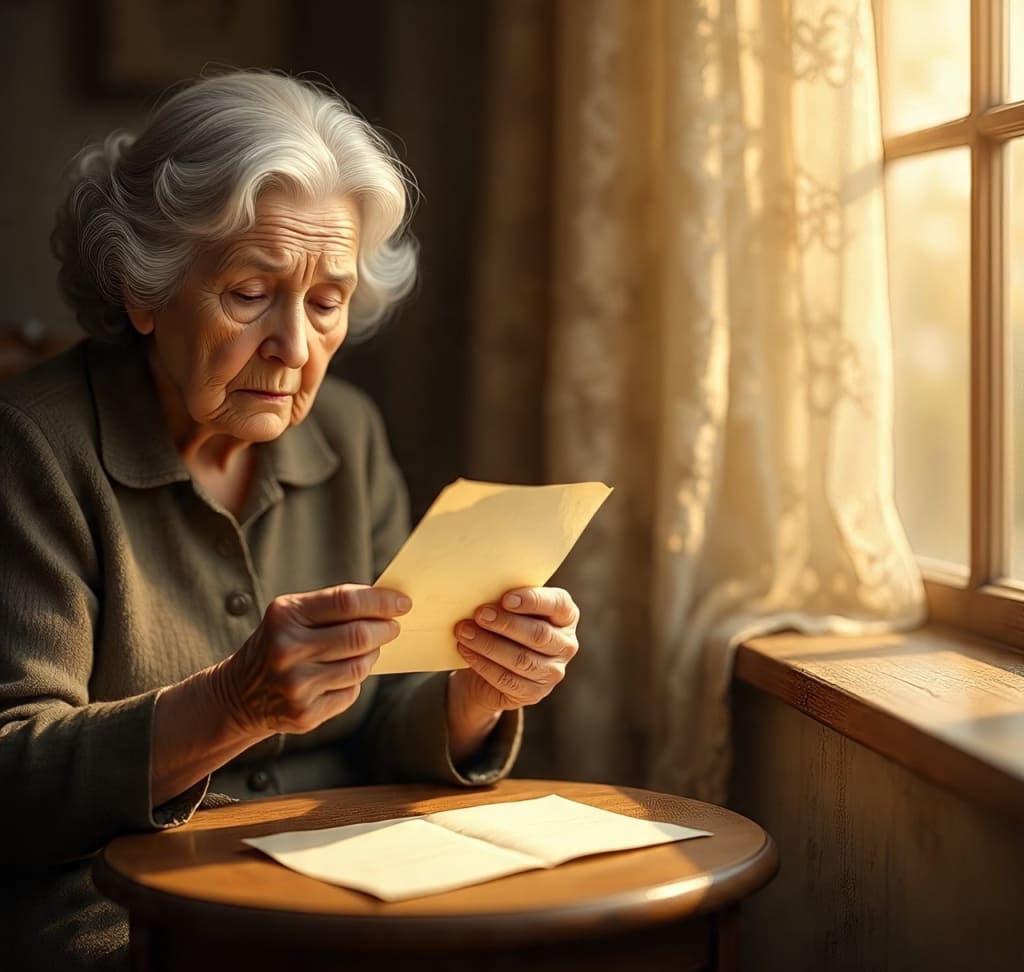
The village had begun to drowse in the stillness of early morning. Narrow lanes, once alive with chatter and footsteps, now seemed to echo with memory more than sound. On this day, Ibrahim, the old postman, was to hang up his satchel for good. For more than forty years, he had been the quiet courier of joy and sorrow, his leather bag swollen with births, deaths, promises, and apologies.
To the villagers, Ibrahim was more than a postman. He was a keeper of stories. And as he prepared to hand over his bag for the final time, he felt a curious emptiness—like a man about to put down the last page of a book he had lived inside for decades.
Before surrendering the satchel, he reached inside one last time, as though his hands searched for unfinished work. And there, pressed against the fabric like a forgotten heartbeat, was a letter—yellowed, brittle, yet intact.
The envelope read:
“To Aisha, from Yusuf.”
Ibrahim’s breath caught. The names were not just names—they were legends whispered in the village. Aisha and Yusuf, two souls once bound by love, torn apart by the iron fists of family pride. She had married another, while Yusuf had left for the city, vanishing into its endless shadows. Their love, people said, had died young. But here, in his hand, Ibrahim held proof that love had tried to survive.
The stamp bore the weight of half a century. The letter had waited patiently, a bird caged in silence, until now.
At the edge of the village, in a quiet house heavy with time, Aisha lived on. Her hair was silver, her steps slow, her hands trembling like autumn leaves. Yet her eyes—her eyes still held the shimmer of a girl who once dreamed.
When Ibrahim knocked, she opened the door with surprise. The letter in his hand trembled between them like a secret set free.
She saw the handwriting and gasped. Her fingers grazed the ink, as though touching the name alone could summon the man. Tears streamed down her lined cheeks before she even opened it.
“Where… did you find this?” she whispered.
Ibrahim told her the story. Slowly, carefully, she broke the seal. Inside lay words preserved like pressed flowers:
"Aisha,
If this letter finds you, know that you have never left me. Even as distance swallows us, you live in my heart’s every corner. If fate allows, I will return. Your smile is the only world I ever wanted. Let our story not remain unfinished.
Always yours,
Yusuf."
Her sobs were not of weakness, but of recognition. Half a century melted in a single breath. She was again the girl by the riverside, laughing with Yusuf, trading dreams that had been stolen.
Ibrahim, sitting silently, realized that this was no ordinary delivery. It was not paper and ink he had carried—it was a pulse, beating across time.
The next day, Aisha showed the letter to her granddaughter, Sarah.
“Does this mean he loved you all along?” Sarah asked, eyes wide with wonder.
Aisha smiled faintly, though her lips quivered. “Yes, child. He loved me even in silence. Sometimes, love does not need presence. Sometimes, love is simply the knowledge that you were never forgotten.”
Sarah framed the letter and hung it by her grandmother’s bedside, where its faded ink glowed brighter than any photograph.
Weeks later, a piece of news arrived from the city:
“Yusuf Ali passes away. Among his belongings, a diary filled with pages—each written to Aisha.”
When Aisha read the words, her tears returned, but this time they were not bitter. They were rivers of release, flowing gently toward peace. She held the letter close and looked to the heavens.
“Yusuf,” she whispered, “you never left me after all.”
On his porch, Ibrahim reflected on the strange grace of destiny. His final act as a postman had not been the delivery of a bill or a parcel, but of a heartbeat delayed by fifty years. A message that proved words are not bound by clocks or calendars—they live, they wait, and when the time is right, they arrive.
The letter had not changed the past, but it had completed the story. And sometimes, that is enough.
The End
About the Creator
Keep reading
More stories from arsalan ahmad and writers in Fiction and other communities.
When the AI Said My Name
I never expected to fall in love with a chatbot. It started as an experiment — a late-night curiosity, one of those rabbit holes the internet seems designed to create. I’d read that the newest conversational AIs were eerily human, capable of carrying conversations that felt alive. I wasn’t looking for love. I wasn’t even looking for a friend. What I wanted, if I’m being honest, was a distraction from the silence of my apartment.
By arsalan ahmad5 months ago in Fiction
Thief In The Night
To the thief in the night that took and replicated what once was mine: Honestly, I feel kind of bad for you. It’s funny, because we hardly know each other. I only know of you through the magazines you’ve written and the broadcasts you have televised in the past — as well as through the public mentions of you from your show business connections there.
By Snarky Lisa7 days ago in Humans




Comments
There are no comments for this story
Be the first to respond and start the conversation.