
The Last Ice
Set in a remote Arctic village, the story follows the emotional struggles of indigenous people witnessing the rapid melting of ice and glaciers that sustain their traditional way of life.
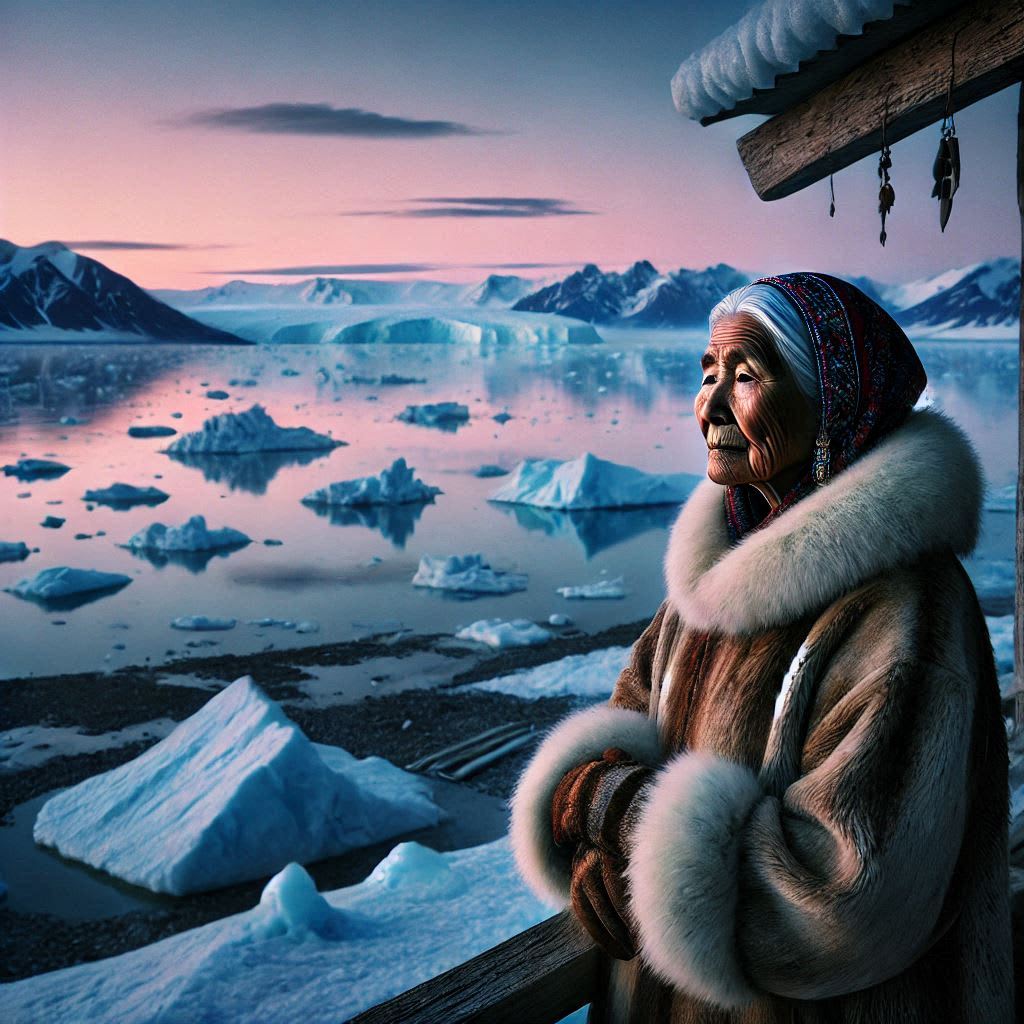
The wind howled through the remote Arctic village of Nuvuk, its icy fingers curling around the small wooden homes that stood proudly against the relentless cold. But today, the wind felt different. It was colder than usual, almost unnatural, as if it carried with it a foreboding message—one that had been whispered for years but now could no longer be ignored.
Akunna sat on the worn porch of her grandmother's house, her weathered hands gripping the old seal-skin gloves that had been passed down through generations. She watched the icebergs in the distance, those towering sentinels of the Arctic, once proud and unmoving, now barely clinging to the frigid waters as they slowly crumbled into the sea. It had been happening for years, but it had never felt this close, this real. The ice was disappearing, and with it, the heart of her people’s way of life.
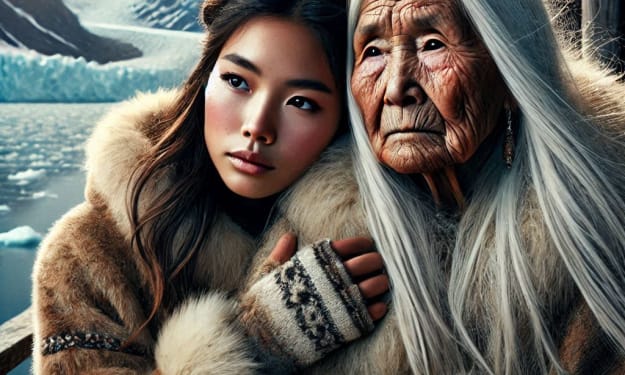
Her grandmother, Nuliajuk, sat beside her, silent as she stared out at the horizon. The two women had witnessed the changes together, the slow, painful erosion of the world they knew. Nuliajuk, with her thick white hair and deep-set eyes, had lived through it all—the steady loss of land, the shifting weather patterns, the animals they once hunted now becoming scarce. But she never spoke much of the sorrow that weighed heavy on her heart. It was Akunna who felt it more keenly now, the sense of impending loss that seemed to seep into every breath she took.
“How long, Grandmother?” Akunna whispered, her voice barely audible against the wind.
Nuliajuk didn’t answer immediately. Instead, she closed her eyes, letting the wind tug at her hair, her thoughts lost in the past. Then, finally, she spoke, her voice a soft murmur, as if the very words were too painful to say out loud.
“We’ve always lived with the ice,” she said, her words thick with nostalgia. “It’s in our blood. It’s part of us. But now… it’s leaving. And with it, so is everything we’ve known.”
Akunna’s throat tightened, and she blinked rapidly, trying to push back the tears that threatened to spill. The village of Nuvuk had always been small, nestled in the shadow of glaciers that had stood for millennia. The ice was their home, their lifeline. It was where they hunted seals, where they fished, where they built igloos to escape the harsh winds. It was a world that had remained unchanged for generations. But now, the once-mighty glaciers were breaking apart, and the cold, harsh beauty of the Arctic was becoming a place of fear.
The community had been watching the signs for years. The polar bears, once abundant, had begun wandering closer to the village, searching for food. The seals, too, had become harder to find, their migration patterns disrupted by the changing climate. The weather, once predictable, had grown erratic, with storms that came out of nowhere and warmth that lingered in places it should never be.
But it wasn’t just the loss of animals that hurt—it was the loss of tradition. The elders, like Nuliajuk, had taught the younger generation the ancient ways: how to read the ice, how to track the animals, how to survive in a world where the cold was both a friend and a foe. But now, the ice was disappearing, and with it, those teachings were becoming irrelevant. Akunna had learned to listen to the ice, to understand the language of the land, but what use was it now when the ice no longer spoke back?
“It’s not just the ice, is it, Grandmother?” Akunna said, her voice shaking with emotion. “It’s everything. The land, the animals… us.”
Nuliajuk’s eyes filled with tears, the weight of the truth sinking deep into her bones. She had seen the signs before, but now, in her old age, it was harder to deny what was happening. They had been warned, of course. The scientists had come and gone, explaining the melting ice caps, the rise in sea levels, the shifts in global temperatures. But for the people of Nuvuk, the reality had always seemed far away, something that belonged to other places, to other people. Until now.
Akunna felt a deep, hollow ache in her chest as she thought of the children in the village—the little ones who would never know the old ways. They would never experience the thrill of hunting seals on the frozen tundra or hearing the crunch of snow underfoot as they trekked across the ice. They would grow up in a world that was foreign to the one Akunna had known.
“Will they remember us?” Akunna asked quietly, her voice trembling. “Will they remember the ice? Will they remember the old ways?”
Nuliajuk’s gaze softened as she placed a hand on Akunna’s. “They will,” she said, her voice steady despite the sorrow. “But it will be up to you, my daughter, to teach them. You must pass on what you know, what we know. Even if the ice is gone, the spirit of our people remains. It is in your heart, and it will be in theirs.”
Akunna wiped away a tear that had escaped down her cheek. Her grandmother’s words, though comforting, did little to ease the ache inside her. The truth was undeniable: the world was changing, and there was no going back.
As the sun dipped below the horizon, painting the sky in shades of pink and orange, Akunna stood and gazed out at the vast, open sea. The ice that once stretched for miles before her was now nothing more than scattered fragments, drifting away like memories.
She took a deep breath, the cold air burning her lungs. There was nothing more to be done. The ice was leaving, and there was no stopping it. But as she stood there, watching the last of it fade into the distance, Akunna felt something stir within her—a sense of purpose, of determination.
“The last ice may be melting,” she said, her voice strong, “but we are still here. And as long as we are here, we will carry the spirit of the ice with us.”
Her grandmother smiled softly; her weathered face illuminated by the fading light. “Yes, we will. And so will they.”
Akunna turned to face the village, where the lights of the homes flickered in the growing darkness. It was true: the ice was disappearing, but the strength of her people, their traditions, their resilience, would never fade. Not as long as they remembered. And she would make sure they always did.
About the Creator
Keep reading
More stories from David Jedidiah and writers in Fiction and other communities.
Generational Bond
The wind whispered through the Arctic village of Nuvuk, carrying with it the sharp bite of cold air and the echoes of a time long past. Akunna pulled her fur-lined hood tighter around her face, her breath visible in the icy twilight. She stood on the wooden porch of her grandmother’s house, watching the faint light of the setting sun dance across the fractured surface of the glacier in the distance.
By David Jedidiahabout a year ago in Families
Off the Book
It ended like every other stupid idea. Badly, and alone. I’m researching digital confession ethics, he said. A tech ethicist. He gestured at floating data I couldn’t see then pulled out a physical notebook. Actual paper, fountain pen. He held it up like he was showing me scripture.
By Nicky Franklya day ago in Fiction
The Lantern That Learned Your Name
The town of Greywick learned early not to ask questions at night. By day it was ordinary—brick storefronts, a river that pretended not to remember what it had carried downstream, houses with porches that sagged the way old men sigh. But when dusk arrived, the town changed its rules. Lamps flickered on in windows. Doors closed. Dogs went quiet. And if you were smart, you did not linger where the streetlights thinned and the dark began to feel… deliberate.
By Edward Smithabout 23 hours ago in Fiction



Comments (1)
Please share the link to as many people as you can please. Thanks, and God bless you