

The coffee maker still worked. That was something.
Lorna stood in the kitchen of a house that wasn't hers—hadn't been anyone's for three years now—and watched the dark liquid drip into a chipped mug. Outside, vines crawled up the sides of skyscrapers. A deer grazed in what used to be Times Square. The planet was healing, they would have said, back when there was a "they."
She'd stopped counting the days after the first year. What was the point? There were no appointments to keep, no deadlines to meet. Time had become as wild and unmarked as everything else.
At first, she'd searched. God, how she'd searched. She'd driven across continents, her voice hoarse from shouting into empty cities. She'd left messages everywhere, spray-painted on walls: "LORNA - ALIVE - HEADING WEST." She'd kept the radio on, cycling through static, hoping for a voice that never came.
The hardest part wasn't the loneliness—though that was a physical ache she'd learned to carry like a stone in her chest. The hardest part was the silence. Not the absence of human voices, but the absence of human sound. No distant sirens. No airplane contrails scratching the sky. No murmur of traffic, no buzz of electricity in the walls.
The world hummed with its own music now. Wind through abandoned buildings made melodies. Rain on broken glass created percussion. Sometimes Lorna would sit for hours just listening, trying to learn this new language of Earth without people.
She'd found books, thousands of them, and she read voraciously. Philosophy, poetry, science fiction about alien worlds—all of it felt like letters from the dead, from her species, saying "we were here, we thought these things, we mattered." She'd started writing her own book, though she didn't know who it was for. Maybe for the next thing that would evolve, millions of years from now. Maybe just for herself.
Today was different, though. Today she'd decided to go to the ocean.
The drive took hours through roads cracked by tree roots and weather. She'd learned to navigate around collapsed overpasses, to watch for sinkholes. A family of foxes scattered at her approach. In the rearview mirror, she watched them reclaim the road.
When she finally stood on the beach, Lorna removed her shoes and walked to the water's edge. The ocean looked the same as it always had—indifferent, eternal, vast beyond comprehension. It had been here long before humans. It would be here long after the last traces of them disappeared.
She thought about walking in and not coming back. The thought came often, soft and tempting like an old friend. But something always stopped her. Maybe it was stubbornness. Maybe it was the coffee maker still working, the perfect ripeness of the apple she'd found yesterday, the way the sunset last week had been so beautiful it made her cry.
Or maybe it was responsibility. Someone had to remember. Someone had to witness the planet's grief and its resilience. Someone had to see the deer in Times Square and know what it meant—not just loss, but transformation.
Lorna pulled out her notebook and began to write, her words a message in a bottle thrown into an ocean of time:
"We were here. We were flawed and beautiful and terrible and kind. We built cities that touched the sky and forgot to listen to the earth. In the end, we disappeared so quietly that the planet barely noticed. But I noticed. I remember. And I forgive us, for whatever that's worth."
She closed the notebook and sat watching the waves, the last witness to a species that had dreamed of forever and received only a moment.
But what a moment it had been.
As the sun set, painting the sky in colors that had no names anymore, Lorna smiled. Tomorrow she would wake up. Tomorrow she would make coffee. Tomorrow she would continue being the bridge between what was and what would be.
Tomorrow she would still be here.
And somehow, that was enough.
About the Creator
Parsley Rose
Just a small town girl, living in a dystopian wasteland, trying to survive the next big Feral Ghoul attack. I'm from a vault that ran questionable operations on sick and injured prewar to postnuclear apocalypse vault dwellers. I like stars.
Keep reading
More stories from Parsley Rose and writers in Fiction and other communities.
The Forest of the Forgotten
Ellie hadn't planned on saying goodbye to anyone. The plan had been simple: prepare the mirrors, wait for Amnity to finish with the Council, and slip quietly into another world in search of answers about a past she couldn't remember. Clean, efficient, uncomplicated by sentiment or second thoughts.
By Parsley Rose 5 months ago in Fiction
A Planetary Alignment will coincide with Mercury Retrograde
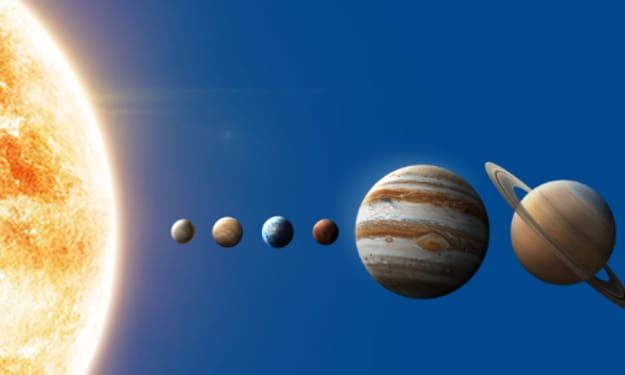
Double phenomena in the heavens Some people say in jest that the planets have aligned in their favor when life works the way they desire. Were you aware that there are seasons when things do line up in the heavens? There will be a planetary alignment AKA a planet parade, on February 28, 2026.
By Cheryl E Preston6 days ago in FYI

Comments
There are no comments for this story
Be the first to respond and start the conversation.