


First we lost streams. Water that gurgled over rocks and splashed against earth banks, their ancient source dried up and vanished forever. Birds swallowed their coos and critters scurried to nowhere, never to be seen again. Numb, we turned away from the news as each day it announced another species extinct. We lived in the remains of another time, reaping what we did not sew.
Then we lost lakes and ponds. All big bodies of fresh water, evaporated. Most of us were now used to living in the kind of apocalyptic wasteland that once only existed in movies. Cracked red earth and barren sands that dust the land, suffocating any life left. We now breathe shallow breaths from air that burns. We hide our skin from a sun that batters down in relentless unforgiving rays. We cannot adapt, we can only try to survive.
.
They tried to fly to Mars. Only after the last drop of freshwater had been guzzled dry, did they begin plans to evacuate the elite off planet. They had three inter-planet missions planned. In the days before the first lift-off, they scrambled over each other. Footage circulated of the privileged few bargaining and bullying to get their seat onto the only way out of this planetary collapse. The collapse they created. We watched in silence.
Only one craft left orbit, two hundred passengers full. It travelled for three days before combusting in an unexpected system malfunction. The only rocket that could make the journey, destroyed. Frozen bodies scattered through empty space: “Desperate climate refugees found the ultimate asylum - death.”
After the Failed Fleet, what was left of the globe quickly imploded into anarchy. Each country rose and fell through waves of dictatorship and rebellion. Each new leader promised a solution to the climate crisis, each of them failed. Uprisings and massacres wet the ground red, until society collapsed altogether. Cracked lips and hoarse throat, most survivors flocked to the ocean’s shores in a desperate attempt at salvation.
It was there they found a temporary solution. One that held the people together for a moment. They created artificial drinkable water from the ocean, sucking fluid from its ever-decreasing content. Each day it grew smaller – soon it would empty. The one resource they had not yet exhausted, would fail them. Soon the remaining canned goods and produce would run out too and then what would they do? They told the people that they would find a solution, but they had no Plan B. They instead delivered a vision of hope, as they counted each day down at a time.
.
My people lived in silence throughout all of this. We had always been nomadic; it was our way. Surviving in seclusion, separate from the general population. In the times before, they would sometimes cross our path in the streets of some city, as we annually gathered whatever supplies we couldn’t from the land. They would notice our unusual clothing and unkempt hair. They would look at us, puzzled for a moment and then continue on their way. We were called many things; ‘gypsies’, ‘hippies’, ‘forest people’. One country called us the Shadow’s and used us to scare their children into obedience “lest they come and steal your food and eat your toes!”
We were travellers. We chose to live differently to most. We kept to ourselves and lived off the land. We were happy.
.
I was eleven when the wind first changed, it swept through our camp in hot thick waves. We knew this was the end our ancestors had spoken of. The climate collapse they had prepared us for, from which there would be few survivors.
We travelled north. We followed the songlines that had been passed down through generations. Songs of trees and tracks. Songs that led us to our new home. Songs that hid within it, the secret that would keep us alive. We sung our way across the continent and seas. After many moons we finally arrived at the haven our ancestors had left for us. The place that no one had inhabited since the first camp, all those centuries ago.
An island. One that did not exist on any map, that was tucked away into the furthest corners of the globe. We arrived on its shores and trekked to its centre. Settling indefinitely for the first time in our lives, in the only place we would survive. By the banks of the earth’s last frozen pond. Freshwater. Our ancestors had predicted this crisis, they predicted an end to the world as we know it. They were right.
We have been here for fifteen years. We are the last surviving community from the time before. We ration produce sparingly and drink as little as we can from the pond. We are smaller than before. Bags of bone, with muscles that hang limp from our bodies. We lead simple lives. There are no more children. We do not procreate freely because we cannot spare the resources, we stopped that a long time ago. I was the last person chosen by the community to bring life into the world. We agreed that we could support one more. We needed hope.
.
Each year the pond thaws in the hottest part of the year’s cycle. The part of the year where we switch to a nocturnal rhythm. Where we gather the water by moonlight and shelter in huts by day.
And each year the pond freezes back over a little smaller than before. We suckle on the liquid we collect and make it last the year. We know it will not sustain us for much longer. Eventually we will have to join the others. The people that still roam the Sands, we know they are there. We hear them on the wind and smell their machines in the air. We do not trust them. They scour the earth in search of water and kill anyone in their way. We have heard the stories.
They still do not know that we exist and we will keep it that way until our island sanctuary can no longer support us. Until my baby is born. The child may be the only thing that will unite us; the last chance at continuing the human race. I hope we can come together peacefully, to find a possible future for the earth beyond this climate collapse.
It is the only way.
About the Creator
Keep reading
More stories from writers in Fiction and other communities.
After the Storm
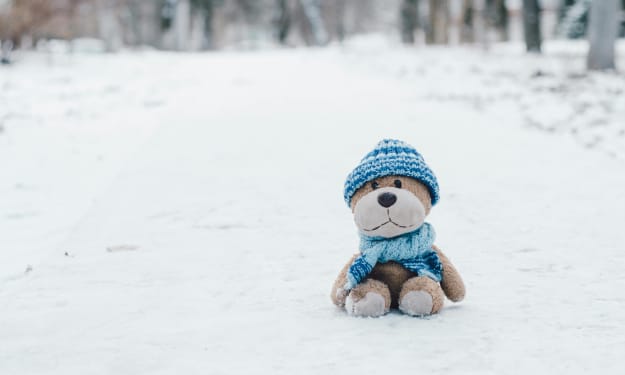
After the storm of winter snow there sat a small bear by the name Ted, of course. He loves the snow and likes to roll around in it making all sorts of trails and whatever he has a mind to do. He wondered where all the people are, but in a way, he is hoping that they are all snug in the homes maybe drinking hot chocolate-one of his favorite drinks with mini-marshmallows and eating something homemade for he likes this winter wonderland all to himself to romp and play and maybe even catch some fish down by the river.
By Mark Graham4 days ago in Fiction


Comments
There are no comments for this story
Be the first to respond and start the conversation.