
The Last Ark
In the worst times, one must remember what humanity truly is.

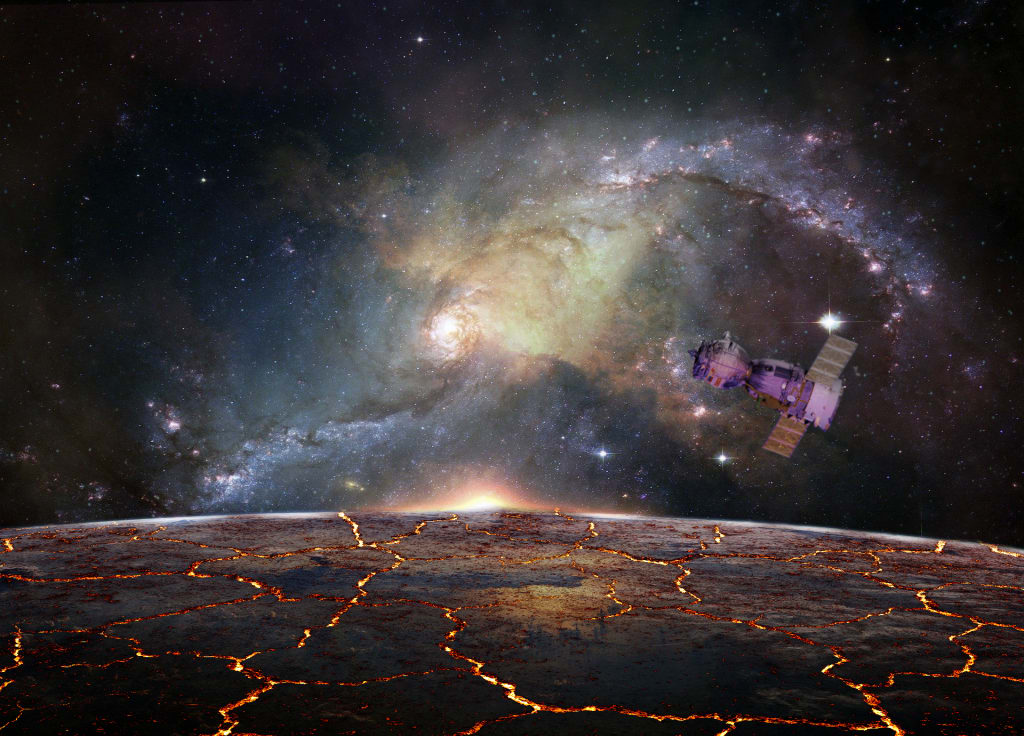
A dim light began to slowly fill the tight-enclosed space of the shuttle, building over time to rouse its sole human inhabitant.
Simultaneous commander, pilot, and head of research on the single-manned mission into orbit, Yelena Pugachev was tasked with a peculiar study: tracking the effects of different artificial time-keeping methods on living beings.
While she herself had attuned her body to rising with the artificial sun-lights in the ship, she had many test subjects following all sorts of individual schedules - many of which didn’t line up at all, to act as control.
For nearly a month now, they’d been circling the Earth, as she busied herself with rewiring light systems and shifting habitat locations, trying to discern how various creatures adapted to the lack of discernible days and nights.
She patrolled the station, now, checking on all her subjects. There were a few monkeys, as they were the easiest to prep for space flight, and thus had been quick to add to her mission, but there were also two dogs, two cats, and her absolute favorite subject of all: the owl.
It took a great advancement of human technology to prepare a bird for space flight, and even still, there had been a lot of trial and error. In the end, it was only the heavy advancements in artificial environment creation that allowed anything to safely thrive in the station, let alone the bird. Only a single cat had ever survived traditional space travel, and it had suffered brain damage in the process. Her two, however, were perfectly normal - as far as cats went, anyway.
But the bird. The barn owl, with its ghostly face and horrible shriek, had been the source of sympathy from many of her colleagues.
“You’ll never get a wink of sleep up there,” one of her friends had predicted. “And if you manage it, you’ll have nightmares about the bloody thing. It’s like a guaranteed haunting.”
She was wrong, though: the barn owl had surpassed all their expectations.
The rising and falling of the lights, they’d predicted, would keep the owl to the exact inverse of her own schedule. It had worked that way at first, sure, but then, he’d managed to figure out how to open his own enclosure.
Each of the animals had their own schedule. One cat and one dog were kept on inverted schedules from the other of their kind, to test consistency, and each of the monkeys was on a staggered schedule of their own.
When the owl had gotten out, Yelena should have awoken to blaring alarms, mass chaos, and roaming creatures. Her research should have been ruined.
Instead, she woke to find the owl sitting in the top corner of a monkey enclosure, enjoying the still-dark space, bright eyes watching her carefully.
From then on, there was no deterring him. Any door she locked, any code she set - somehow he slipped right through, until she no longer even bothered. She’d find him anywhere, at any time: if he wished to rest, he’d find a spot to rest. If he did not, he’d find a dim-lit spot, and settle in to observe the shuttle.
She began to think of him as a fellow researcher, trying to follow her strange behaviors and those of her menagerie, just as she tried to study him. He was her company at all times - her only company, as her experiment required her to remain desynced from Earth times, limiting her ability to contact the planet unless in emergency.
She wandered the station a bit on this day, pausing to look out the window at her planet. The stark line of contrast that separated night and day on the Earth looked so sharp from here - odd to think that millions were in the space between, shrouded in various shades of twilight, or on the other side, in dawn.
“Day 30, Anatoly,” she mused aloud, referring to the name she’d given the owl. It meant ‘sunrise’ - a name she felt fit well, for a creature that determined his own days. “Mission is logged for 150 days, total, but I’m not sure the cats are going to put up with it that long.” They were already stir crazy - artificial turf and climbing equipment were not enough enrichment for the poor creatures on their own. They needed more stimulation, and she could only play with them for a few hours out of her day. She’d already adjusted the schedules so that each animal shared at least a few of her own waking hours, but she had so many duties…
She needed a full staff to pull this off, really. Or just to call it entirely - she wasn’t learning much, anyway. Most animals adjusted to the level of noise more than the light, honestly, and even if they did generally sleep more when it was dark, it was more than likely due to the fact that she was also asleep, and not making rounds.
This wasn’t about the animals, though, really.
As she watched out the window, she saw a flare of red, and sucked in a small breath.
No matter how many times she saw an eruption, it never got easier to watch.
The chasm through the edge of the planet lit up with a brilliant light, disrupting that crisp barrier of daylight and shadow, making almost all of the visible surface bright as that in direct sunlight. From the Earth’s surface, she knew, it would suddenly be achingly hot - alarms would blare for thousands of miles, and shelter doors would shut, trapping the people inside in the temperature controls… and the people outside in their doom.
The fissures had been appearing for years, now, and getting worse by the day. There were hundreds, now, though most scarred over with obsidian after one or two eruptions, leaving barren and uninhabitable wastelands behind.
The planet was dying.
Scientists of all sorts speculated at the details, but they all agreed on one thing: the Earth was a time bomb, that could crumble at any moment, collapsing under its own weight.
That was her purpose, here, and the purpose of all her sister stations: water generation, conversion of space matter into energy and consumable mass, terraforming, cryogenics, over a hundred stations from across the globe all working together to perfect the formula of New Earth.
They didn’t have time to send individual, fully formed teams up, one at a time. For one thing, there were only around a billion people surviving - a lot on paper, but less than a tenth of what the population of the planet had been prior to the first fissure. On top of that, few countries were stable enough to focus on research: most had collapsed entirely.
Russia, her homeland, was one of the paramounts of Earth at this time - not due to economics, or politics, but by sheer geography. As the Earth’s crust had crumbled and the seas had boiled, the arctic wastelands of the planet had become the only remaining habitable zones. The poles were mainly ice, and as it melted, there was little space for survivors, and so the icy tundras of Russia had been prime real estate.
She watched the fissure glow, and flicker, and spark. She remembered the first fissure: she’d been a child at the time, in school, when news had come that there had been a strange phenomenon along the equator, swallowing several countries, spanning across Latin America all the way to the edge of Africa.
People had panicked, but tried to take advantage: if they could calm the fissure, and crust it over, it might create a land bridge; if it is similar to a volcanic eruption, it might create incredibly fertile soil along the edges afterward! These were the sorts of theories being thrown about.
None of that worked, though: the crusted-over fissure remained hotter than a desert at record high, and while the soil may have had minerals deposited, the heat boiled out any moisture at all, making it impossible to foster life. A few brave souls had attempted to collect it, anyway, and mix it with infertile, moist soil, to force it into fertilizer, but it had sucked up every drop of water that ever touched it and remained just as unyielding at the end. Putting a mere handful of it in a full garden could sap every drop of water from every plant there, killing each and every one, and still barely have enough potential to sprout grass.
There were no upsides to this. There was only the steady, constant escalation of the end.
People on Earth were terrified, starving, crowded into small and unfamiliar spaces…and here she was, isolated in space, watching. Unable to do a thing but track the steady on and off of her light cycle, and mind her animals.
Watching this fissure sizzle, something in her broke.
Perhaps Anatoly’s breakout was meant to teach her something, she thought, and she turned from the window, marching into the main area of the shuttle, toward the containment zone.
The command room was biologically locked. She had to scan her palm, face, and iris to get in, and she did each of these in turn without losing determination for a single moment. In fact, they almost made her more determined: with each pass of the cold, uncaring red laser of the scanner, she thought to herself, This is wrong. This is not what humanity is.
An alarm went off in the shuttle. She ignored it, steamrolling ahead, to the command center.
The speaker in the room crackled to life.
“Station to Kovcheg, Station to Kovcheg, we’re getting alerts of an initiated override, is everything-...?!”
Yelena wanted to cut off the broadcast, but it did it on its own, the signal dissolving into static. She hit the switch to cut the sound off, and moved ahead.
The door override was a single switch, and then a passcode to confirm. She hit both.
The sound of air whooshing as each door unsealed satisfied something inside her she hadn’t even noticed was aching. A moment later, the whole shuttle brightened, as each light system reacted to the override by syncing up, putting the whole station on the same schedule at long last.
The door behind her, left open, gave a warning flash as another entry was detected, and she turned to watch Anatony fly in, perching on the console behind her. His talons dug into the metal, one hitting at just the right juncture, and piercing, digging a hole into the communicator.
“Hey, hey, off that,” she scolded. “You’re going to break it, and then we can’t get home.” She shooed him away, and he fluffed up his feathers in offense, flying off to resettle on another console a ways away.
Now that she’d accomplished what she set out for, she felt a bit bad for ignoring her home station - and had the sinking feeling that she was about to be recalled, fired, and probably tried for treason.
Still, she flipped the communicator on, frowning at the resurgence of static.
“Must be the override,” she muttered, fiddling with the settings of the communicator.
Before she could get the static to settle back into human voices, though, she heard something hit the ground in another room, and swore to herself, rushing back to the station kitchen.
The animals, freed from their prisons, were exploring, and it seemed one of the cats had found a dehydrated meal half-finished on the table, and had hopped up to help herself.
“Oh, no no, don’t do that,” Yelena scolded, rushing forward. “You’ll dry your-....mouth….out….”
She trailed off, freezing, as she stared out the window behind the cat.
The static in her ears became deafening, and she wasn’t sure how much of it was the communicator.
Out the window, the Earth was glowing vicious red, as the fissures swallowed the surface.
The planet was lost.
A nudge against her ankle forced her gaze to tear away, and she looked to see wide eyes staring up at her eagerly: the lonely cat, having finished his snack, clearly requesting water to rectify his mistake.
How long would their water generator last, without tech support on the line to help her repair it?
How long would the matter recycler last, without updates from the station?
Could she reach the other research satellites on her own?
Were they even still there?
The cat let out a harsh, broken meow, upset and desperate in its thirst, and she forced herself to move, collecting a bowl, filling it with the water, and settling it on the ground for the cat, who lapped at it gratefully.
She’d just have to figure it out. She had no other choice.
As lonely as she felt, she was not alone - and that meant she wasn’t finished.
She had work to do.
About the Creator
Peter Christian McCord
Episodic fiction writer exploring diverse story ideas in my own corner of the internet
Keep reading
More stories from writers in Fiction and other communities.
Dead and Wearing Green
She was wearing that green dress when I first saw her, five years ago to the day. Flowing meadow fabric draped over long legs, thick auburn hair flowing down her back. That smile. Of course, she is still beautiful now. But now she is no longer alive.
By Karen Cave6 days ago in Fiction
Seven O'Clock
Finally! Fucking finally! He'd been waiting for the day. The day he could finally leave. And now that the time had come, he planned to do just that. For the past four years, it had been the only thing on his mind. He'd been preparing. He'd been imagining...
By Cristal S.6 days ago in Fiction



Comments
There are no comments for this story
Be the first to respond and start the conversation.