
The Lantern in the River
In the quiet town of Bellmere, where the river curled like a silver ribbon through the valley, people whispered about the Lantern. No one quite remembered how the tale began.

M Mehran
In the quiet town of Bellmere, where the river curled like a silver ribbon through the valley, people whispered about the Lantern. No one quite remembered how the tale began. Some said it was a fisherman’s trick of light, others swore it was the ghost of a woman waiting for someone who never came home. Whatever its origin, the story lived on: every August, when the moon was high and the nights grew cooler, a single lantern appeared, drifting down the river against the current.
Mira, a young journalist for the Bellmere Chronicle, had always dismissed it as one of those stories people told to keep small towns feeling magical. But this year, when her editor demanded something “bigger than bake sales and council meetings,” she decided to chase the Lantern.
On the first night of August, she stood by the riverbank, recorder in hand. The town was still, except for the hum of crickets and the gentle rush of water. She had almost given up when she saw it: a glow far downstream, bobbing gently, moving up the river as if the current were nothing but air. Her breath caught. It wasn’t a campfire, nor the reflection of a streetlamp. It was a lantern—wooden frame, glass sides, and a steady golden flame burning inside.
Mira followed it. She walked along the bank, stumbling over roots, brushing through tall grass. The lantern moved slowly, waiting for her, until it reached a bend where the trees leaned close like old listeners. And then, without a sound, it vanished.
The next morning, Mira’s article caused a stir. Neighbors dropped by the Chronicle’s office, eager to share their own encounters: a farmer who saw the Lantern from his porch in 1978, a teacher who claimed her grandmother followed it once and never came back. Mira listened, scribbling notes, half convinced and half skeptical.
But what unsettled her most was the letter she found slipped under her apartment door that night. It was written on faded paper in a shaky hand:
“The Lantern chooses. If it waits for you, follow it. It will show you what you most need to know.”
No name, no return address.
By the third night, curiosity gnawed at her more than fear. She returned to the river. Again, the Lantern appeared, glowing softly like a star within reach. Mira followed it further this time, across the wooden bridge and into the darker stretch of forest. The sound of water faded; all she could hear was her own heartbeat and the crackle of flame.
At last, the Lantern stopped in a clearing where the river pooled like glass. It hovered for a moment, then sank slowly beneath the surface. The flame did not go out. Instead, the water lit up, shimmering with threads of light that formed an image: her mother’s face.
Mira staggered back. Her mother had disappeared when she was six years old. The police said she’d drowned in the river during a storm, but no body was ever found. Now here she was, smiling gently, as though waiting.
“Mira,” the image whispered—not with sound, but directly into her chest, like memory made real. “You are ready.”
The light rippled, showing Mira a small wooden box, its lid carved with the same pattern as the lantern’s frame. She remembered it vaguely, tucked high on a shelf in her childhood home, always locked.
The vision faded, and the clearing was once again only shadow and water. The Lantern was gone. Mira stood trembling, recorder useless at her side. For the first time, she believed.
The next day she searched her late father’s attic, and there, under dusty blankets, she found the box. The lock snapped open easily, as if it had been waiting. Inside lay letters—dozens of them, written by her mother. They told a story Mira had never known: her mother came from a long line of “Lantern Keepers,” people bound to the river’s strange gift. Each year, one person was chosen to guide lost souls back to those who remembered them. The flame was not of fire, but of memory.
Her mother’s final letter was dated the night she disappeared:
“If the Lantern comes for me, I must follow. But one day, Mira, it will come for you. Do not fear it. The river remembers.”
Mira wept quietly in the attic, clutching the pages that smelled faintly of cedar and river mist. She realized the Lantern had not shown her the past to haunt her, but to pass on the duty.
That August, Bellmere buzzed with rumors of Mira’s investigation. Some thought she was fabricating stories for fame. Others, older and wiser, simply nodded and said, “The Lantern found her.”
Mira never published the letters. Some truths, she decided, belonged to the town’s hush and mystery. But at night, when the river glowed faintly beneath the moon, she walked its banks with a lantern of her own, flame steady, waiting to guide those who still searched for home.
About the Creator
Keep reading
More stories from Muhammad Mehran and writers in Fiction and other communities.
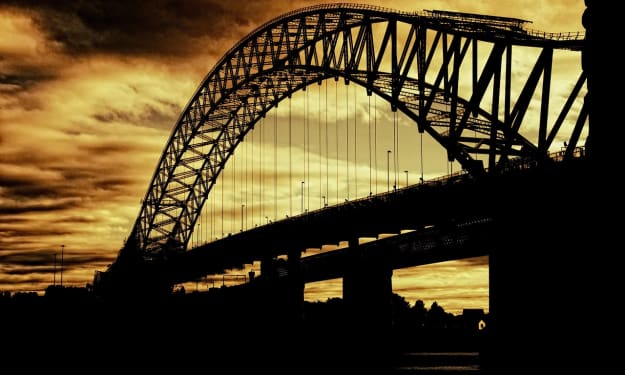
The Bridge of Second Chances
M Mehran In the town of Riverton, a small bridge spanned the quiet river that divided the old neighborhood from the new. To most, it was just a functional crossing, worn with age and lined with chipped paint. But to those who knew its history, it was a symbol—a bridge between regret and redemption.
By Muhammad Mehran6 months ago in Fiction
Mattie in a Naked World.
Mattie woke up this morning and found herself back in the days of the natural state of the unclothed-ness of existence. People were walking around quite naked, literally... as if it was the most natural thing in the world. The non wearing of clothing had long been behind Mattie for over 90,000 to 170,000 years ago...yet here she was surrounded by a wonder of nakedness. She looked down on her nude state and had the distinctive urge to cover herself.
By Novel Allen3 days ago in Fiction


Comments
There are no comments for this story
Be the first to respond and start the conversation.