
The Bridge of Second Chances
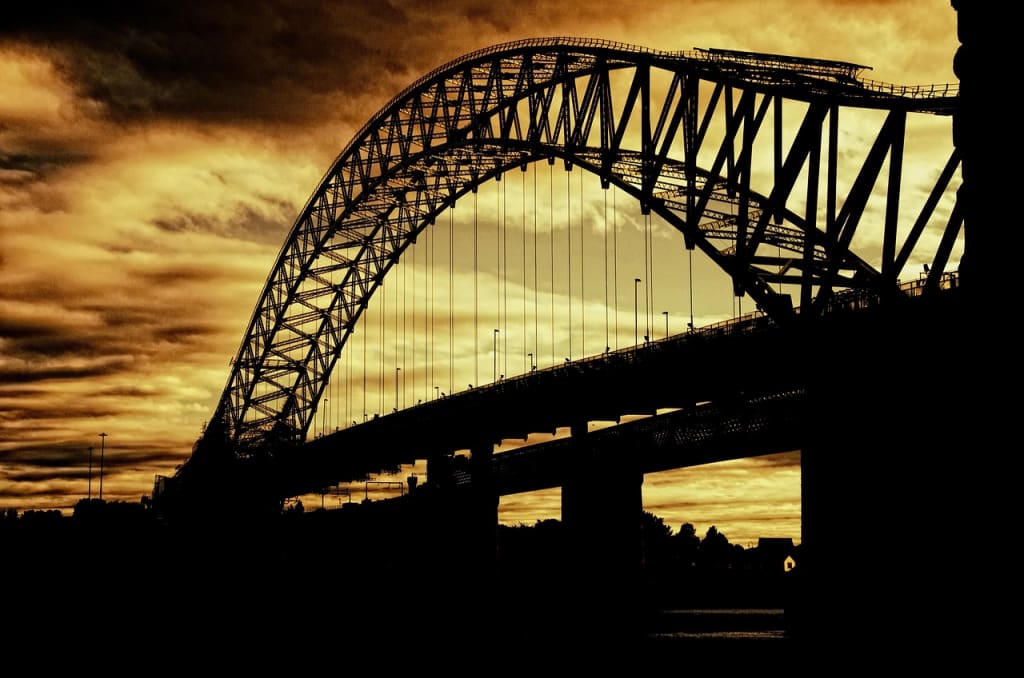
In the town of Riverton, a small bridge spanned the quiet river that divided the old neighborhood from the new. To most, it was just a functional crossing
M Mehran
In the town of Riverton, a small bridge spanned the quiet river that divided the old neighborhood from the new. To most, it was just a functional crossing, worn with age and lined with chipped paint. But to those who knew its history, it was a symbol—a bridge between regret and redemption.
---
Marcus’ Struggle
Marcus had grown up in Riverton, a boy full of ambition but trapped in circumstances he could never control. His father had disappeared when he was young, leaving him with a mother who worked double shifts to make ends meet. By his teens, Marcus had fallen in with the wrong crowd, chasing money in ways he shouldn’t have.
The bridge, with its rusty iron railings and narrow walkway, became his refuge. Whenever the weight of his mistakes pressed too hard, he would stand there, staring at the river, wishing life had given him another chance.
---
The Turning Point
One late evening, Marcus encountered Mrs. Thompson, an elderly woman who had lived on the edge of town for decades. She saw him leaning against the railings, hands trembling, eyes distant.
“You look like someone carrying the world,” she said softly.
Marcus laughed bitterly. “Maybe I am. What does it matter? I’ve made too many mistakes.”
Mrs. Thompson didn’t argue. Instead, she handed him a small, worn notebook. “Write,” she said. “Write your story. Sometimes, putting your pain on paper can show you the path forward.”
Marcus wasn’t sure why he accepted it. Maybe it was desperation, maybe curiosity, or maybe just the need to be heard. That night, for the first time in years, he opened the notebook and wrote down everything—every failure, every fear, every dream he had buried.
---
Rediscovering Purpose
The act of writing became a habit. Marcus returned to the bridge every evening, pen in hand, capturing the moments he had missed, the people he had hurt, and the things he hoped to achieve. Writing didn’t erase the past, but it gave him clarity.
One night, a teenager approached him nervously. “I see you here every night… writing. Do you… think it works?”
Marcus looked up. He saw a reflection of himself in the boy—lost, unsure, searching for direction. He handed the notebook over. “Try it,” he said. “Even small steps matter.”
Word spread. Soon, the bridge became a place where residents—young and old—gathered to share stories, dreams, and lessons learned. The bridge was no longer just a structure over water; it was a meeting place for second chances.
---
The Community Responds
Riverton began to change. Neighbors who had drifted apart started talking again. Teenagers who once ran the streets aimlessly found guidance from those willing to share their own journeys. The bridge became a nightly ritual, a symbol of hope and transformation.
Marcus, too, transformed. With the notebook as his guide, he applied for a job at the local community center and began mentoring youth. He shared his experiences honestly, explaining how mistakes can teach as much as successes.
People noticed. Parents trusted him with their children. Teachers invited him to speak at schools. Slowly, the bridge’s reputation grew beyond the town, becoming a story of redemption that inspired others to believe in the power of second chances.
---
The Bridge Speaks
One rainy evening, Marcus returned to the bridge alone. Water splashed against the railings, and the river reflected streaks of gold from the streetlamps. He opened his notebook and began to read aloud, not to anyone in particular, but to the wind, to the river, and to himself:
“Every step I take is a chance. Every mistake I’ve made is a lesson. Every moment I live is a gift.”
In that quiet, he realized the truth: the bridge had never been magical. Its power was in the people who stood on it, in the willingness to confront the past and build a better future.
---
Passing It On
Years later, Marcus published a book about the bridge and the people who had shared their stories there. He returned frequently, walking the worn planks, greeting new visitors, and offering notebooks to anyone willing to try.
The town of Riverton remembered him not as a man who had once stumbled, but as someone who had risen, bringing others with him. The bridge became a symbol of resilience, a reminder that no mistake is too great to overcome and that every person deserves a second chance.
For Marcus, the bridge was more than a structure—it was a promise. And for Riverton, it was a lesson in compassion, courage, and the quiet, transformative power of storytelling.
About the Creator
Keep reading
More stories from Muhammad Mehran and writers in Fiction and other communities.
The Clockmaker’s Secret
M Mehran In the heart of Ashwood, a sleepy town where everyone knew everyone, there was a small shop tucked between a bakery and a bookstore. Its sign read simply: “Harrison’s Clocks”. Few paid it much attention, but those who did, whispered about the old clockmaker and the secrets he kept.
By Muhammad Mehran6 months ago in Fiction
Veil of Subconscious Awakening
Images slide behind my eyelids like film cadres, bursting with meanings. In one moment, I’m speeding down the highway, making the speedometer swing wildly like a frantic pendulum. The next moment, I’m plunging from a falling plane, slowly crashing earthward. At home, I meet black cat’s green, googly eyes staring at me from the cavernous hollowness of the kitchen. When I turn for a moment, it disappears, and all I can see is a pair of blue suede shoes set up against the wall. I pick them up and put them on. When I glimpse at them again, they’ve become black as night, making me blink and flinch.
By Moon Desert6 days ago in Fiction
Staying sane in the insane world.
”It is no measure of health to be well adjusted to a profoundly sick society.” Jiddu Krishnamurti This quote has been one of my favourites since the moment I first laid my eyes on it. To me, it cuts right through the fog of the illusion of normality that permeates our lives. And since I am someone who has never felt (well) adjusted to this society, Krishnamurti’s words gifted me with the realisation that there isn’t anything inherently wrong with me.
By Eva Smittea day ago in Humans



Comments
There are no comments for this story
Be the first to respond and start the conversation.