
Broken and dirty and falling apart
Leave the pitchin fork lay by the old hay cart
The story ain’t purty but you listen up right
It keeps the spirits from walkin the old barn at night
My grandma recited the old rhyme in my ears once again when she saw me walking back from the old ramshackle wooden barn. I’d heard it a thousand times at least. I knew it by heart, in fact. The story of how Great, Great, Great Grandad had a slave that got in a fight with a great great uncle and in the scuffle they had both fallen from the hayloft of the old barn onto the wagon. According to the local legend my Great, Great Grandaunt came out to mourn and put up the pitchfork only to trip and fall into the milking pit headfirst the very next day as she tried to help with the chores to ease her mind through manual labor. My thrice Great Grandad found the fork against the wagon again when daylight arrived and just knew in his heart that the ghost of my uncle had missed her and took her to the spirit world with him.
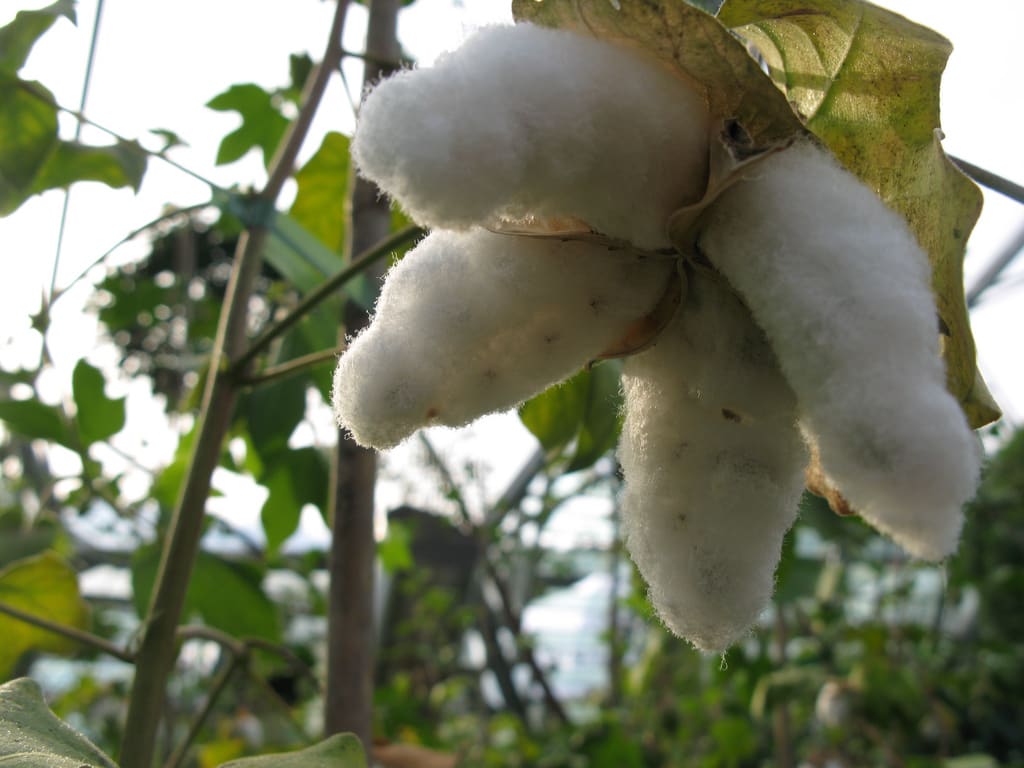
I am not a superstitious young man, but I honored the tradition. Truth is, my family had never made much money from farming, not then, and not now. Pictures in front of the legendary cart and pitchfork earned us about as much as our livestock. My family history on that farm would be a comedy of errors, if it was comedic. That old ghost story is one of the best examples. Now, I won’t defend whether slavery was a good thing, it was certainly not and is an embarrassment on an already embarrassing history. But how it becomes even more embarrassing is that my Grandfather, again, thrice removed, had spent all of his money buying Ezekial, that was the slave’s ‘English name’ and then had to borrow the money to put in the crop for the fellow to work with himself harvesting. My ancestor was kind to the man and treated him as an equal, not like a great many other ‘owners’ and had even drawn up the documents for Ezekial’s freedom and hoped to then hire him. That’s what started the fight. Whichever brother or son of my distant Grandfather’s brother’s, the story is always a little murky here on relations, had wanted to be foreman and disagreed with freeing Ezekial before the crops had earned back his cost. You see, the fight, and deaths, happened before the borrowed-upon crop of cotton had been planted, let alone harvested! I shook my head at how ludicrous the story was. Of course, no one believed my ancestors bought a slave just to free him. Maybe that was all part of the legend, too. We had only just paid off our farm last year, six generations after banking everything on a cotton crop and one of the most evil practices ever used in agriculture. Perhaps it served us right that we had been in bondage to the bank for over 200 years.
My grandma walked over beside me as I sat at the table drinking a glass of milk. She stared out of the kitchen window and down at the barn. The kitchen was so storybook quaint it was hard to imagine anyone actually living there. The red and white plaid curtains and tablecloth clashed with the ceramic plates displayed on shelves with their crowing rooster design. An old clock shaped like a farmhouse with marble columns ticked away every second. “You have a good talk with ‘em?” She asked airily, in hushed, reverent tones.
“No Gramma, well...yes I suppose,” I replied.
“You know ain’t right talking to the dead, it’s in the good book not to,” She warned.
“I don’t ‘commune’ with them or consult them. I just...I don't know, talk. Same as you would at a grave,” I explained.
“I suppose someone gotta show ‘em some respect since yer daddy started using his picture takin with ‘em to pay the bills,” She complained.
I nodded in silence. She was right. My father, the direct descendant of our only family slave owner, had started advertising photographs at the local unofficial landmark. At first the attraction didn’t do much, but then it became more and more popular until one or two groups a week showed up and the week of the barnyard brawl, as he called it, every day was booked with photo ops. The poses became increasingly odd as people looked at their phones and repositioned until they gave dad the ‘OK’. It was surreal to me but dad only said he didn’t want to bother me with the details on it just yet. I was just getting my driving license and he wanted me to get a ‘real job’ before I did anything on the farm.
In two days that crazy week would begin for this year. It was May 10th and the air was brisk at night and warm and amazing in the day. I had been drawn to the spot several times this week and, even though it made little sense, I sat on the ground by the pitchfork and spoke to the air just in front of the cart, where the horses would have been hitched if it was in use. Today, I particularly apologized for anyone having been sold like an animal. I asked what it was like to work with my Great, Great, Great Grandfather. I wondered out loud if the two brawling men had gotten along before whatever made them fight that fateful evening. I stated how badly I hated fighting and cruelty, people should treat everyone with kindness. I could never make myself look at the fork nor the cart when I spoke. My father married a woman from South America. My mother is half black African and half Guatemalan. I don’t feel guilty or ashamed of my family history, times were different then. I feel bad that another human being ever got treated badly just for how they looked or where they were from. I guess I identify with both men. People say I have privilege because my family owns this farm, even though I have sacrificed years of my life to help pay for it. Other people say I’m disadvantaged because I have darker skin than anyone else in my family, even though no one treats me differently. Today, as I thought of how terrible my ancestral cousin, or uncle, or whatever he was, had acted and how much fear of losing his source of income, and family home, he must have felt, I felt sick inside. Then when I thought of Ezekial and how terrified he must have been. Even if he had won the fight, who knows what would have happened to him in response to his defending himself. I started crying and realized I could have been either man.
A sudden spring storm was picking up outside and there was a lot of lightning. The sky had grown dark and the wind whipped and whistled through the barn. My Grandma yelled at me to get away from the windows in the kitchen. I stood up and put my empty glass in the sink. When I raised my head there were two men in overalls pushing the barn doors to hold them closed. I stared. My grandma shrieked at me,” Get away from the window, son! The barn’s blowing away!” It wasn’t a tornado but the barn was weak and falling in already and the straight line wind was ferocious. I couldn’t turn away. The hay cart, broken and dirty and falling apart, Piece by piece was blowing away. The pitchfork, too, blew and fell in the wind, shattering into dry rotted dust and rusty scraps. The men stopped pushing on the doors and turned to look at me, nodded, smiled, waved goodbye, and walked into the storm and rain down the road and disappeared.
My mom and dad came to pick me up the next day. They never wanted me to have to stay during the crazy week of photographs and it was Sunday. Dad shuffled through the debris by the barn. Almost nothing was left of the hay cart, but one wheel. The pitchfork was beyond any repair or even recognition. He shook his head sadly as he sat at the kitchen table. He opened up his portfolio case and pulled out some pictures on film and slid them over to me. “ I don’t know how you never looked online to see why people were coming out to take pictures. I suppose we could make replicas but it won’t have them,” he said as he tapped a photo. I didn’t need to look to know who he meant. In each photograph was a tall black man and a burly man with a dark beard, both in overalls. The burly white man appeared to be about 20 years old. He sat in the cart most often in the photos, looking sad and ashamed. The black man stood by the pitchfork with a look of disappointment. Then he slid over our family photo from last year, taken just outside the kitchen window, beside the roses that made Grandma so proud. On either side of me, with pride on their faces, stood the men. I looked at the picture for a long time and whispered, “thanks for the talk, goodbye.”
About the Creator
Keep reading
More stories from litningrod74 and writers in Fiction and other communities.
Family Tradition
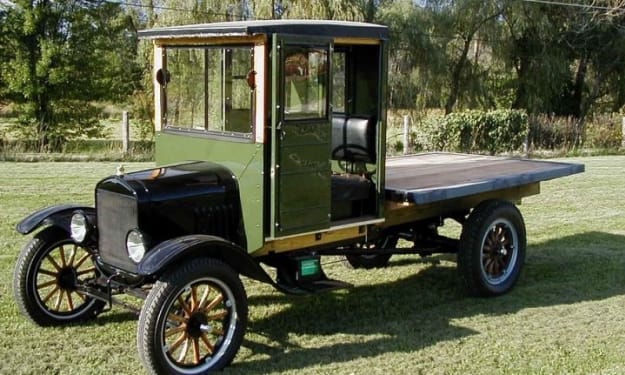
“My grandpa’s daddy was a trucker, I guess you’d say. He drove a massive thing called a Kenworth with a trailer bigger than our house to haul freight. My grandpa was a trucker, but with farm goods, with this very same flatbed Dodge truck we’re working on now,” Eli explained as he leaned over the long swooping fender of the antique old truck. Jedidiah looked up at him from the wooden toy trucks he was pushing in circles in the dirt with bright blue eyes, a reflection of Eli’s. He smiled and made one of the trucks jump over another as he asked,” Uncle Eli, how come you gotta drive it? You been working the mules on this farm for poppa all this time. Can’t those folks in the next town grow their own farms?” Eli answered from under the hood of the nearly one hundred year old truck while grunting as he tightened a hose fitting, “ Oh Jed, they probably do have a good farm connected to that town,” Eli took a grimy, hot pink, heart shaped locket out of the breast pocket of his striped overalls and looked at intently before continuing. “ Your cousin Macy needed medicine, Jed. Wasn’t nobody round able to make the trip to get it in time. I tried but mules can only go so fast, especially pulling a wagon with a sick girl inside. Then there’s bandits on the roads nowadays, where’s there’s roads,” Eli’s eyes clouded as he fought back memories and unconsciously rubbed a scar that ran the length of his forearm,” it’s just safer and quicker to use a truck. Delivering some trade goods just helps pay for parts at the swap meets. Besides the moonshine we’re making to run in the truck can be used to make medicine, too!”
By litningrod745 years ago in Wheel


Comments
There are no comments for this story
Be the first to respond and start the conversation.