
The Khan Who Chose the Grain
A legend reborn in mercy, where empire was traded for grain & silence grew into legacy.


The Scroll in the Dust
They say the sky chose him.
Before the legends, before the fear, he was only Temujin, a boy born beneath a cracked moon, his mother’s cry louder than the wolves outside the firelight.
When his father was poisoned by kin and his clan turned them out, Temujin learned to survive on roots and silence. He boiled bone for broth and watched his younger brothers sleep with hunger under their tongues. From that frostbitten childhood came strength, but not cruelty. Not yet.
Years passed. Temujin became a man of grit and fire. He gathered the scattered, the orphaned, the betrayed. His name passed between fires like wind, first in fear, then in awe. He was not yet legend, but the shape of one.
In the old stories, power came from signs. A bird that circled three times. A stone that bled when struck. For weeks, Temujin had dreamed of white branches breaking under snow. In each dream, something whispered in a tongue older than his bones.
On the eve of his first great war, the dream came true.
His scouts had returned: a valley tribe refused allegiance. They held land rich with wheat and water. Taking it would mark the beginning of his empire.
That night, Temujin rode alone under a sky heavy with wind. His thoughts circled like hawks. His sword was polished. His arrows counted.
Then his horse stopped.
No noise, no reason. It planted itself beside a rise of dust. There, something stuck from the earth, a scrap of parchment, curled like a dry leaf. He dismounted and pulled it free.
It was a scroll.
Not Mongol. The script curved like smoke, older than the Orkhon stones. He did not know how he understood the words. He only knew they were meant for him.
It told of a man with his name. His strength. His hunger. A man who would bring ruin in the name of unity. Nishapur would fall, its walls broken and streets drowned in flame. Cities would burn from Samarkand to the Yellow River. Rivers would clog with bone. Behind him, the world would turn gray.
At the bottom, a single line:
“The arrow flies until it chooses to fall.”
Temujin stared at the scroll until the wind forgot to move. He did not know if it came from the sky or from something older within himself.
Then he took the bow from his shoulder and broke it across his knee.
The sound was clean. The silence after, even cleaner.
The Storm That Chose Rain
They expected fire.
When the valley tribe saw dust rising on the horizon, they closed their gates. Women gathered their children. The old sharpened worn blades and muttered names of ancestors to the wind. Some buried jars of grain under their floors. Others blackened their doors with soot, a forgotten gesture to ward off marauders. They had seen what happened to Otrar. They remembered the black banners raised at Nishapur. They thought he came for the same.
He had burned out clans, they said. Broken steppe kings. Routed horsemen twice his number.
So when the riders came, the fields braced for ruin.
But no arrows flew.
No war cries. No torches. No blood banners.
Only carts.
They rolled in slow, creaking lines, pulled by oxen, guided by quiet men. Instead of siege ladders, they carried woven sacks. Instead of flames, they carried wheat. Millet. Dried fish. Clean water. Cloth for the coming winter.
At their head rode Temujin, dressed in unpainted leather, no sword at his waist.
The gates did not open.
So he dismounted, placed his hands on the ground, and waited.
He waited through dusk, through wind, through the first soft snow.
The villagers watched him from slitted towers. A boy whispered, “He is praying.” A woman replied, “No. He is remembering.”
On the second morning, the gates opened.
No words were spoken. A bowl of warm barley was offered by an old woman with white hair down to her waist. Temujin bowed his head and ate in silence. Then, wordlessly, he gave the tribe all the grain they could carry.
No tribute was asked. No blood was claimed. He left behind seed, not command. And when he rode away, his men left their carts behind.
That winter, the valley did not starve.
Temujin visited five more valleys that season.
He fed those who had cursed his name.
He sheltered those who had once sworn to kill him.
He sent riders to tell the mountain tribes: no blades, no oaths, only this:
“Where you once feared the storm, now expect the rain.”
Some still feared him. Some called it trickery. But others followed.
Not out of fear.
Out of awe.
“This is not the Khan they told us of,” whispered one old man. “This one brings bread, not fire.”
The Way of the Yurts
He built no cities.
Temujin said walls were for fear, not strength. He had known too many winters behind brittle fences, too many nights when silence grew louder than the wind. So he built something else. Something that moved.
The yurts were the beginning.
Circular, open to sky and earth, warm with smoke and shared breath. He ordered hundreds made, light enough for travel, strong enough to weather storms. He sent them east and west, pulled by oxen and faith, carried by the hands of those who no longer feared his name.
Each yurt held what the next valley needed. One held medicine. One held bread. One held books, copied by hand, passed between tribes that had never written before. There was a yurt with tools, and a yurt for songs. And there were always fires, lit each night, where no one went hungry and no questions were asked.
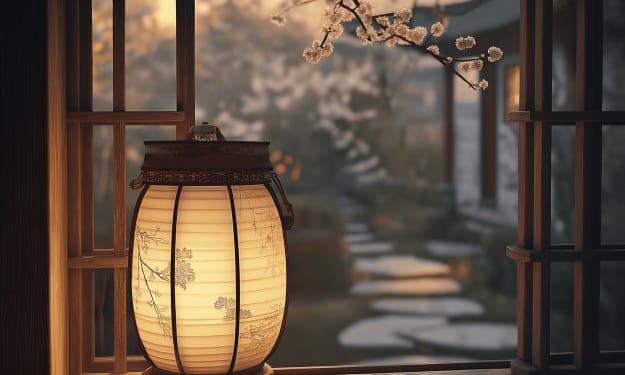
The people called them the Steppe Lanterns.
He called it the Way of the Yurts, a river of kindness drawn across a land once carved by war.
They once called him the Scourge of the Steppe. Now they called him Father of Flame, not for burning, but for light.
But not all followed with certainty. One night, beside the fire, a rider from his early wars sat sharpening a blade that would never be used.
“We could take what we give,” the man said quietly.
Temujin looked at the man for a long time. Then he reached into the fire, pulled out a flat stone glowing orange, and dropped it into the man’s bowl of water.
The hiss filled the silence.
“We could,” Temujin replied, “but we will not.”
His old warriors followed, though many still missed the sword. Some missed the glory. But Temujin gave them new roles. The fiercest riders became healers. Scouts became messengers of peace. Cartwrights and cooks were honored higher than killers. There was still discipline, still silence and steel, but no conquest.
Only protection.
He created a new law, not one etched in stone, but told from voice to voice:
“To feed is to lead. To shelter is to rule.”
Those who heard it laughed at first. Then they listened.
One year passed, then another. The Way of the Yurts stretched as far as the rising sun. Trade routes once taken by thieves became lined with fire and song. Orphans found parents. Enemies shared bread. Villages traded stories, not prisoners.
There were still threats. Still blades in the dark. Some warlords spat on his name, called him coward, traitor to the wind. But his people, those who had once been nothing, stood between him and harm.
Not because they were ordered to.
Because they remembered who had come to them with grain instead of blood.
It was not the empire history demanded of him. But it was the one no one dared to imagine.
The empire he built had no borders, no flags.
Only footsteps in the snow, and warm light in the dark.
The Broken Arrow
He left no tomb.
Some say he vanished into the western wind. Others say he walked alone into the snow, barefoot, so the land could swallow his tracks.
There are no monuments.
Only stories.
One tells of a river caravan that stopped in a drought-struck village, its yurts filled with barley and salt. When the villagers asked who had sent it, the riders answered only, “The Khan who feeds.”
Another speaks of a traveling physician who healed the blind with herbs pressed into cloth, then disappeared before morning. His hands were rough from riding. His boots were stitched with symbols of the old clans.
Still another claims a man once appeared in the mountain passes, helping build a school from stone and ash. He taught children to braid words into meaning. When they asked his name, he said, “No name. Only fire that does not burn.”
Some said he died beside a fire, not alone but at peace, his head in the lap of a weaver who never asked his story. Others said he became wind itself, guiding caravans from unseen ridgelines.
In time, the tales blurred. Names faded. But the symbol remained.
A bow, snapped in half. Carved into doors. Sewn into sleeves. Drawn with chalk beside sleeping mats. The broken arrow was not a sign of surrender. It was a promise. A reminder that violence is not the only inheritance of strength.
The Way of the Yurts endured. Caravans still moved through valleys with food and books. Children still learned stories beside night fires, passed down not in conquest, but in kindness.
The old stories spoke of a Khan who scorched the earth. But the ones we tell now begin with grain, not fire.
In one valley, during the first snow of a hard winter, a girl saw tracks beside a cart trail. Her grandmother told her not to follow, but she did.
She returned before dusk. Her hands were empty, but her eyes were full.
“There was no one there,” she said, “but the wind spoke in a man’s voice.”
Her grandmother nodded. “He walked there.”
It is said the scroll was buried again, far from where it was found, beneath a tree that never loses its leaves. It waits in the dust for another hand, someone with power, someone with choice.
It still bears the line:
“The arrow flies until it chooses to fall.”
And though no one knows where his bones lie, the wind still shifts at dusk across the steppes.
And in some places, if the snow is soft, you can still see footprints beside a cart track.
Just two.
Not enough for an army.
Only enough for a man.
About the Creator
Tai Song
Science meets sorrow, memory fades & futures fracture. The edge between invention & consequence, searching for what we lose in what we make. Quiet apocalypses, slow transformations & fragile things we try to hold onto before they disappear.
How to Become a Werewolf
Thank you for choosing Lycan Brands for your life alteration. WARNING: Side effects of becoming a werewolf may include: bloodlust; drowsiness; insomnia; increased appetite; nausea and decreased appetite caused by overeating; supernatural strength; intermittent and inexplicable aches and pains; itchiness and rash. Do not proceed if you are allergic to becoming a werewolf, or have vasovagal syncope related to the sight of blood (sudden drop in blood pressure resulting in loss of consciousness), or if you are nursing, pregnant, or may become pregnant.
By Ophelia Keane Braeden7 days ago in Fiction


Comments (1)
Brilliant story 🖌️😊I subscribed to you please add me too ♦️🌼♦️🙏