
The Island of No Signal
A couple’s dream trip to a Croatian island turns into a nightmare when they vanish from the digital world—and discover they were never truly alone.

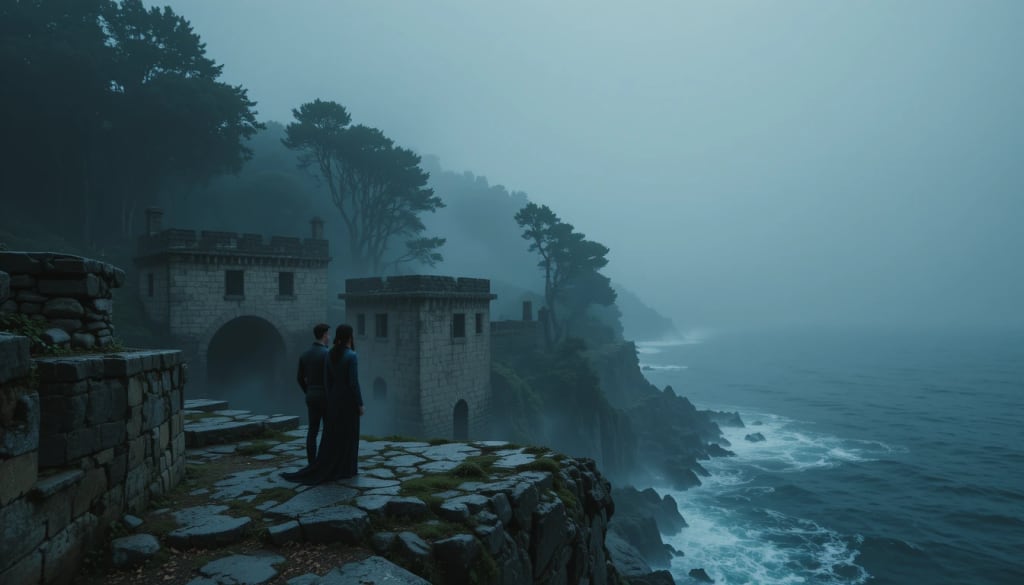
The Island of No Signal
Written by Mirza
It was supposed to be their escape.
Maya and Ibrahim had been planning the trip for months. Both in their late twenties, they worked corporate jobs in Berlin and had grown tired of city noise and screens. They found an Airbnb listing for a secluded stone cottage on a private Croatian island—Otok Mrak, which translated eerily to “Island of Darkness.” But the photos looked serene: turquoise water, wild olive trees, and a promise of “complete disconnection.”
Exactly what they needed.
From the mainland port of Split, they took a ferry with a handful of tourists, then transferred to a rusty local fishing boat captained by a man who barely spoke English. “No internet. No cell. Just quiet,” he grunted, almost like a warning. Ibrahim chuckled. “Perfect.”
The island came into view like a secret whispered to the sea—small, lush, and surrounded by limestone cliffs. A crooked wooden dock led them inland. The cottage sat in a clearing, surrounded by thick woods and the faint smell of salt.
That night, with a candlelit dinner and the sound of waves crashing, they felt like they'd found paradise.
Day Two.
Maya woke to bird calls she couldn’t name. She grabbed her phone to take a photo—but the signal bars were gone. Ibrahim tried his too. No service. No Wi-Fi. Just like the listing had said.
They spent the day hiking trails that circled the island. Around the northern cliffs, they found a collapsed structure—what looked like an old military outpost. Bullet holes marked its concrete walls. A rusted sign read: “Zabranjeno!”—Croatian for “Forbidden.”
“Must’ve been from the Yugoslav wars,” Ibrahim guessed.
That night, a storm rolled in quickly. The wind howled, and something slammed against the cottage roof. They stayed awake, holding each other as branches scratched the windows like claws.
Day Three.
Maya noticed it first. Her journal was missing.
She always kept it by the bedside. Now, it was gone.
“I didn’t touch it,” Ibrahim said.
“Maybe it fell off?”
They searched the room. Nothing. Then, out by the garden, she found it: soggy and half-buried near a rock. Pages torn out.
That afternoon, they walked to the outpost again. Ibrahim brought a flashlight. Inside, beneath fallen beams, they found something they hadn't noticed before: an old wooden crate. Inside were used ration cans... and a stack of photos.
Black and white. Faded. All of couples—laughing, hugging, sitting by the cliffs. Until the final ones.
People running. A blurry figure in the trees behind them.
A chill ran down Maya’s spine.
“Maybe someone used to live here after the war?” Ibrahim offered.
She nodded slowly. But something in her gut twisted.
That night, Maya woke to the sound of whispering.
She shook Ibrahim awake. He listened, eyes wide.
The voices were faint, like a radio just out of tune. They grabbed their flashlight and stepped outside.
Nobody.
But in the dirt just outside their door were footprints—barefoot. Deep. Leading into the forest.
Day Four.
They decided to leave.
No signal meant no ferry to call. They packed their things and walked to the dock.
The boat was gone.
So was the radio in the boathouse.
Something was watching them. They could feel it.
At sunset, they spotted movement in the woods—a silhouette. Then another. And then they heard it again.
Whispers.
This time, closer.
They ran back to the cottage and locked the door. Ibrahim held a kitchen knife. Maya cried quietly as they pushed furniture against the windows.
“What do they want?” she whispered.
“I don’t know,” he replied. “But we’re not staying another night.”
Day Five.
At first light, they crept out toward the cliffs where the outpost sat. The boat wasn’t returning. No flares. No contact. But the cliffs... maybe they could signal from the highest point.
At the top, they built a fire. Thick smoke curled into the sky.
Nothing.
Then Maya turned—and screamed.
Someone was standing at the edge of the trees. Watching.
It was a woman. Pale, barefoot, with wild hair. In her hand was Maya’s missing journal.
Ibrahim moved forward.
“Who are you?!”
The woman stepped back into the trees and disappeared.
Behind her, carved into the cliff wall, was a message in English:
“We live here now.”
That evening, just before sunset, a faint rumble came from the sea. A boat.
A patrol vessel.
Ibrahim waved a towel as Maya cried with relief. The boat came closer, its siren slicing the stillness.
Two officers jumped ashore.
“You’re the couple from Berlin?” one asked. “We've been searching for five days. Your host said you never checked out.”
They looked at each other, confused.
“But we still had two nights left,” Maya said.
“No, ma’am,” the officer replied. “You were booked for three nights. You disappeared after the first.”
The couple turned around one last time.
The cottage was gone.
Only rocks and sand where it once stood.
Epilogue
Back in Berlin, Maya couldn’t sleep. She kept hearing whispers.
Ibrahim tried to rationalize it all—hallucination, stress, some old trauma in the woods.
But three days later, a package arrived.
No return address.
Inside was Maya’s torn journal.
And a photograph.
Of them.
Standing on the cliffs.
But they didn’t remember anyone taking it.
About the Creator
Keep reading
More stories from Moonlit Letters and writers in Fiction and other communities.
In the Heart of Shadows
In the Heart of Shadows Written by Noor Khan It was supposed to be a guided trek—nothing more. Lara, a wildlife biology student from Austria, had traveled to the Choco Rainforest in Colombia for her research internship. She wanted solitude. She wanted data. She didn’t want distractions, and especially not people like Jayden—the overconfident British travel vlogger tagging along on the same eco-tour.
By Moonlit Letters8 months ago in Fiction
The Chosen; Chapter 6
I sit in our camp space glowering into the fire. We had been traveling for two days without any incidents. It was unsettling. Ahriman had known where we were. He had come after us and now nothing. Amara saw it as a sign that we had gotten away from him successfully, that we were now in the clear for the moment. To me, it felt more like we were in the eye of the storm.
By Katarzyna Crevan6 days ago in Fiction


Comments
There are no comments for this story
Be the first to respond and start the conversation.