
The Incendiaries
Chapter One

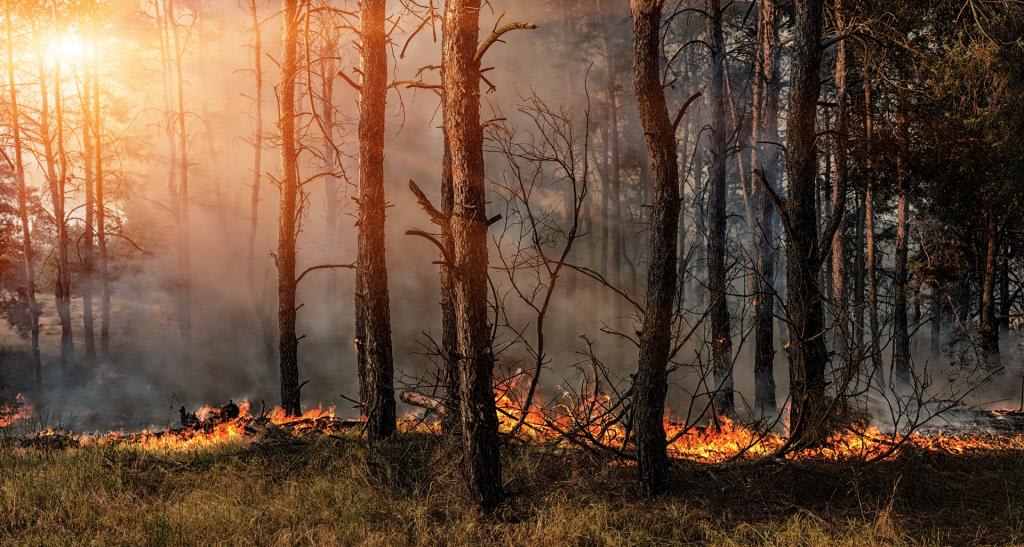
There weren’t always dragons in the Valley. When I was a child they were only myths, rumors spread by travelers and villagers familiar with the stories. My mother knew the Vardian Prophecy well, reciting it to us often in the glow of the fireplace before bed. The land will perish, the mountains will fall, and the Fire Queen will rise again upon the return of the dragons. She will be your salvation. Her voice was always warm and soft with the words, cradling us into a hopefulness everyone else had abandoned years ago. For people like her, this prophecy was more than a story spread through taverns, more than whispers after dark. It was religion. An inevitable fate. The dragons would come, and the Fire Queen would rise.
Over the years, I started to lose faith in her arrival. When Azarek inherited the throne from his father, King Ranzar, there was a divide in the east. With Ranzar on his deathbed and his young son in charge of Arona, rebellions erupted in waves. We did not want to be ruled by such a merciless monarch, not when peace with the north, with Karzai, was so close in reach. We couldn’t afford the losses. Azarek was a cruel prince, who turned into an even crueler King. He slaughtered the rebels who opposed him in a nefarious rage, including any who tried to aid their escape from Arona into Prakaban. Under his rule, we seemed to be cast into a irreparable twilight.
The summer I turned eighteen, shortly after Azarek took over the throne, half of the village burned. The rebel forces who were part of the Resistance and all the families who aided them were found out. The Lanca family came to us in the country to hide after burning and fleeing their home. We were farmers. We minded our own away from the town and only ventured in when we needed to sell portions of our harvest. It was safer for country people. We were their only hope for survival. The father, Baureem, said Azarek had a black list and their family was on it because they helped supply the Union, the rebels. So we took them in, the four of them. The boy, Hanser, was only eight. His sister Stella was not much younger than me. They were all hard workers, and helped my father in the fields for long hours of the day. Stella and her mother, Agnes, usually stayed in the house with me and my sister, Zareena. I remember Agnes had a wonderful singing voice that, for ephemeral moments, made me forget the heavy burden of reality, our cornering fatalism.
We lived that way with the Lancas for months, hiding them under the floorboards with bags of lentils whenever an inspection threatened our home. Other families aiding the rebellion did the same, hiding those that were blacklisted in cellars, attics, underground, anywhere they could. Our neighbors to the south, the Ranveers, protected and transported nearly ten families into the safety of Prakaban before they were caught. They hung for their bravery; for the Resistance.
One day, the King’s men arrived at our home for an inspection only five days after their last. Before, the protocol had been only one inspection every six months. We were not prepared. The Lancas rushed inside to hide but one of the guards coming around the back saw Hanser make for the cellar. My parents tried to pass him off as a relative.
“Says here you have two children,” the man said, peering at the pages of a black leather-bound book. He had Hanser by the collar of his tunic. “Who’s this, then?”
“The boy is my sister’s,” my mother said, her voice strong and calm. Her ability to navigate any fear was something I wish I’d known myself. “She suffered an illness, the plague, and unfortunately passed. We are his guardians now.”
The man inspected Hanser, loosening his grip on his collar. “And the boy’s father?”
“Executed,” my mother said. “He was not loyal to the crown. My sister turned him in herself before succumbing to her sickness.”
His expression softened at that, and for a moment, only a moment, there was a feeling of relief among our family.
But then another man entered our home, and there was something different about him. It was in the way he carried himself, the sharp look in his deep blue eyes. He had the same square jaw and slim nose as King Ranzar, but much younger. More beautiful. The golden colors of the throne adorned the fabric of his clothes.
It was Azarek.
He was followed by a woman dressed in a long gown of dark red and deep purple. Her skin had black markings on it, unlike any I’d ever seen before, and her eyes were bright green. She stood in front of my mother and stared at her. I didn’t know then that this woman had a gift for breaching minds. She was from Luraniad, where I had only heard stories of torchure and death. Stories that made the tragedies of Arona small.
After searching the eyes of my mother, the woman looked at Azarek. This family is housing rebels. The boy’s family is beneath the floorboards, she said. I heard her, but her mouth didn’t open. Her lips didn’t move. I looked at my family, at my father, who stood still and alert. Did they not hear her?
Panic seized me, and I tapped my foot twice on the floor, signaling that they knew. That the Lancas had to run west, into the forest, if they wanted to live.
The woman looked at me, alarmed. You hear me, she said. Again, her lips did not part. Her voice was solely in my mind. Before I could speak, there was a terrible sound from under us. Agnes, or Stella. The woman was staring at the ground with an impenetrable concentration in her eyes. She was causing their pain.
My father swung at the guard nearest to him, knocking him to the floor. He yelled for us to run, but it was too late. Azarek stood in front of the door. The man holding Hanser drew him near, grabbing ahold of his head. I plunged for him, screaming at him to stop but his hands twisted abruptly before my eyes, and Hanser fell to the floor in a lifeless heap.
“Thea!” My mother grabbed me, pulling me back before I could reach them, but then she, too, fell to the ground. I watched in horror as the tears in her eyes turned to blood. My sister screamed as the same fate befell our father, and then her. Her hands went to her ears, holding her head as if there was something inside it making her bleed. It was the Luraniad woman, she was in their minds like a disease, burying herself into their bodies until they broke.
I crawled from my mother to Zareena, holding her in my arms. But she was already gone. The silence, I remember. The awful, heavy silence that filled the air when the screaming was over still torments me.
When I looked up through a film of tears, the woman had her eyes set on me.
“No,” Azarek said from the corner of the room. His voice was low. “Not her.”
She looked at him. If we don’t, she will come back for you. I’ve seen it. He considered me, studied me as I sat on the ground holding Zareena to my chest, protecting what I’d already lost. Azarek stepped toward me then and I backed up on the floor, struggling to hold onto my sister. He knelt in front of me with a serious expression. Something almost in pain. “I hope she does.”
I stared back at him, my body trembling with rage, with agony and grief. He looked down at Zareena and I pulled her closer to me, shielding her from his eyes.
“You are not like them,” he said.
And with that, they left. Azarek, the woman, the guards. They left me there in the country with what remained of my family and the Lancas. I can’t remember how long I sat there, stuck in the delirium of grief. The pain was so ravenous I thought it would end me better than any Luraniad-born could. When it didn’t, I only wished that it had.
I spent the next few days digging graves. I drug the bodies of the Lancas out from beneath the floor, trying miserably not to look at their faces. By the end of it, standing over seven graves, a numbness had swept over me. It atrophied every corner of my mind until the only thoughts left were cold and broken. Every night I dreamt of the woman, of Azarek, of familiar voices that wailed and screamed. There was too much pain in my home, pain that left me afraid I’d breathe in the ghosts of them, so I made up my mind to leave. To travel towards Prakaban, where I knew I’d find the Resistance. I followed stories of the Union packs, of rebel armies, until I found myself across the border. From there, a friend of my father’s by the name of Murix guided me to the first camp. He was a smuggler, a valuable asset to the Resistance, and vouched for me upon our arrival when Carian, the leader there, questioned my legitimacy. They had a right to be skeptical. The people Azarek employed were intellectual vessels of malign intent, meant to infiltrate camps posing as refugees, orphans, rebels and farmers.
The first night I arrived, Carian held a knife to my throat, the gaze in his dark brown eyes indicating he had already deemed me an enemy.
“Who are you?” He demanded.
“Thea,” I said. “Thea LeTrell. I come from a farm in Arona where my family was killed for hiding rebels—those blacklisted by the King.”
He did not waver, staring at me with the same untrusting fury in his eyes.
Murix stepped beside me. “She tells the truth, Carian. Her father was a friend of mine. You can trust her.”
He kept the knife to my neck. “How did you survive?”
I thought of the screaming, of the weight of Zareena in my arms, of the blood in their eyes. “I don’t know.”
His jaw clenched. “You don’t know?”
“He spared me.”
“Who spared you?”
“Azarek.”
His expression shifted. “Azarek was there?”
I nodded, careful of the blade pressing against my skin. “Yes.”
“And why would he grant you this immunity? No one lives in the places he visits.” With each word, Carian seemed to become more and more hateful of me.
“She was going to kill me, but he stopped her. I don’t know why.”
“She?”
“A Luraniad woman.”
He brought the weapon down from my neck, and I realized I’d been holding my breath.
“Suri,” he said, more to himself than to anyone else. I looked at him, at the meditative look of disgust on his face mixed with something deeper. He knew this woman?
Murix spoke again, “Thea is not your enemy. What she’s been through is more than any one person should have to face alone. I will vouch for her.”
Carian looked at him, then again at me. “Welcome, then, to our Resistance.” His tone was cruel and distant.
My first few weeks in the camp, they called me Thea, but after they heard what happened to me, they only called me Seven. They took me in as one of their own, though I could tell Carian still didn’t trust me. Not fully. I wondered often what kind of threat he saw when he looked at me.
We slept in tents and underground bunkers, where they put me in training. If I was going to be a part of them, I was going to be useful, Carian told me. I would learn how to fight, how to wield a sword and a knife. Among them, I found only currents of hatred for the throne of Arona, for Azarek, and a knowing of the Vardian prophecy. Murix was especially faithful in the Fire Queen’s arrival. He believed in an irrevocable way that she would return to Arona to polish the dark out of us all.
“She will come,” he told me. “Maybe today, maybe tomorrow, maybe in a few years. But the land is already starting to decay with the fires set by the King, and that is surely a sign.”
Even though I thought Murix was a fool for having hope in something so hopeless, I was grateful to have him with me in the camp. More often than not, I had him to thank for my survival. He looked after me as if he were my own father. Sometimes the way he reminded me of him was unbearable.
I had only been with the Resistance a few months when it began. At first, it was in the fields like a disease. The soil dried and eroded, causing insufferable dust storms that swept through not only Arona and Prakaban but other nations that bordered us. When the dust came, it was hard to breathe. Those who didn’t find cover suffocated in the open. We tried to save as many as we could, especially those that fought our same cause. But when the storms came in, immense and destructive, they consumed everything in their wake. The fields ceased to yield any harvest, and many families and villages starved. But Carian was smart. He had suppliers from other nations where the dust failed to reach. Sentimentalists who empathized with our fight. Without this resource, we surely would have met the same fate as those less fortunate. When I could, I’d bring leftover bread and vegetables to families near our camp that had nothing. One night, as I snuck back into the bunkers after making these deliveries, Carian caught me. He’d been following me.
“Couldn’t sleep, Sev?” he asked, sitting in the corner of my makeshift room of sheets and old furniture. In the dim light, he looked angry.
I froze by the door and began to panic. “Nightmares,” I told him, which wasn’t altogether far from the truth. “I went for a walk to cool down.”
He stood, crossing the room in only a few steps until he stood directly in front of me. I expected him to strike me, and stood still for the impact. Carian, only four years my senior, was a higher-up in the rank of Resistance leaders. To disobey him would be to disobey the Union, and what I’d done was punishable in a number of ways.
Instead, he stared down at me, his face impossibly close to mine. There was a strange tension between us that I’d never known before, and it crawled hotly up my skin. He brought his hand up to my face, and the touch of him felt electric and warm, not the cold fury of him that I’d known. His gaze fell to my mouth, and he ran his thumb over my bottom lip, pulling it down lightly. I struggled to impose calm on myself.
“Don’t let me catch you doing that again,” he said, dropping his hand. “As much as I’d like to help them, I must think of the Union first. And so must you if you’d like to remain here.”
I searched his eyes, afraid to move. All of my words were stuck together in my throat. Before I could answer, he left.
The next day, the earthquakes started. The ground shook with great, unnatural magnitude, and we worried our bunkers would collapse in on us. There were nearly two hundred of us in the camp, frightened of the violent shaking. Carian assured us they would hold, and I noticed how the panic among the crowd soothed at his words. The earthquakes were of a seismic activity greater than we’d ever known. It was as if there was something inside the Earth trying feverishly to escape. This lasted five days. The children in the camp cried at each passing tremble of the ground. A boy beside me held onto his mother tightly. All I could think was how much he resembled Hanser.
By the time it was over, we made our way out of the bunkers and up to the surface. Here we saw the true face of the earthquakes’ destruction, and the work of something else far more wicked. Everything was destroyed. Our camp, the walls of our fortress, the houses and villages nearest us. Everything above ground lay in heaps of smoldering rubble. Beyond us, the mountains that had once stood strong and watchful were gone. They’d collapsed, destroying everything in range. Towns, homes, rivers, the city of Rahlia, all gone. All destroyed. The ground was blackened and apocalyptic, accompanied by the putrid smell of burning. There had been a fire. By the looks of it, an insatiable and relentless one.
I looked from Carian to Murix for an answer. “What happened here?”
But Carian had his gaze fixed on something else. In the distance, there was a figure of a man. As he got closer, I noticed he was running towards us. From what, I did not know. When he arrived, I recognized him as Nathaniel, Carian’s second in command. He hadn’t been in the bunkers those five days we waited for the world to calm, he’d been away in the city on a resource excursion.
“Carian,” Nathaniel gasped for breath, nearly falling to the ground.
Carian steadied him. “What is it? What’s happened?”
“Th-they came out of the mountains after the earthquakes and burned everything,” he said. “Four of them. I saw it with my own eyes.”
“Saw what?” I asked him.
Nathaniel looked at me with a paralyzing fear in his eyes. “Dragons. They set fire to Rahlia before flying east, to Napalon Valley.”
I looked at Carian. Napalon Valley was right where Arona and Prakaban’s territorial lines met. If the dragons were there, we had no way of crossing to Arona. No way of invading unless through Karzai or by sea. And that was too risky. Karzai was not a kind nation to the likes of us, and only bad things happened in the Morgar Sea.
Beside me, Murix stepped forward, his eyes set on the decaying forest. “The land will perish, the mountains will fall,” he recited. “...And the Fire Queen will rise again upon the return of the dragons. She will be your salvation.”
“That’s a children’s story,” Carian said.
“Is it?” Murix asked. “Look around us. There is only death and destruction. Something is coming. Something beyond our control.”
“The Fire Queen is an old myth,” Carian said dismissively. “This is something else. Azarek and the witch—”
“You cannot be sure,” Murix said, this time frustrated. “The prophecy is happening, Carian. Right before your eyes. Dragons in the Valley, after years of extinction? You cannot tell me that is a coincidence.” Murix turned towards what was left of the mountains, staring at them with overcast eyes. “She is coming,” he said. And the words were so definite, so solid, that I felt the fate of the world on their backs.
About the Creator
Keep reading
More stories from Khloe Kammerzell and writers in Fiction and other communities.
Quiet Places
Alone It is undoubtedly in the quiet places that we are the most honest with ourselves. It is in the quiet places that we lose ourselves, we find ourselves, and we step into ourselves. It is a big step, I know, you have to gather yourself up from wherever you were, pull your energy back from whoever you were with, and swim in it. Drown in it. Because of this, people become codependent. They see themselves standing alone in a quiet place and they don’t like what they see, they don’t like what they will think. They don’t want to be alone, it’s too overwhelming a thought. So they deny it, wholeheartedly.
By Khloe Kammerzell8 years ago in Humans



Comments
There are no comments for this story
Be the first to respond and start the conversation.