
The House That Watched the Village
Every lock hides a story — until someone dares to look.
we used to talk about Fernley House as if it were a person.
Not a building, not quite a ghost either, but something in between — as if the wind that moved across the moors each dusk stopped a while in its chimney to listen.
It stood at the top of Briar Hollow, half-hidden by birch trees and fog, its black slate roof glinting like wet stone whenever the sun broke through. For most of us, it was simply there — too grand to be ours, too ruined to be envied. Until the spring of 1832, when old Mrs. Agatha Fernley died and the house was left, by will, “to the people of the parish for their betterment and assembly.”
That phrase — betterment and assembly — puzzled us. None of us had known the widow well enough to expect such a gift. She had lived alone since her husband’s passing, kept few servants, and rarely stepped beyond her gate. Some said she read strange books; others said she prayed all day. Either way, when the solicitor rode in from York with the papers, the house became ours, whether we wanted it or not.
The first time we entered, it was with both excitement and caution. The vicar led, the blacksmith forced the swollen door, and the rest of us trailed behind like children peering into a cathedral. Dust hung thick as breath. Portraits stared down with eyes that had never approved of us. But there was grandeur, too — carved banisters, chandeliers dulled by cobwebs, rugs from far-off places whose names we only half knew.
We decided the great hall could serve as a meeting room, the kitchen for charity suppers, and the gardens for fêtes. But one door — at the end of the upper corridor — would not open.
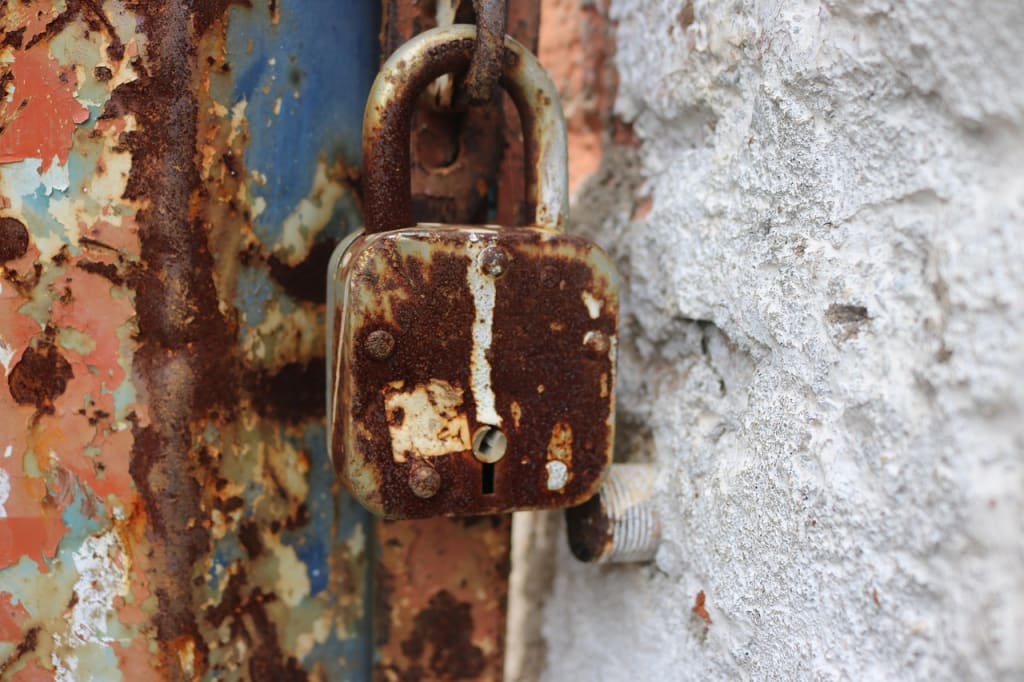
It was narrow, oak, and locked with an iron keyhole large enough to tempt any sinner.
“Best leave it,” said the vicar, when young Tom Larkin bent to inspect it. “A private chamber, perhaps. Let the dead keep their corners.”
So we did. For a while.
The trouble began a month later, when Maggie Pott, the washerwoman’s daughter, claimed she had seen a flicker of light behind the locked door. She had gone upstairs to fetch a broom and found the corridor faintly glowing. Out of mischief — or bravery — she bent to the keyhole and swore she saw a woman sitting by a window, sewing, as though time had forgotten to move inside that room.
By evening half the village knew.
The blacksmith said it was reflection, the doctor said imagination, the baker said the house was settling. But Maggie’s little brothers crept up the next day and returned pale as linen. Each claimed to have seen something different — one a cat, one a field, one their late grandmother smiling faintly.
Word spread like midsummer fever.
Soon everyone had a theory. The midwife said the door was a “looking place,” that the widow had left it enchanted for confession. The miller scoffed but still took a turn at the keyhole one night after ale; he emerged shaken, muttering about a boy he’d wronged years before.
We, the village, began to change.
Some avoided the house altogether. Others visited in secret. On Sundays, whispers followed the sermon like echoes: “What did you see?” “Did it show you?” “Did it speak?”
By autumn, the Fernley House no longer felt like a gift. It watched us — the brass knob gleaming, the keyhole waiting. Even the crows seemed to circle slower above it, as if caught in its gaze.
Then came the day of the storm.
Rain arrived in sheets, lashing the moor until paths vanished under mud. The roof of the church shed half its tiles, and the vicar sought shelter in the Fernley House with a few of us who were mending the hall. Thunder rolled overhead, shaking dust from the rafters.
It was then that little Eliza Mott, an orphan girl who swept floors for her supper, crept upstairs. No one noticed until we heard the scream.
We found her kneeling before the locked door, trembling. “She called me,” Eliza whispered. “The lady inside.”
The vicar pressed his ear to the panel. Silence. Then — faintly — a sound like humming. Old, gentle, sorrowful.
He crossed himself. “Everyone downstairs. Now.”
But the rest of us lingered. The humming stopped. Then, as if moved by unseen breath, the keyhole flared with light — a soft gold that painted the corridor in honeyed streaks.
We were frozen.
Eliza, eyes wide, reached out her hand. The lock clicked. The door opened a crack — just enough to exhale the scent of lavender and something older, like paper and candle smoke.
Inside was no apparition, no ghostly figure waiting. Only a small room lined with mirrors.
Dozens of them, stacked against the walls, polished to impossible clarity. In the center stood a single chair and a desk strewn with letters.
On the mirror nearest the door, our own faces shone back at us — frightened, curious, guilty. The vicar’s lips moved in prayer; the rest of us stared at the reflections as though they were strangers.
We later found the widow’s journal in a drawer. It spoke of loneliness, of watching the village from her window while hearing laughter down in the square. Of how she wished we might one day see ourselves as she saw us — flawed but not lost. She wrote of her experiments with “reflected light,” how she believed mirrors could hold a trace of the soul if tended with care.
The room, she explained, was her “chamber of truth.” She had polished those mirrors each morning, hoping that if she vanished, her neighbors might someday look in and recognize themselves — not as gossip or rumor, but as they truly were.
Some of us wept at that. Some scoffed. But none left unchanged.
The vicar sealed the room for a week, saying prayers to cleanse it. Yet even he returned one evening, quietly, and stood a long while before the mirrors. After that, he preached with more gentleness. The blacksmith reconciled with his brother. Maggie Pott stopped lying for attention. The house seemed to sigh in relief.
As months passed, the keyhole gathered dust, and the legend faded into something softer. We began using the manor as it was intended — for gatherings, for music, for warmth in winter. But every so often, someone would pause on the stairs and glance toward that door, and the air would still, as though the house remembered.
We came to understand that it had never been haunted. It had only been waiting.
Waiting for us to see.
Years later, when new families arrived and the old ones drifted away, the story of the keyhole became a fireside tale. Children dared each other to peer through it; lovers carved initials on the banister; and the mirrors grew dusty again.
But those of us who were there — we never forgot that night when the door opened. When the house that had watched us finally let us look back.
Sometimes, in heavy fog, when the church bell sounds muffled across the moor, we think we hear that faint humming again — the widow’s tune, low and patient. And we know the Fernley House is still listening, still reflecting, still forgiving.
Because houses remember what people forget.
And some doors, once opened, never quite close again.
About the Creator
Keep reading
More stories from Ishaq khan and writers in Fiction and other communities.
Leo, the Wise King of the Jungle
Deep in the heart of the Sundarban jungle, where sunlight danced on the canopy and streams sang to the rocks, lived Leo, the mighty lion. Known far and wide as the king of the jungle, Leo was not just strong and fierce — he was wise, fair, and respected by every creature, from the tiniest ant to the soaring eagles.
By Ishaq khan5 months ago in Fiction


Comments
There are no comments for this story
Be the first to respond and start the conversation.