
The House That Remembers Me
A story told by someone who may not be telling the truth — or maybe doesn’t know what the truth is anymore.

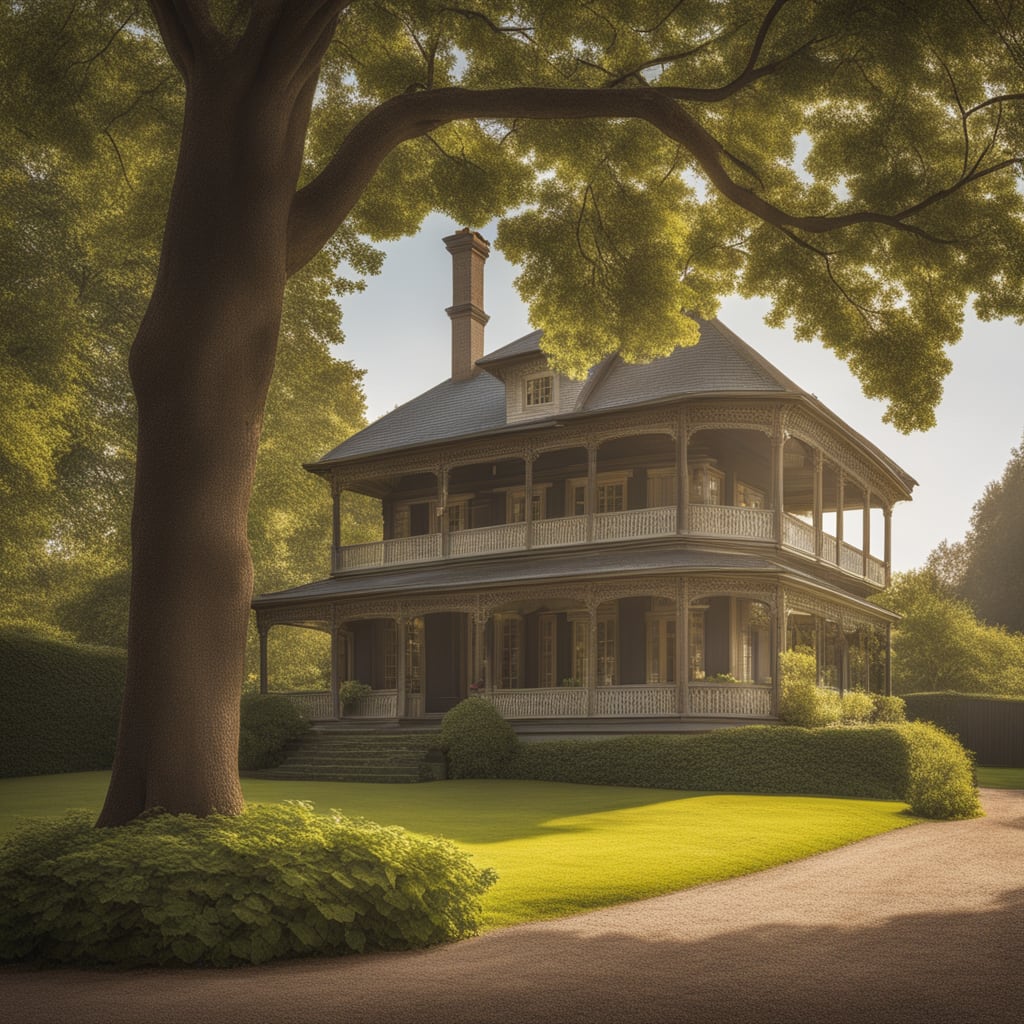
The first time I saw the house, it wasn’t really there. I mean, it was there—white porch, cracked shutters, those big oaks that lean like tired old guards—but it felt like a memory pretending to be solid. Like déjà vu wearing fresh paint.
My therapist says I shouldn’t start stories like that. She says memory is tricky enough without me “romanticizing the unreliable.” But that’s easy for her to say—she never saw the house change faces.
Anyway, I’ll tell it straight. Or as straight as I can.
The Return 🏚️
I came back to Ashford Hollow after twenty years. My mother had died, or so the letter said. The envelope was yellowed, hand-addressed in a neat, old-fashioned script that wasn’t hers. I thought it was a prank at first. She’d been gone since I was twelve. Ran off, Dad said. Or maybe was taken, if you believed the town talk.
The will said she left me the old family home.
Only problem: I remember that house burning down when I was a kid.
That’s what I told the lawyer, a graying man with the kind of face you forget while still looking at it. He smiled politely, like I’d said something mildly amusing.
“Still standing,” he said. “Always has been.”
The House That Shouldn’t Exist 🕰️
Driving up the gravel road, I had that crawling sensation in my spine. The trees looked too tall, the sky too low, and the air too still—like the world had been paused just for me to arrive.
The house loomed ahead, identical to the one from my dreams. Every night since I got the letter, I’d dreamt of its windows blinking open and closed, like eyes adjusting to the dark.
When I stepped onto the porch, the boards didn’t creak. That bothered me more than it should have. Old wood should complain.
Inside, everything was perfectly preserved. The old floral wallpaper, the smell of lilac and dust, my mother’s piano in the corner. Even the portrait of her above the fireplace—same blue dress, same faint smile that never quite reached her eyes.
But the strangest part was the clock on the mantle. It ticked in rhythm with my heartbeat. Or maybe my heart was syncing to it. Hard to say.
Conversations with Ghosts ☁️
I started hearing her voice the second night.
At first, it was a whisper beneath the floorboards, like water running through pipes. Then it became clearer. Familiar.
“Don’t go in the attic,” she said.
I laughed. Out loud. Because that’s exactly what you’d say if you wanted someone to go into the attic.
And I did, of course.
The ladder creaked like it remembered me. The attic smelled like mothballs and wet wood. Boxes stacked to the ceiling, all labeled in her handwriting: Tommy’s Toys, Tommy’s Books, Tommy’s Drawings.
That’s my name. Or was, once.
But when I opened the boxes, they were empty. Every single one.
Then I heard her again, closer this time.
“You shouldn’t be here.”
Things That Don’t Line Up 🪞
The lawyer called a few days later to “check in.” I told him the house wasn’t right. That it changed when I wasn’t looking.
He asked what I meant. I said the wallpaper pattern moved. The piano played at night. The portrait of my mother kept tilting its head, just slightly, like she was trying to understand me.
He suggested grief counseling.
I hung up.
The next morning, the clock was gone. In its place was a note written in blue ink—her handwriting again.
“Stop telling them lies.”
I tore it up. Burned it in the sink. But that night, I dreamt of her standing at the foot of my bed, holding the pieces in her hands. Smiling.
The Stranger in the Mirror 🪞
By the end of the week, I stopped going outside. The trees were watching—don’t laugh, they were. Every time I opened the curtains, they seemed to have crept closer.
And the mirror in the hallway began showing things it shouldn’t. Sometimes it showed me older, sometimes younger. Once, it didn’t show me at all—it showed my mother.
She mouthed something I couldn’t hear. I wrote it down phonetically after I woke up. Looked it up online later.
It was an old Scottish phrase.
Roughly translated: You’re remembering it wrong.
A Visit from the Neighbor 👣
A woman came by on the ninth day. Said she used to live next door. Brought me a pie, peach I think. She looked at me funny, like I was both familiar and strange.
“You look just like him,” she said.
“Who?”
“Your father.”
That didn’t make sense. Dad was dead before Mom disappeared. But she kept talking, like I should know better.
“Saw him around last spring,” she said. “Out front, pruning those hedges.”
I laughed too loud. She took a step back.
Then I realized the hedges were neatly trimmed.
I never touched them.
Pages That Weren’t There Before 📖
In the attic again—yes, I went back—I found a diary under a loose floorboard. My mother’s handwriting, neat and looping.
“Tommy is getting worse. Keeps saying he’s me. Keeps writing my name on his drawings. Doctor says it’s disassociation, but I don’t believe him. The house remembers too much.”
I dropped the book. Ran downstairs. But the portrait over the fireplace was gone. In its place—an empty frame.
When I looked at the mirror, her face was there instead of mine. She smiled, sad and knowing.
“You’re remembering it wrong,” she said again.
The Truth (Maybe) 🌀
Okay, maybe I should admit something.
I might not be Tommy.
Or maybe I am, but not the same Tommy.
Look, when I was twelve, there was an accident. A fire, yes—but maybe it didn’t destroy the house. Maybe it destroyed me. Maybe my mother tried to fix it. Maybe she tried to fix me.
There were rumors she studied “memory therapy.” Hypnosis. Even soul transference, if you believe the old folks. I laughed about it once. Not anymore.
Because last night, I found another note, folded under my pillow. Blue ink. Her handwriting.
“I tried to save you. But you became me instead.”
I don’t know what that means. But when I looked in the mirror this morning, my reflection blinked a second too late.
The Neighbor Returns 🔦
Tonight, someone knocked again. I didn’t answer. She kept shouting through the door.
“Tommy, please! We found your mother’s remains. In the old well. You need to come out!”
But she’s wrong. I saw my mother this morning, in the kitchen, humming while making tea.
I tried to tell the woman through the door, but she just kept crying. Said no one’s lived here for twenty years. Said the house was condemned.
She left eventually.
When I turned back, the kitchen was empty. The teacup was still steaming though.
The House Remembers 🕯️
I hear the piano playing again. A tune I almost remember. Something she used to hum while brushing my hair.
The walls feel closer tonight. Breathing, maybe. The clock’s ticking again even though I never found it. It’s counting slower, like it’s waiting for me to realize something.
Maybe I already did.
Maybe the reason the lawyer, the neighbor, the town—they all look at me like I’m a ghost—is because I am.
Or maybe that’s just another bad memory pretending to be real.
Either way, I’m staying. The house needs someone to remember it.
And I’m good at remembering.
Even if I remember it wrong.
Epilogue (If That’s What This Is) 🕰️
If anyone finds this letter, don’t come here. The house doesn’t like strangers. It likes stories. It likes people who forget and remember the wrong things.
If you hear piano music when you pass the old road to Ashford Hollow—just keep driving.
I’ll be inside, waiting for her to finish the song.
FAQ
Q: Who was the unreliable narrator — Tommy or his mother?
It’s deliberately unclear. Tommy might be his mother reborn, or just a traumatized man losing touch with reality. The diary and notes suggest both possibilities.
Q: Is the house real or a metaphor?
Both. The house represents memory — a place where the past refuses to stay buried.
Q: Why do the details keep changing?
Because unreliable narrators don’t just lie — they live inside their lies until the truth rots away.
Q: What’s the theme of the story?
Identity, memory, and the haunting nature of self-deception.
About the Creator
Karl Jackson
My name is Karl Jackson and I am a marketing professional. In my free time, I enjoy spending time doing something creative and fulfilling. I particularly enjoy painting and find it to be a great way to de-stress and express myself.
Keep reading
More stories from Karl Jackson and writers in Fiction and other communities.
Out of the Woods
The night the storm hit, Mara didn’t plan on driving into the woods. She’d only meant to leave the city—to breathe, to escape the heavy silence of her apartment that still smelled like her ex’s cologne. But somewhere between her grief and the winding backroads, she took a wrong turn, and the road took her somewhere it shouldn’t have.
By Karl Jackson4 months ago in Fiction
The Tarot Reader Who Predicted World War 3
The Tarot Reader Who Predicted World War 3 The night was quiet, the kind of quiet that makes every small sound feel important. In a dimly lit room a tarot reader sat at her wooden table, a single candle glowing beside a worn deck of cards. The flame moved gently whenever the wind brushed against the window. Her cat rested near the cards, watching the room with calm yellow eyes.
By George’s Girl 2026 5 days ago in Fiction




Comments
There are no comments for this story
Be the first to respond and start the conversation.