
The House That Ate Its Inhabitants
Where Silence Was Never Empty

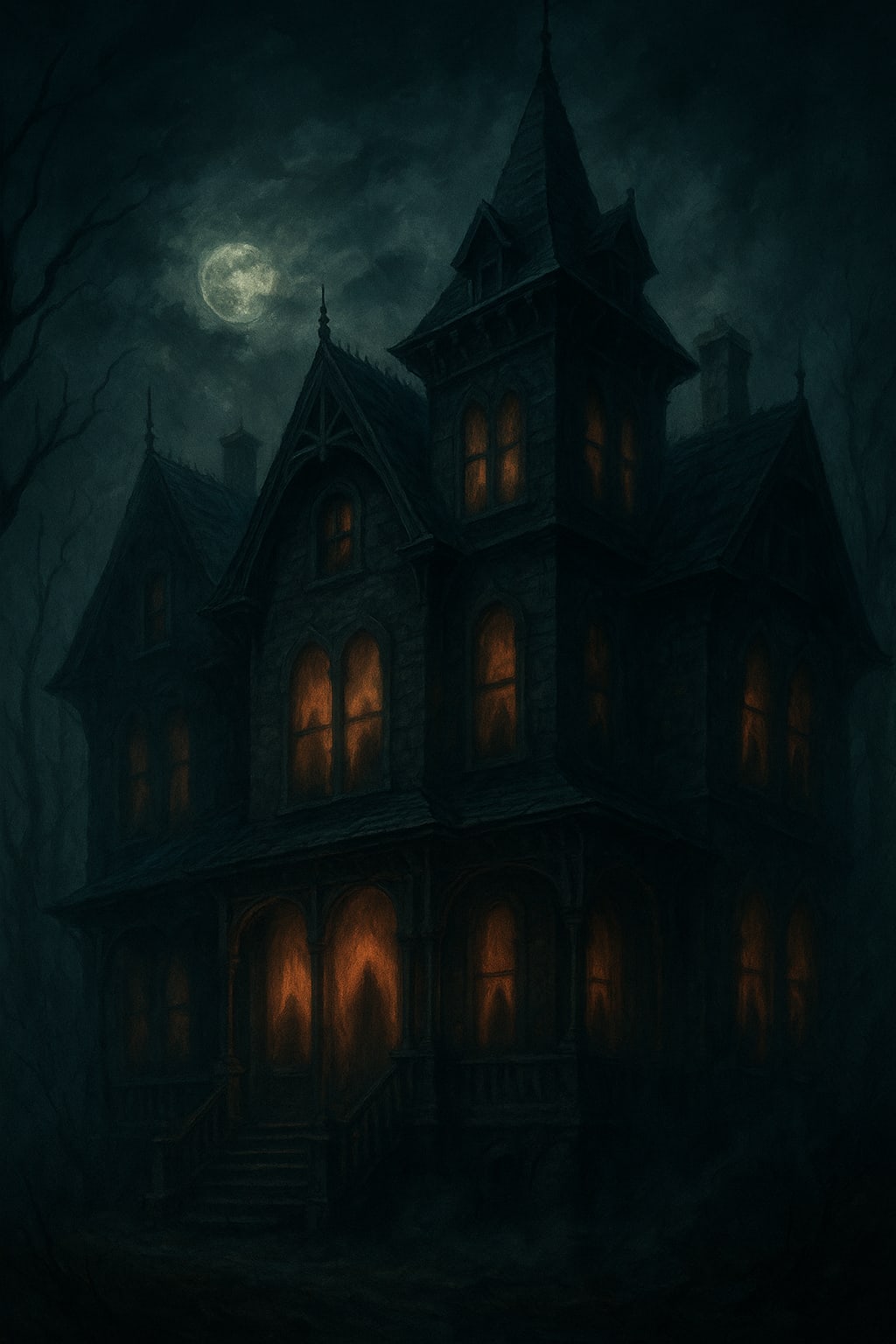
They said the house was beautiful.
High-arched windows that caught the sun, oak staircases polished smooth by careful hands, fireplaces carved with vines and angels. It stood tall at the edge of the village, proud and expectant, as if it had been built not just to shelter, but to witness. A place to cradle laughter, warmth, the lives of those who entered.
But beauty, as the house knew, is only a mask.
What fed it was never visible in sunlight.
I. The First Hunger
It began gently.
The house tasted the sigh of a mother as she folded laundry late at night, wishing for help she did not dare request. It absorbed the father’s frustration when bills stacked high and he swallowed his anger in silence. It licked at the tears of a little girl who wanted to ask why she was afraid, but pressed her lips shut instead.
The walls thrummed softly, content. The beams shivered in delight.
It was not cruelty. Not yet.
It was hunger.
II. The Silence Between
Every home breathes. This one devoured.
It consumed quarrels that never erupted, apologies that never came, truths that sank into throats like stones.
The family told themselves they were keeping peace.
They said not everything needs to be spoken.
They said what’s the use of stirring trouble?
But the more they repressed, the stronger the house grew.
At night, the stairs groaned like a belly full of secrets. The windows fogged as if exhaling withheld confessions. In the corners, the shadows thickened, alive with watchful silence.
Visitors remarked how quiet it was, how peaceful. They mistook stillness for harmony.
Only the children sometimes noticed. They whispered to each other that the house listened. That when they held their breath too long, the walls leaned closer. That if you dared scream inside, the house itself would swallow the sound before it reached another ear.
III. The Feast of Years
As the years passed, the house demanded more.
The eldest son, who dreamed of leaving for the city, buried his longing each morning as he walked the same path to the same mill. The daughter, who loved another girl, held her hand in secret but never spoke it aloud. Their mother, weary of her husband’s absences, told herself she was content. Their father, trembling beneath debts he could not pay, told no one.
The house fed on all of it.
Its beams pulsed with unspoken words. Its hearth glowed not with flame, but with secrets fermenting into fuel. The wallpaper curled with satisfaction, as if every pattern of vine and flower was rooted in silence.
The family thinned. Not in body—there was food enough—but in presence. Their laughter grew pale, their eyes hollow. They no longer noticed the missing hours, the blurred memories, the way they forgot what they had once desired.
Because the house had eaten those, too.
IV. The Visitors
Neighbors began to whisper.
They said the family seemed strange. Their mouths smiled, but their eyes were flat, glassy. When you spoke to them, they answered politely, but the words were hollow, like recited lines from a forgotten play.
One neighbor swore that, through the glowing windows, she saw them setting the table in silence—plates and forks arranged with mechanical precision, mouths moving but producing no sound. Another claimed he heard weeping from the chimney, though when he knocked, the father opened the door, dry-eyed, as though nothing had happened.
And those who stepped inside the house never stayed long. The air pressed too heavy against the chest. Breathing was difficult. Thoughts seemed to stick in the throat. Words shrank. They left quickly, gasping, desperate to speak again in the open air.
V. The Last Supper
One winter evening, the silence became unbearable.
The father sat at the long table, his hands trembling, a confession rising—but the words died before his lips. The mother clenched her fists, wanting to scream, but her scream broke inside her chest. The children opened their mouths to speak truths of who they were, but all that emerged was a brittle smile.
And in that moment, the house swallowed them whole.
Not their bodies, not yet. But their selves.
What remained were shells, shadows wearing skin, moving through corridors in endless routine. The neighbors swore they still saw them, through the glowing windows—brushing hair, tending fires, eating bread. But if you looked long enough, you noticed: their mouths never moved.
The house had eaten their voices.
VI. Aftermath
Years passed. Seasons changed. The house remained.
Some say it is empty now. Others claim the family is still inside, repeating the same gestures forever, preserved like insects in amber.
Those who walk past at night swear they hear the creak of footsteps, the sigh of someone holding back words. The silence presses outward, warm, suffocating, hungry.
And should you dare step across the threshold, you will feel it too: the weight of everything unspoken, the taste of words bitten back. The house will lean closer, eager.
Because houses remember.
And this one will never stop feeding.
About the Creator
Alain SUPPINI
I’m Alain — a French critical care anesthesiologist who writes to keep memory alive. Between past and present, medicine and words, I search for what endures.
Keep reading
More stories from Alain SUPPINI and writers in Fiction and other communities.
Mastering French Without Losing Your Sanity: A Realistic Guide for Beginners
Learning French can feel like solving a Rubik’s Cube blindfolded. The tricky pronunciation, the never-ending grammar rules, and the surprising exceptions make it seem impossible. But don’t worry—equipping yourself with key expressions and effective strategies can turn frustration into fluency. Let’s simplify French and make learning enjoyable.
By Alain SUPPINIExclusive • 11 months ago
If You Love Me, You'll Do It
I met Jason when I was five years old. I could say that I loved him from the moment I saw him. He was so handsome to me and I felt in awe by his presence. When they introduced him as the new kid in school, I wanted to be his friend right away. I remember it like it was yesterday. I remember his smile and how he didn't seem shy. He appeared confident and ready to learn. I waved at him and said "hello," before anyone else could even say a word. He sat next to me, and I asked him if he wanted to be friends. He looked so happy as he said, "Yes!"
By Sidney Smith (Sid Smith)8 days ago in Fiction




Comments
There are no comments for this story
Be the first to respond and start the conversation.