
The House on Blackwater Lane
A fictional story based on generational trauma, dark choices, and the spirits that never left

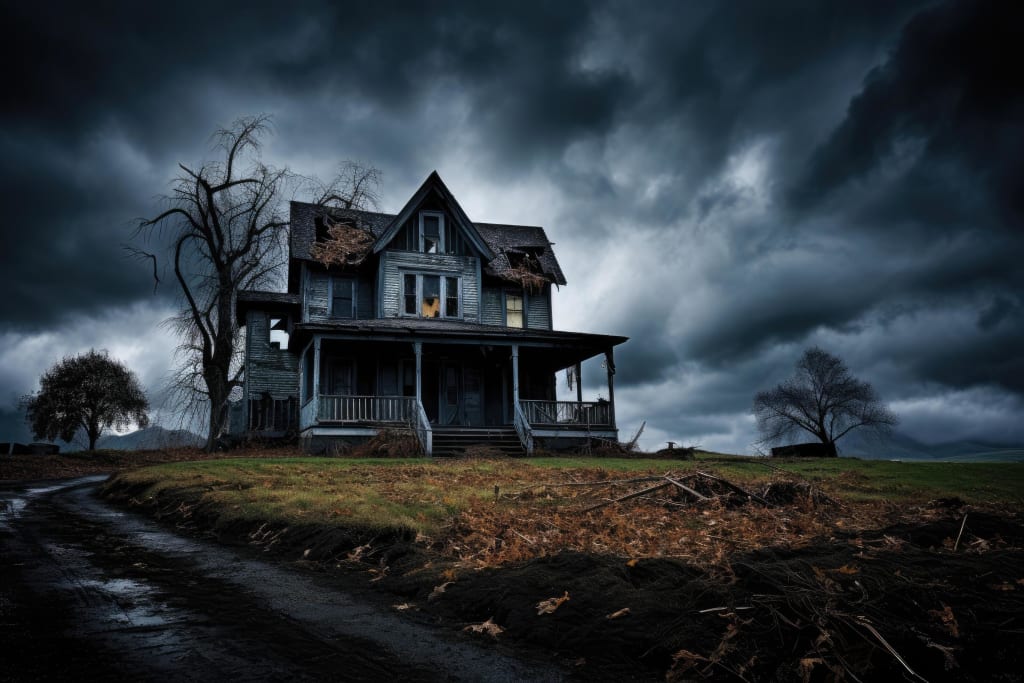
Fiction inspired by a true story
There were six of us, all born into a house built on secrets.
Mama used to say we came into the world sideways, like the air was too heavy to breathe in straight. I didn’t know what she meant until later — until the whispers in the walls grew louder than the prayers.
Our mother, Marlene, had been adopted into a family that wore Sunday clothes but practiced something far from holy. Her adoptive mother, Dorothy, never offered tenderness. She offered rituals. Salt in the corners. Mirrors under the bed. Candles in places they didn’t belong.
“She hated me,” Mama would say flatly, like it was fact — the same as the weather.
Marlene got pregnant at 17, and gave birth to my sister Cora, the golden child, the one Dorothy adored. Not because she reminded her of Marlene, but because she didn’t. Cora had a way of reading rooms, of saying exactly what people wanted to hear. And she knew early that power wasn’t in honesty, it was in control.
The rest of us came later. I was third out of six. Quiet. Always watching. The kind of kid who knew how to slip into the background and listen.
That’s how I learned most of what I know now not by being told, but by seeing the things adults tried to keep quiet.
Uncle Ray was the only son. He died of a drug overdose one Sunday morning. They found him in his apartment with the TV still humming and his heart no longer beating.
Dorothy collapsed in the funeral home hallway. Screamed like someone had ripped her spirit right out of her chest. And maybe they had. She was never quite the same after that.
The night after the service, we went back to Grandpa’s house on Blackwater Lane. He wasn’t there — he was in the hospital again, recovering from a recent fall. His bed was still made, his slippers tucked beside it. But the air in that room was stale, heavy, like something had already left and wasn’t coming back.
That’s when Cora pulled out her tarot deck. Velvet pouch. Worn edges. Something about it made my stomach clench.
She smiled. “Let’s see what the universe says.”
I should’ve walked out. Instead, I sat on the corner of that bed and held my breath while she shuffled.
She turned over a card.
The Tower.
Her smile didn’t falter. “Well… that’s never good.”
It was like a hole opened in the floor beneath us. The kind you can’t see, but feel. Like falling in slow motion.
I left the room. Went into the hallway and closed my eyes, whispering prayers like lifelines. I didn’t sleep that night. Couldn’t.
Two weeks later, Grandpa died. Heart failure.
Dorothy didn’t cry this time. She just stood still, staring at the casket like it wasn’t real. Like her body was still back at the last funeral, screaming in that hallway.
In the span of three weeks, she lost her only son and her husband.
Then came the reading of the will. That’s when the earthquake hit.
Everything went to Cora.
The house. The bank accounts. The land. Grandpa’s medals. The jewelry. The savings bonds. The cars.
Mama got nothing. Not even a framed photo.
The lawyer was polite, but firm. “Your name was removed last year.”
Mama didn’t flinch. She just nodded.
“I should’ve known,” she said later. “Dorothy always chose Cora. Always.”
I thought maybe Cora would do something kind — give back part of it. Share. But power is a greedy thing. And Cora had been taught by the best.
Cora moved into the house on Blackwater Lane within the month. She brought Dorothy with her. Claimed it was to “help care for her,” but it was clear from day one who was doing the caring.
Dorothy, 82 years old, grieving the only two men she ever loved, was now cooking dinner, watching children, and folding laundry while Cora threw parties and posted Bible quotes on Facebook under smiling selfies.
“She’s so strong,” people commented.
They didn’t see the crying behind closed doors. The way Dorothy whispered to the corners. The shadows she claimed crawled across the walls at night.
At first, Cora chalked it up to grief. Then to dementia. But when her baby monitor picked up voices no one else heard — when the hallway lights flickered every night at 3:12 a.m. — she stopped laughing.
Even the kids started saying things. “There’s a man in the closet,” her youngest said once. “He has no eyes.”
Cora got cameras. Burned sage. Called a pastor once, just to check all the boxes.
But nothing helped.
And deep down, I think she knew:
Some things you call in… don’t leave just because you change your mind.
Mama didn’t say “I told you so.” She just prayed harder.
“She brought something into that house,” she whispered to me once. “When y’all laid those cards out on that bed — that’s when it shifted.”
I nodded. I knew. I felt it too. I still did.
Even now, years later, I sometimes wake up at 3:12 on the dot, covered in sweat.
Dorothy eventually stopped sleeping. She’d nod off in chairs, clutching a photo of Ray to her chest, mumbling things like, “He’s still here. He didn’t leave.”
She’d cry about Grandpa, too. Say he was mad. That he came into her room at night and stood by the dresser, breathing heavy, smelling like the basement.
Cora stopped letting the kids be alone with her. Claimed she was “scaring them.” But she still needed the childcare. Still needed the checks. So Dorothy stayed — more prisoner than guest.
Last I heard, Cora drained most of the accounts. Put Dorothy into a nursing facility a few towns over. The same place Ray was in for rehab years before he died.
Full circle. Or maybe just a spiral.
People say Cora’s house feels “off.” The pink mailbox is faded now. Porch lights never come on. Some say the floors creak when no one’s walking. That her oldest son started sleepwalking and won’t talk about why he’s scared of the basement.
They say Cora doesn’t smile as much anymore.
Mama says she’s still praying. For all of us. Even for Cora.
As for me, I left town. Started over. I have kids now. And I do everything different.
I don’t keep mirrors under beds. I don’t let unspoken things into my house. And I pray over my children’s doors before they sleep.
Because I know better now.
I know how darkness waits for silence.
I know how bloodlines carry more than just eye color.
And I know how loud you have to pray when something’s been invited in.
Epilogue
Sometimes I drive past Blackwater Lane when I’m visiting Mama.
The porch is empty. The curtains drawn. But I swear I see a shadow in the upstairs window, watching.
The real kind?
Or something else?
I don’t look twice.
Because I’ve learned:
Some houses remember.
Some choices echo.
And some cards should never be flipped.
About the Creator
The Arlee
Sweet tea addict, professional people-watcher, and recovering overthinker. Writing about whatever makes me laugh, cry, or holler “bless your heart.”
Tiktok: @thearlee




Comments
There are no comments for this story
Be the first to respond and start the conversation.