
The House at the Edge of Cedar Lane
Some houses never forget the people who pass by. Some memories live behind windows, waiting to be remembered.
I. The Sad House
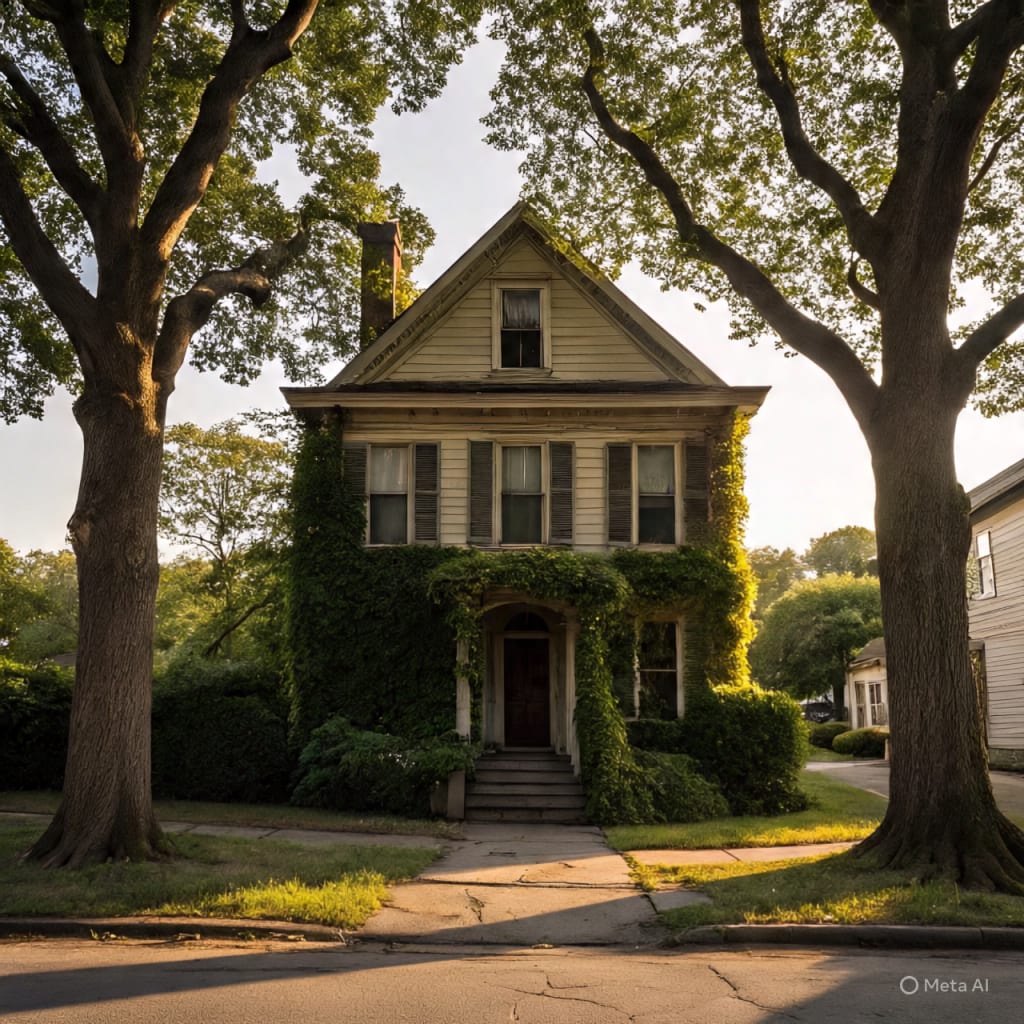
Everyone in the neighborhood called it the Sad House.
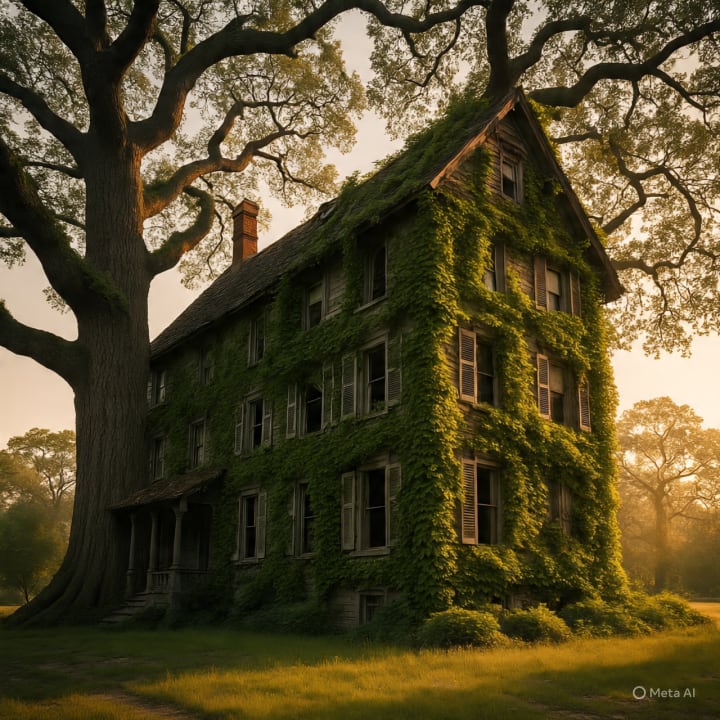
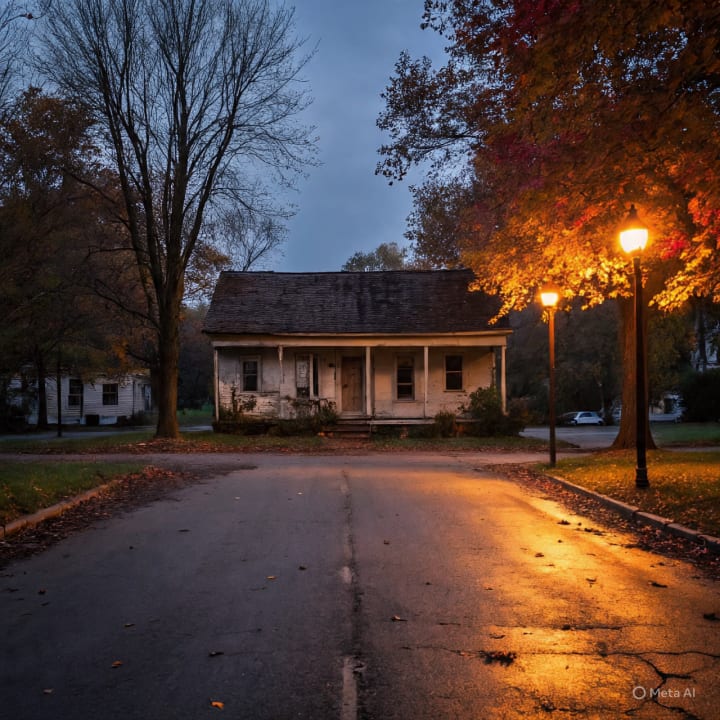
It sat crookedly at the end of Cedar Lane, cloaked in ivy and shaded by two giant oaks that looked like they were mourning something ancient. Its shutters hung lopsided, one of them missing entirely, and no matter the weather, a veil of silence wrapped around it tighter than any storm.
But none of that stopped me from walking past it every day after school.
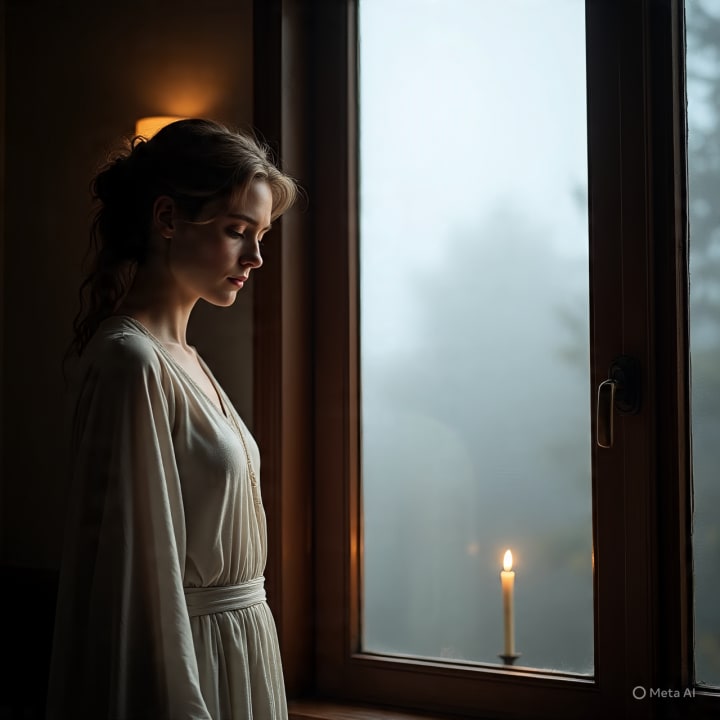
I was eleven the first time I saw someone in the window. A woman, pale and still, staring down as if waiting for something she wasn’t sure would ever return. Our eyes locked for a moment—just a flicker—and then she was gone.
When I told my mom about it, she dismissed it with the kind of clipped caution that only adults use when they know more than they’re willing to share.
“Oh honey,” she said. “That place hasn’t had anyone living in it for years. Not since the Levitts moved away.”
The Levitts. The name echoed in my head like a ghost story you’re not allowed to tell out loud. My mom gave me the usual warnings: Don’t go near it. It’s dangerous. The roof could fall in. It's not safe.
But I wasn’t listening.
---
II. Offerings
The woman in the window appeared twice more that summer. Always around the same time—early evening, when the sky was that in-between color and the world felt like it was holding its breath. She never moved, never waved, never even blinked, it seemed. Just stood there, wrapped in that same quiet sorrow the house wore like old wallpaper.
By the time school started again, I stopped telling anyone about her.
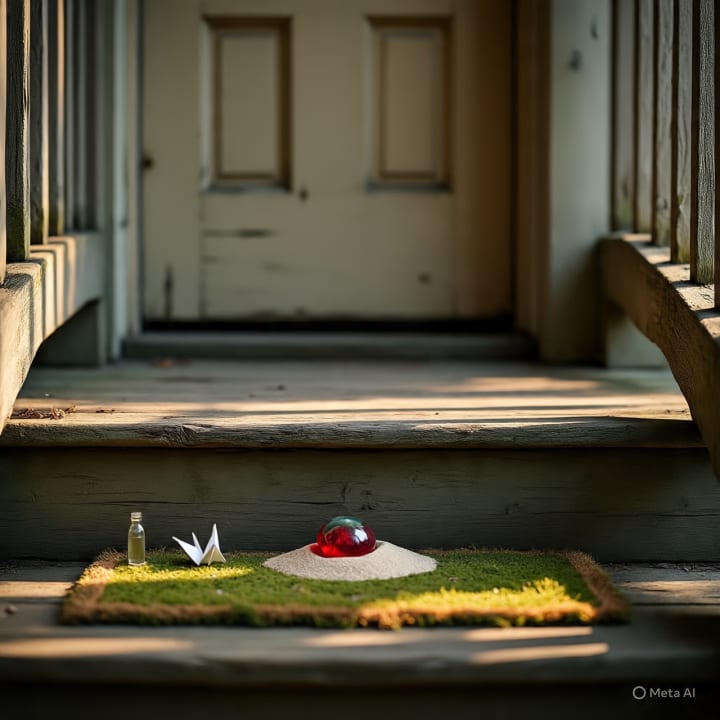
Instead, I left things behind. Little things. A folded paper crane made from my math homework. A small red marble I’d carried in my pocket since kindergarten. A tiny bottle filled with sand from my aunt’s beach house. I’d place them carefully on the front steps, just under the mossy welcome mat that hadn’t welcomed anyone in a decade.
Nothing ever moved.
---
III. Return
It was years later—after high school, after college, after grief had carved out its own permanent room inside me—that I returned to Cedar Lane. The town hadn’t changed much, but everything else had. My father had died, and the house I grew up in had been sold to a couple who installed a hot tub in the backyard and cut down the maple tree I used to climb.
I didn’t even recognize the street at first.
But the Sad House was still there.
More dilapidated now, the ivy thicker, the silence heavier. I parked my rental car across the street and just stared at it, unsure of what I was looking for. Closure, maybe. Or an answer to a question I’d never dared to ask out loud.
It was then I noticed the front door was slightly ajar.
---
IV. Inside
Curiosity is a strange thing. It wears the costume of bravery but always hides a reckless kind of longing underneath. I stepped onto the porch and pressed lightly. The door creaked open with the same hesitation I felt in my chest.
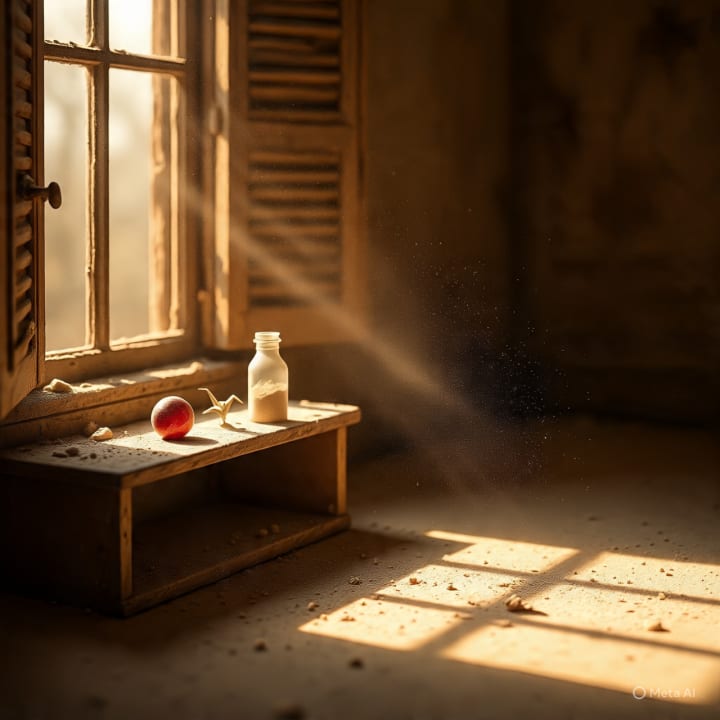
Inside, the air smelled of old newspapers and forgotten dreams. Dust danced in the sunlight pouring through the broken slats. The floorboards groaned like they were remembering every footstep that ever crossed them.
And then I saw them.
On a narrow shelf by the window: a paper crane, slightly crumpled. A red marble. A glass bottle filled with sand.
My knees went weak.
There, next to them, were other offerings—not mine. A faded drawing of a sunflower. A silver thimble. A worn-out hair ribbon. And a note, so brittle it nearly disintegrated when I touched it.
> “For her. Whoever she was. She watched us all.”
No name. No date. Just that.
---
V. Light
I don’t know how long I stood there. Long enough for the shadows to stretch like reaching hands. I thought of all the kids who must have walked by over the years. How many had seen her? How many had tried to reach her?
And was she ever really there?
I don’t know. I’m not sure I want to.
But as I left, I pulled something from my pocket—an old photograph of me and my dad at the town fair, cotton candy in one hand, his hand in the other. I set it gently on the shelf beside the others.
"For her," I whispered. "For all of us."
---
VI. The Window
That night, as I drove away from Cedar Lane, I glanced one last time in the rearview mirror.
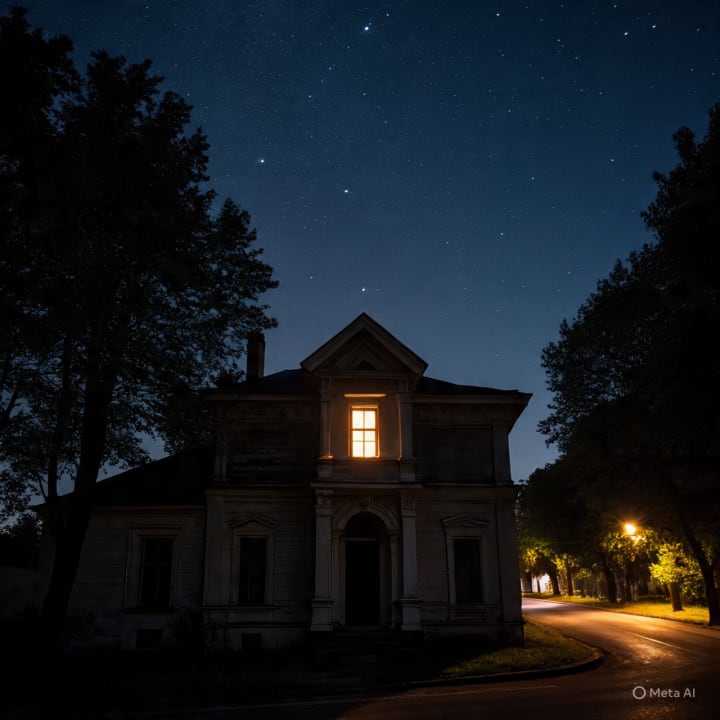
In the upstairs window, a faint glow.
No figure. No face.
Just light.
VII. Conclusion: The Unseen Witness
I still don’t know if the woman in the window was ever real—whether she was a ghost, a memory, or just a reflection of all the stories that house held quietly behind its walls. But standing there in that crumbling room, I realized something:
Some places remember us even when we forget them.
Maybe she wasn’t watching us out of sadness or longing. Maybe she was simply bearing witness to the small kindnesses we left behind—to marbles and paper cranes, to grief and growing up, to love in its quietest forms.
Maybe, in a world that forgets too fast, she was the one who remembered.
✅ Author’s Note (Optional):
> This story is for anyone who has ever looked back at a place that shaped them and wondered what was left behind. Sometimes, even forgotten corners carry echoes of who we once were. Thank you for reading.
And maybe that was enough.
---
About the Creator
Money Talks, I Write
Writer. Investor. Observer of money and mindset.
✍️ Money Talks, I Write — because every dollar has a story.
Keep reading
More stories from Money Talks, I Write and writers in Fiction and other communities.
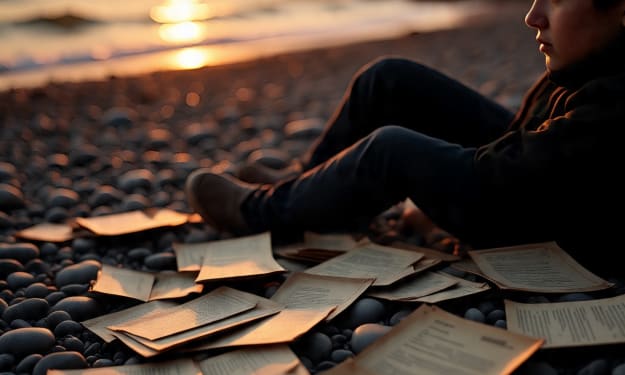
The Weight of Memories
Lena had always been fascinated by old photographs. She loved the way they captured moments in time, freezing them forever in a frame. As a historian, she spent most of her days poring over ancient texts and dusty archives, searching for clues to the past.
By Money Talks, I Write8 months ago in Fiction
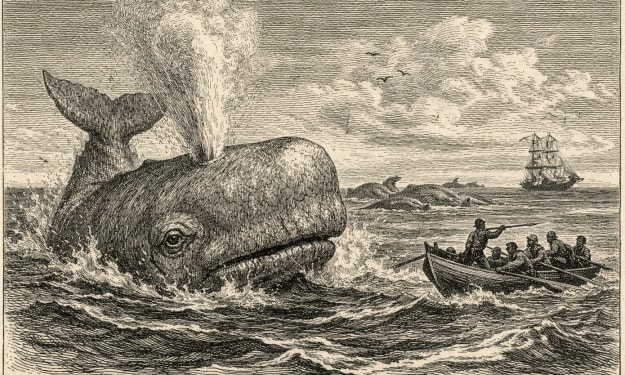
Moby Dee
We all think we know the story of Moby Dick, a tale of human courage, obsession, and revenge against a monstrous white whale, a creature of evil nature. We also remember that in the end nature cannot be tamed or defeated: Moby Dick kills his obsessed hunter and leaves. This has become such a recognizable myth that the name itself -- Moby Dick -- evokes powerful feelings of fear and anxiety about the untamed monster whale in the vast ocean.
By Lana V Lynx2 days ago in Fiction
Top tipple tricks
Been thinking a lot about drinking, lately. Not least because of a recent episode of over-indulgence and the inevitable after effects. Some readers may recall the earlier articles I wrote about beating the booze. Here I set out an experiment in techniques for cutting down on my alcohol intake. The experiment was successful, the techniques worked, and I have armed myself with an arsenal of weapons in the war against the demon drink. I have yet to fire the first round however. It's all a question of timing (perhaps procrastination).
By Raymond G. Taylor6 days ago in Psyche


Comments
There are no comments for this story
Be the first to respond and start the conversation.