
THE HOCUS POCUS "AI" VS "THE SUPER BRAIN"
The amazing AI and the power of super brain

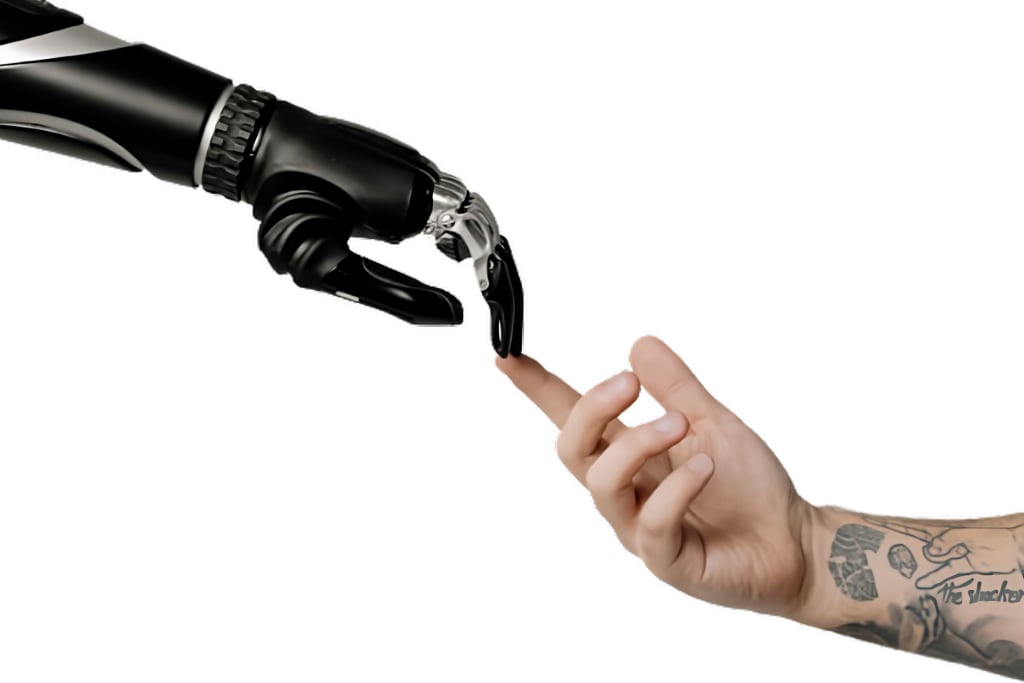
Artificial Intelligence (AI) is a rapidly growing field that is changing the way we live and work. The development of AI has led to a lot of debate about the capabilities of machines versus the capabilities of the human brain. While AI has come a long way in recent years, there are still significant differences between AI and the human brain. In this article, we will explore the differences between AI and the human brain and the advantages and disadvantages of each.
AI
AI is an umbrella term that refers to machines that can perform tasks that typically require human intelligence. These tasks can include image and speech recognition, natural language processing, decision making, and problem-solving. AI systems use machine learning algorithms to learn from data and improve their performance over time. AI has the advantage of being able to process vast amounts of data quickly and accurately, which can be useful in many applications, including finance, healthcare, and transportation.
One of the key advantages of AI is its ability to perform repetitive tasks with a high degree of accuracy. Unlike humans, machines do not get tired or distracted which means they can work for long periods without making errors. Additionally, AI can analyze vast amounts of data quickly, making it useful in situations where a large amount of information needs to be processed quickly.
However, AI has its limitations. For example, AI systems are still not as good as humans at tasks that require creativity, intuition, and emotional intelligence. Additionally, AI systems can be vulnerable to errors and biases, which can be difficult to detect and correct.
Human Brain
The human brain is the most complex organ in the body, with billions of neurons and trillions of connections. The brain is responsible for many functions, including perception, thinking, and emotion. Humans have the ability to learn and adapt to new situations quickly, which is a significant advantage over AI.
One of the key advantages of the human brain is its ability to think creatively and intuitively. Humans can solve complex problems by drawing on their knowledge and experiences, which can lead to innovative solutions. Additionally, humans have emotional intelligence, which allows them to understand and empathize with others.
However, the human brain is not infallible. Humans are prone to biases and errors, which can impact decision-making. Additionally, humans can become fatigued and distracted, which can lead to errors and mistakes.
Conclusion
In conclusion, while AI has made significant progress in recent years, there are still significant differences between AI and the human brain. AI has the advantage of being able to process vast amounts of data quickly and accurately, making it useful in many applications. However, AI is still not as good as humans at tasks that require creativity, intuition, and emotional intelligence. The human brain has the advantage of being able to think creatively and adapt to new situations quickly, which is a significant advantage over AI. However, humans are prone to biases and errors, which can impact decision-making. Ultimately, both AI and the human brain have their advantages and limitations, and the key is to find ways to leverage the strengths of each to achieve the best results.
About the Creator
Ibrar Hussain
Meet Ibrar Hussain, a talented content writer, motivational writer, and wordsmith. I have always been passionate about writing and has developed a unique style that captivates readers and motivates them to take action.
Keep reading
More stories from Ibrar Hussain and writers in Fiction and other communities.
THE AMAZING HUMAN BODY
10 Amazing facts about Human body 1. The adult human body is made up of approximately 100 trillion cells. Despite the fact that there are so many cells in the human body, they all share certain characteristics. They are all surrounded by a cell membrane, which controls the flow of substances into and out of the cell. They all require energy to function, which is provided by the mitochondria. And they all have the ability to divide and replicate, which allows the body to grow and repair itself.
By Ibrar Hussain3 years ago in Education



Comments
There are no comments for this story
Be the first to respond and start the conversation.