
The history of the printing press.
The invention of the printing press was one of the most revolutionary developments in human history.

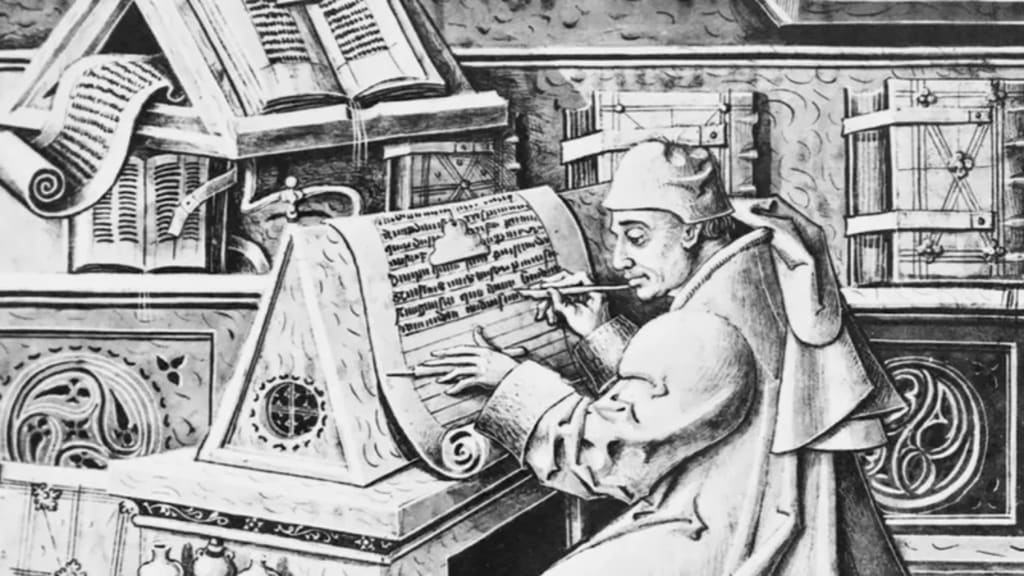
The printing press transformed the way information was disseminated, leading to profound cultural, scientific, and political changes. Before its invention, written materials were copied by hand, a laborious and time-consuming process that limited the spread of knowledge. The printing press allowed for the mass production of books and documents, making information more accessible and contributing to the advancement of literacy and education.
Early Methods of Printing
Before the printing press, early civilizations developed various methods to replicate written texts. In China, as early as the 2nd century AD, woodblock printing was used to reproduce texts and images. By the 9th century, Buddhist monks in China had produced the world’s first known printed book, the Diamond Sutra. The Chinese also developed movable type in the 11th century under the inventor Bi Sheng, who crafted individual characters from clay, allowing them to be rearranged for different texts. However, the complexity of the Chinese writing system, which has thousands of characters, made this method difficult to standardize and widely implement.
Johannes Gutenberg and the Printing Revolution
The major breakthrough in printing technology came in the mid-15th century with the invention of the mechanical movable-type printing press by Johannes Gutenberg, a German inventor. Around 1440, Gutenberg developed a system using metal movable type, oil-based ink, and a wooden press modeled after existing screw presses used in winemaking. His most significant achievement was the production of the Gutenberg Bible in the 1450s, which demonstrated the efficiency and quality of his printing method.
Gutenberg’s press drastically reduced the cost of producing books, making them more affordable and widely available. Before his invention, books were primarily owned by the wealthy elite or religious institutions. With the printing press, literacy began to spread beyond the upper classes, and access to knowledge increased dramatically.
Impact on Society
The printing press had far-reaching effects on society. One of its most significant contributions was the acceleration of the Renaissance, a period of renewed interest in art, science, and classical knowledge. By making books more available, the press facilitated the exchange of ideas and knowledge across Europe. Scholars were able to publish their works more efficiently, leading to rapid advancements in various fields.
Another major impact was on religion. The printing press played a crucial role in the Protestant Reformation. Martin Luther, a German monk, used the press to distribute his 95 Theses in 1517, which criticized the Catholic Church’s practices. His writings, along with translations of the Bible into vernacular languages, spread rapidly, challenging the Church’s authority and leading to significant political upheavals.
The Expansion of Printing
By the late 15th century, printing presses had spread across Europe, with major printing centers established in Italy, France, England, and the Netherlands. Cities such as Venice became hubs of book production, and by 1500, an estimated 20 million books had been printed. The standardization of texts also became possible, leading to consistency in language, spelling, and Knowledge dissemination.
In subsequent centuries, printing technology continued to evolve. The development of steam-powered presses in the 19th century further increased production capacity, making books and newspapers even more widely available. Literacy rates soared, and mass communication became a defining feature of modern society.
The Printing Press in the Modern Era
The impact of the printing press continues into the digital age. While traditional printing has declined due to the rise of digital media, the foundational principles established by Gutenberg remain relevant. The ability to disseminate information quickly and efficiently is now achieved through the internet and electronic publishing, but the printing press laid the groundwork for this transformation.
Modern printing technologies, such as offset printing and digital printing, have refined and improved upon Gutenberg’s original concept, allowing for higher-quality and faster production of materials. Meanwhile, the role of print media has adapted, with newspapers, magazines, and books coexisting alongside digital formats.
Conclusion
The invention of the printing press marked a turning point in history, ushering in an era of mass communication, increased literacy, and intellectual growth. Johannes Gutenberg’s innovation not only revolutionized the production of books but also had a profound impact on culture, politics, and science. The spread of printed materials laid the foundation for the modern knowledge-based society, making information more accessible and shaping the course of human progress.
About the Creator
Badhan Sen
Myself Badhan, I am a professional writer.I like to share some stories with my friends.
Keep reading
More stories from Badhan Sen and writers in Fiction and other communities.
Affection and Healing for Yourself
During the night of the last quarter moon, I gathered my ritual supplies. I carefully handled the chunk of black tourmaline that would protect me from your overall negative and narcissistic energy. I carefully walked the house with my stick of selenite in hand, asking the universe to cleanse our working space.
By Alisha Wilkins ✒️🦋🖋️5 days ago in Fiction
TUS NUA - ch 48
TUS NUA – ch 48 New Beginnings – Mia and Midnight (*)(*)(*) After a few minutes, Finola stood. “Come, Alistar. Time to get back and hear Mia’s news, although I’m sure I already know. One of these days, I’m going to have to teach her to not be so transparent.”
By Margaret Brennan7 days ago in Fiction


Comments (1)
Hello, just wanna let you know that if we use AI, then we have to choose the AI-Generated tag before publishing 😊