
The History Of Chocolate
An Article Related to History of Chocolates.

Introduction:
Chocolate is a beloved treat that has been enjoyed by people around the world for centuries. Its rich, creamy texture and sweet taste make it a favorite among both children and adults. But where did chocolate come from, and how did it become the treat we know and love today?
The origins of chocolate:
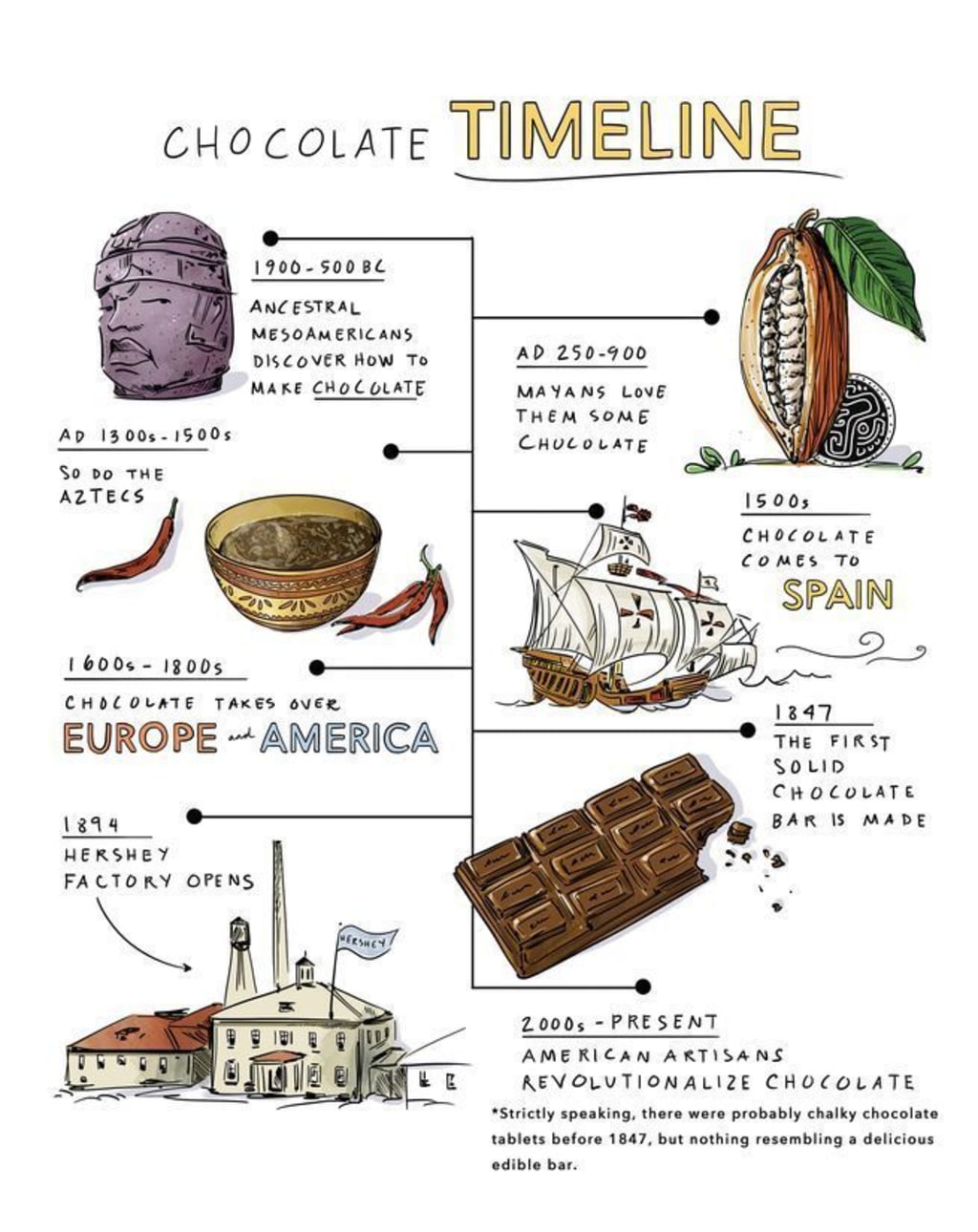
Chocolate has its roots in Mesoamerica, where the ancient Maya and Aztec civilizations used cacao beans to make a bitter drink. They believed that chocolate had magical properties and used it in religious ceremonies and as a currency.Chocolate has a long and rich history that dates back to ancient Mesoamerica, where the Maya and Aztec civilizations first discovered the cacao plant. The cacao tree, which is native to Central and South America, produces large pods that contain cacao beans. The beans were prized by the Maya and Aztecs, who used them to create a bitter drink that was thought to have magical properties.
The ancient Maya and Aztecs believed that chocolate was a gift from the gods, and they used it in religious ceremonies and rituals. It was also believed to have medicinal properties, and was used to treat a variety of ailments, from fevers to fatigue.
In addition to its religious and medicinal uses, chocolate also played an important role in the economy of the Maya and Aztec civilizations. Cacao beans were used as a form of currency, and were even used to pay taxes and tribute to rulers. The beans were so valuable that they were often counterfeited by mixing in other seeds and nuts.
Chocolate arrives in Europe:
Chocolate didn't make its way to Europe until the 16th century, when Spanish explorers brought it back from the New World. At first, it was only available to the wealthy, but as production increased, it became more widely available.
The industrial revolution and chocolate:
The industrial revolution brought about significant changes in chocolate production, with new machinery allowing for mass production and lower prices. This led to a boom in chocolate consumption, with chocolate becoming a popular treat for people of all social classes.The industrial revolution of the 18th and 19th centuries had a significant impact on the production and consumption of chocolate. Before this time, chocolate was still made by hand, and the process was slow and labor-intensive. However, the introduction of new machinery during the industrial revolution revolutionized chocolate production and made it possible to produce chocolate on a much larger scale.
The rise of milk chocolate:
In the 19th century, Swiss chocolatiers began experimenting with adding milk to chocolate to create a creamier, sweeter taste. This led to the invention of milk chocolate, which quickly became a popular treat around the world.
The impact of World War II on chocolate:
During World War II, chocolate production was severely impacted by shortages of ingredients and resources. Chocolate was considered a morale booster, and efforts were made to keep production going despite the challenges.
Chocolate today:
Today, chocolate is enjoyed all over the world in a variety of forms, from bars and truffles to hot cocoa and ice cream. Chocolate companies continue to innovate, with new flavors and products hitting the market every year.
The social and cultural significance of chocolate:
Chocolate has played an important role in many cultures throughout history, with different traditions and beliefs surrounding its consumption. In some cultures, chocolate is considered an aphrodisiac, while in others it is a gift for special occasions.
Conclusion:
The history of chocolate is a rich and fascinating one, with its origins in ancient Mesoamerica and its spread around the world. Today, chocolate remains a beloved treat that brings joy to millions of people every day.
About the Creator
Musa Chohan
I'm A self made story writter. My stories are based on true stories but recreated. I hope that you will enjoy while reading my stories...Although my stories aren't very long but they are better than long stories...NOW GRAB SOME SNACKS AND..
Reader insights
Outstanding
Excellent work. Looking forward to reading more!
Top insights
Compelling and original writing
Creative use of language & vocab
Easy to read and follow
Well-structured & engaging content
Excellent storytelling
Original narrative & well developed characters
Eye opening
Niche topic & fresh perspectives
On-point and relevant
Writing reflected the title & theme
Keep reading
More stories from Musa Chohan and writers in Fiction and other communities.
Lost in the island of Secrets
It was supposed to be a dream vacation, a chance to escape the hustle and bustle of everyday life and unwind on a remote island paradise. But when a group of friends set sail on a private yacht for the mysterious Island of Secrets, they had no idea what kind of adventure was in store for them.
By Musa Chohan3 years ago in Fiction



Comments
There are no comments for this story
Be the first to respond and start the conversation.